A Summer of Repairs, Rebuilds and Restorations – Workshop Update
At the risk of sounding like a broken record, it has been another hectic couple of months. Frankly, I cannot believe that the time has come around already to be writing another one of these updates. This summer season has been incredible for us, with lots of interesting projects in the workshop and some great trips out in cars. I have been out making good use of Reggie, our XK140, visiting shows near and far and even getting away for my wedding anniversary in it. Despite some really challenging conditions due to the hot weather and traffic, the car has performed really well. I have also had the pleasure of getting out for some testing in an early aluminium-bodied XK120 which, in totally standard and original guise, is a very different creature to our XK140.
We have lots of exciting things to look forward to this year. Goodwood Revival is just around the corner. We will be in our usual location, Over the Road, near Bonhams and the cinema. Please do come by and say hello. We will also be at the NEC in November and hopefully a few more local events in between.
In this update, we have a look at some crash repair work, the beginning of another restoration, a couple of engine rebuilds and much more.
Classic car seat belts
Did you know that, for cars first used from 1 January 1965 onwards, seat belts are required for the driver and specified front passenger? Cars first used before this date were not required to have seat belts fitted. This is particularly relevant to the classic cars we look after, as the majority were built before 1965 and therefore do not require seat belts to be fitted.
Many of these cars are now exempt from the MOT test, provided they meet the relevant requirements for historic vehicles. However, we still advise our customers to have their cars inspected regularly to ensure they are safe and roadworthy and, ideally, checked by an independent third party.
Despite the above comment about seatbelts, we would always advise having seat belts fitted where possible. Seat belts have saved many lives in the years since their introduction, so I find it hard to understand why you wouldn’t want them. Hopefully, you will never need them, but I am sure you will be glad of them if that moment ever comes. It is also worth remembering that, if seat belts are fitted, they need to be in good working order.
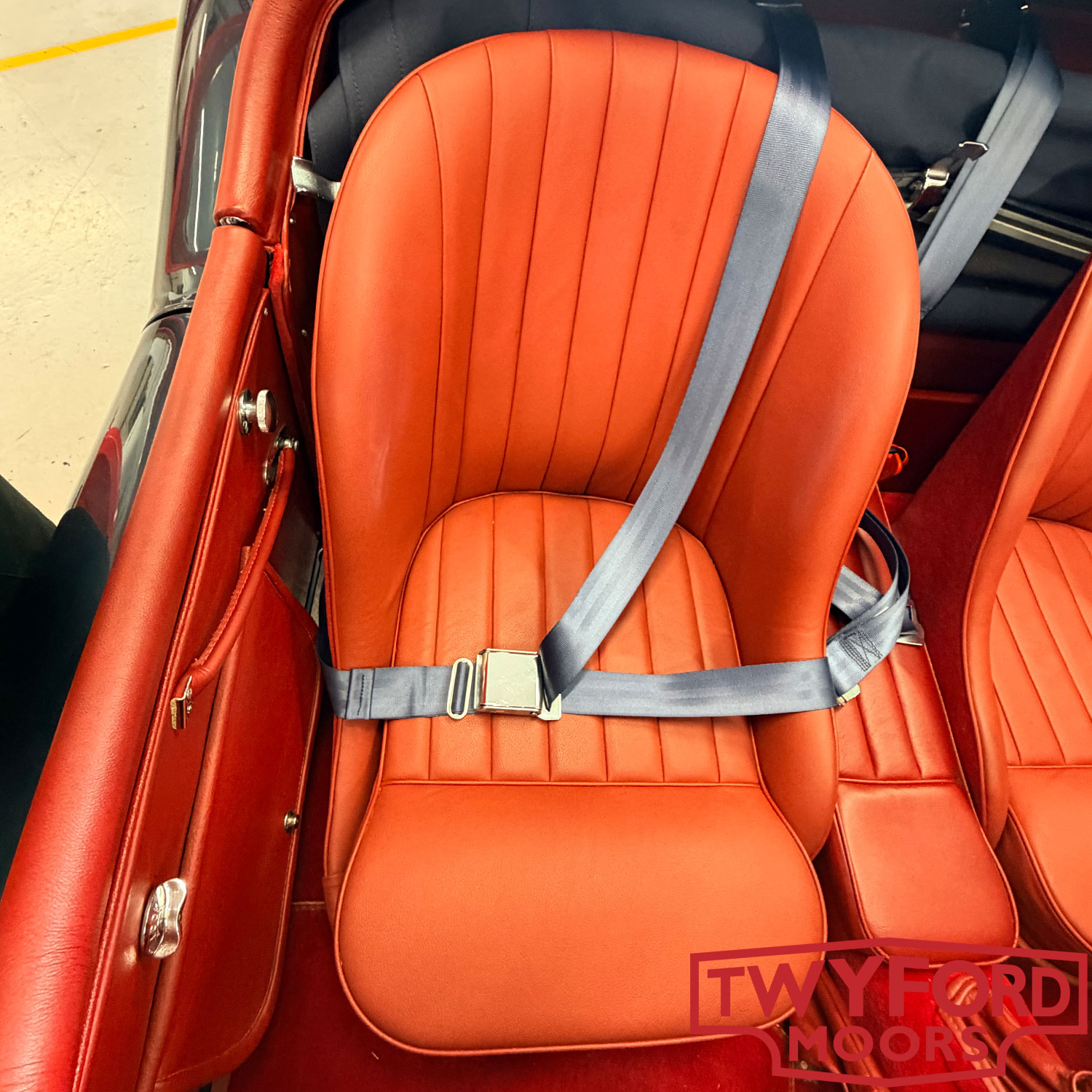
We offer a range of seat belts to suit all needs and applications. From static lap belts to three-point inertia-reel belts, we have a solution to fit most classics. We offer a range of buckles and hardware, from modern-style plastic ones to the chrome ‘aeroplane’ style buckles pictured here. The webbing is available in a variety of colours, allowing you to choose a colour to either match or complement the colour of your car.
Jaguar E-Type engine rebuild
As you can see, we are just in the process of refitting this E-Type engine and gearbox. We shared an image of this engine in our test rig in our last update, so we won’t go into too much detail about the engine this time. It has been fully rebuilt, lightened and balanced to a fast-road specification. We have tested it and are very pleased with how it has come out. For more on the engine, please read our previous post.
What we really wanted to talk about here is doing jobs properly. There are certain jobs on XKs and E-Types which require you to remove the engine and gearbox. Likewise, on an E-Type, some tasks require the rear subframe to be removed to allow proper access.
When we share photos of these processes on social media, we often get comments telling us how we can, for example, remove the gearbox to gain access to the clutch by cutting X, Y or Z part and then tipping the gearbox through an extreme angle. We are, for the most part, aware of these options; however, we choose to do these jobs properly.
Although it can seem a daunting prospect to hear that your engine has to be removed, to us this is a routine and quite straightforward process. We are very fortunate to have wonderful facilities which equip us with everything we need to do these jobs in a timely and efficient manner. From car lifts to transmission jacks, from engine cranes to the hydraulic trolley you see in this photo, we have it all.
This means that we can do the job properly, in a sensible amount of time, without the need to cut corners. Often, these ‘alternative’ methods might seem faster, but once you factor in the time wasted modifying the car, fighting to get something out of a gap it was never intended to come out of and then the risk of damage, they are often a false economy.
Jaguar X150 XK
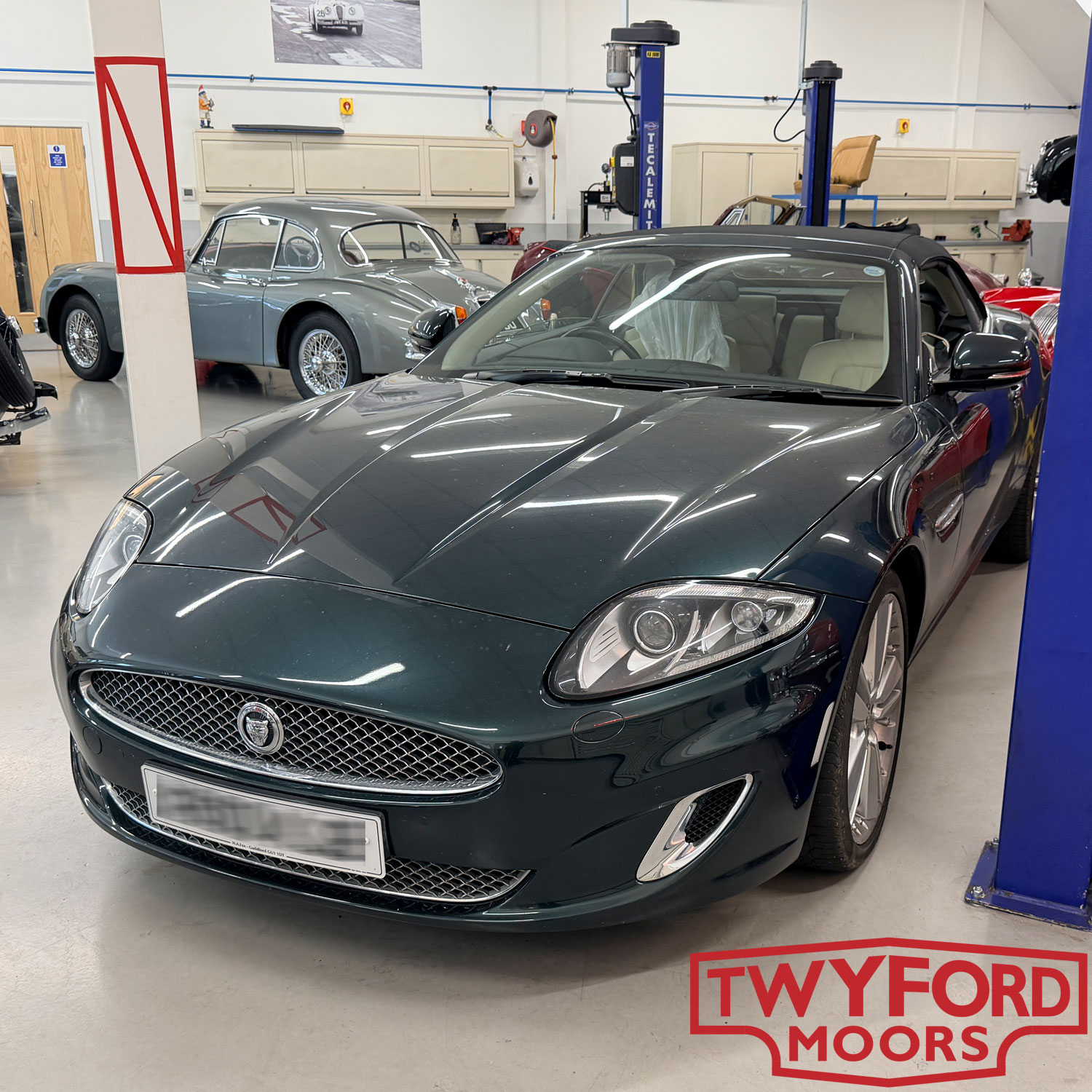
Here is another more modern visitor to our workshop. This is a Jaguar X150 XK from the early 2010s. As I have mentioned in previous updates, we have had a lot of people approaching us over recent years asking if we would care for their ‘modern classic’ Jaguars.
We have spent some time researching, training and investing to get ourselves to the point where we are set up to care for these cars to the standard our customers expect of us. We are now taking it slowly and getting to know these cars better, and are fortunate to have a JLR-trained mechanic who worked on these cars when they were new on our team.
We are currently offering a limited range of services for these cars, which we will gradually grow with time if there is sufficient demand.
We can see, though, why so many owners are so attached to these XKs. They are delightful cars. They feel thoroughly modern, even though they are now over ten years old. They are comfortable, quiet, perform incredibly well and look stunning. I feel it is a shame that the XK was discontinued so long ago without any replacement. Perhaps Jaguar will come out with another two-door GT car in years to come, but you can guarantee it will not be powered by a V8 engine!
Jaguar XK150 corrosion
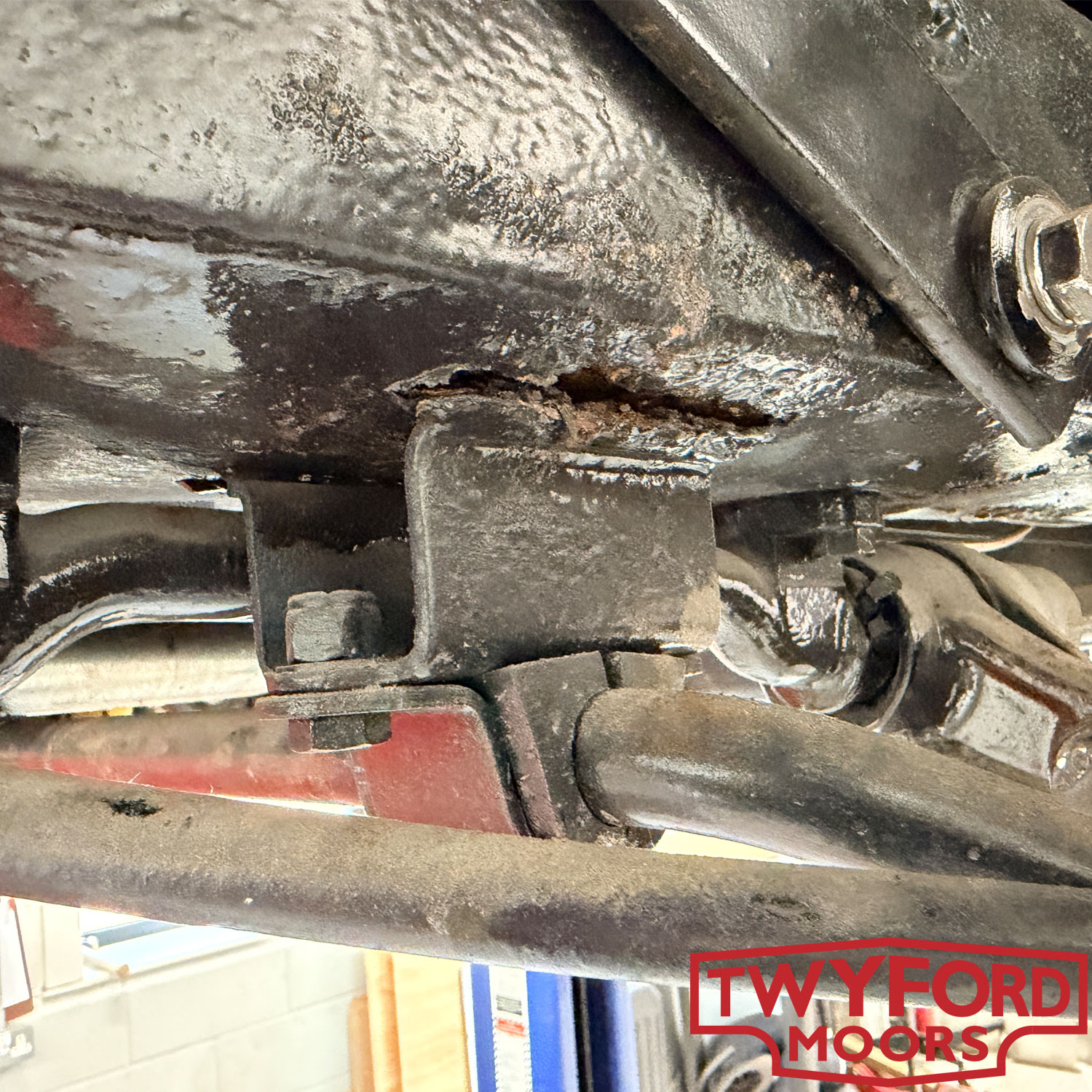
Corrosion does not tend to be a massive issue for classic XKs these days. They really did suffer with rust back in the day, particularly at the rear of the bodies, but the vast majority of XK120s, XK140s and XK150s on the road today have long since had any issues attended to. The standards which reputable modern restoration companies work to, combined with the care most owners lavish on these cars, means that the likelihood of serious corrosion returning is pretty low. There are, however, a few spots worth keeping an eye on.
One such spot is pictured here. This is the underside of the chassis, up at the front, where the lower wishbone and anti-roll bar mount. Moisture can get trapped in here and corrodes the chassis. In this case, an historic repair has been carried out, trapping old corrosion inside, which continued to rust and gradually push the new plate down, causing the bulge you can see. The most visible problem here is the split and corroded anti-roll bar mount, but we know from looking at this that there will be more problems hiding underneath.
Fortunately, we have a jig for the task to ensure all the suspension mounts, etc., are still in exactly the same position after the repair. We will cut out all the affected material until we reach good metal, and then repair the car properly so it will last another seventy years.
Jaguar E-Type Series 3
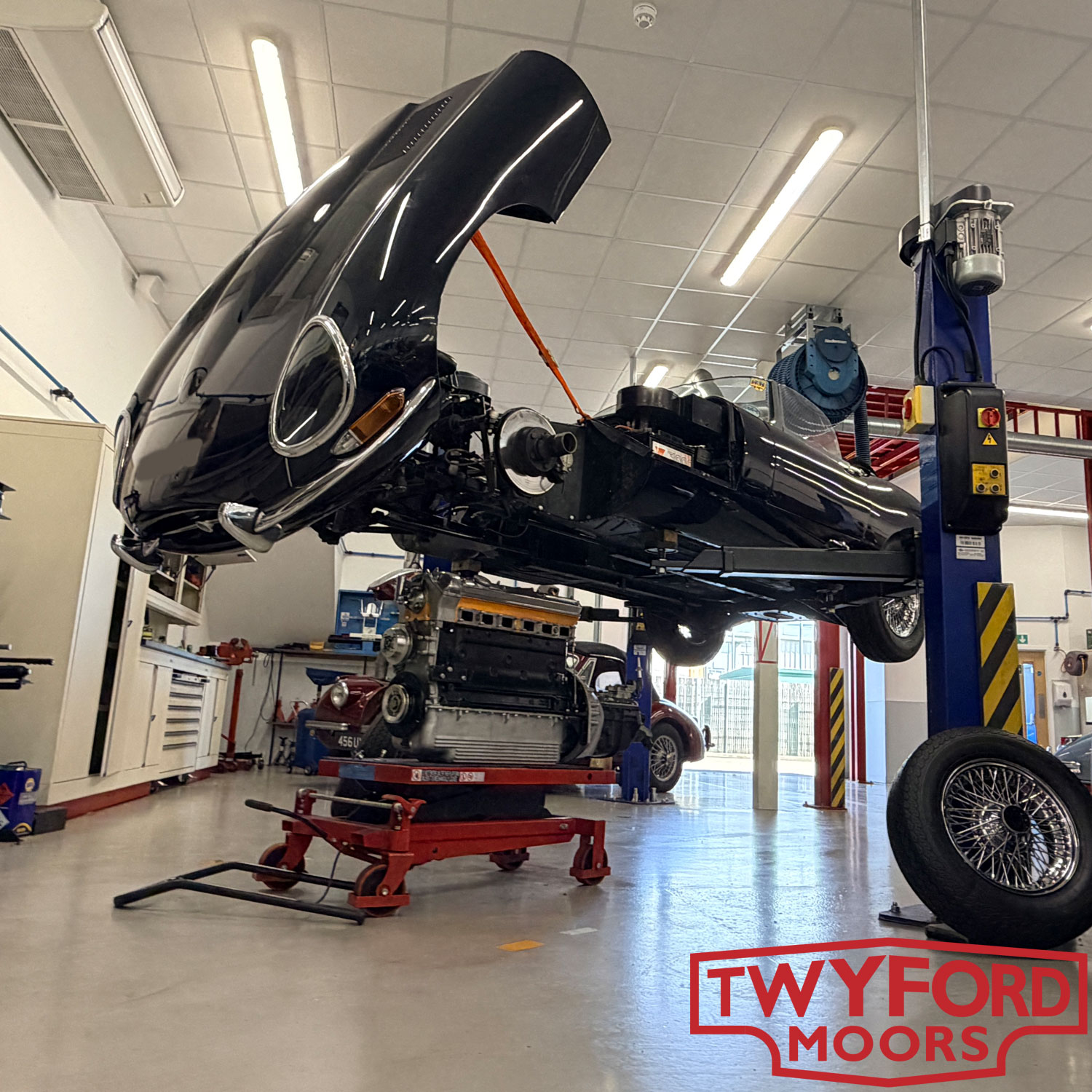
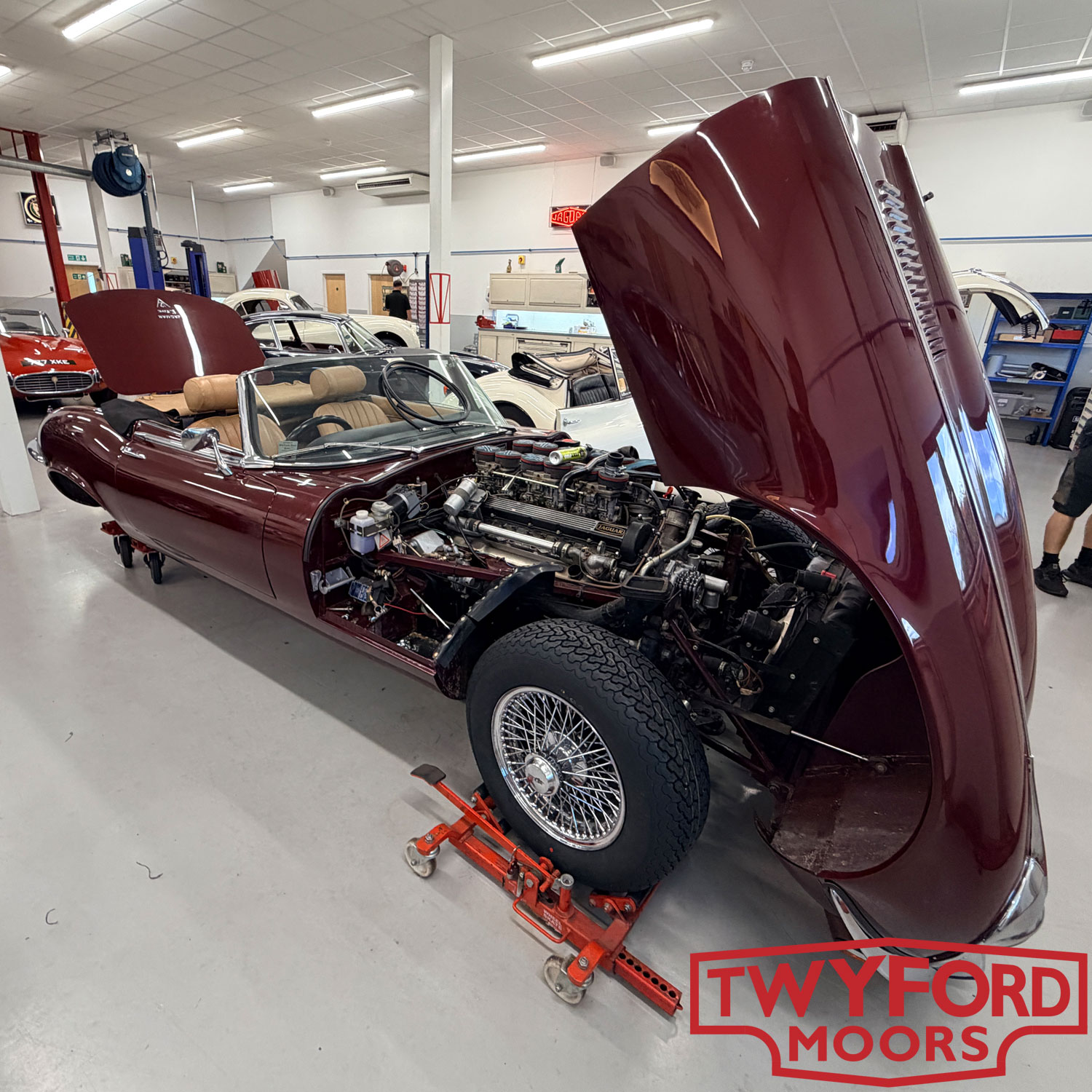
You might spot that this V12 E-Type is sitting on its own wheels, front and rear. That is because it is undergoing quite a significant amount of work. The rear axle and subframe have been removed to allow for a number of jobs to be carried out, including replacing the solid fuel lines, which run from the front to the rear of the car, as these were extremely corroded.
You may just about spot the custom made trolley we have, which bolts onto the subframe mounts to allow the car to be safely moved with the rear suspension out. At the front, the steering rack has been removed to be overhauled, so we have placed skates under the front wheels to keep the car mobile. As these jobs will disable the car for some time, we like to be able to move the car off the lift to allow other work to continue and the car to be safely moved around the workshop.
You might notice that under the bonnet, this particular V12 engine is equipped with six twin-choke Weber carburettors. We look after a few cars with this set-up. They certainly need patience to get tuned correctly, but once they are properly set up, they really allow this engine to perform. More than anything else though, the induction noise is unbelievable. If you want a big smile put on your face, try one of these!
Jaguar XJ-S
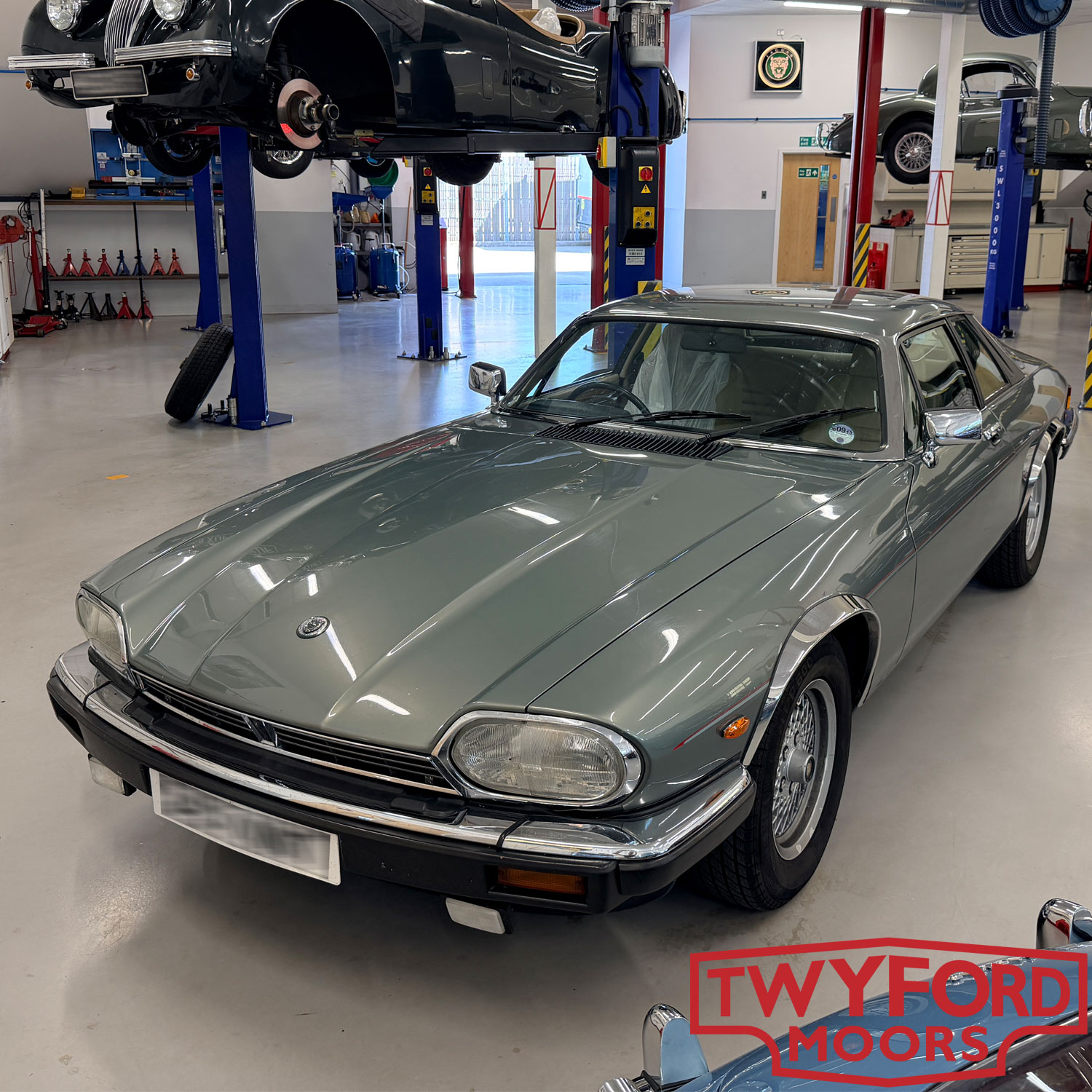
Another month and another XJ-S to feature. In fact, we have had quite a few of these in lately, but I like to provide a bit of variety in these updates, so one XJ-S is probably enough. In our previous update, I mentioned that I believe these are hugely underrated cars and can still be obtained for very good value.
I wonder, given that we are seeing an increasing number coming through the workshop, if people are now recognising their value and starting to invest a bit more in maintenance. Also we have seen a bit of confidence returning to the XK market, with lots of test drives and cars selling more readily again, and I am hearing a similar story across the classic Jaguar world. So maybe this is the time to be getting into an XJ-S?
On the other hand, many of the things that make these lovely, comfortable and enjoyable cars to own and drive also make them difficult and relatively costly to maintain well. I fear that this combination may always have a dampening effect on their values.
This car was in for a few minor defects that had been picked up in a recent MOT. Play in the wheel bearings, a perished gearbox mount, a few bushes, etc. Having recently spoken to a potential customer who worried that the job they wanted doing was too small for us, I thought it would be worth pointing out that we are here to help, no matter how big or small the job. From the most simple bulb replacement up to a full restoration, we are happy to help.
Jaguar E-Type handbrake upgrade
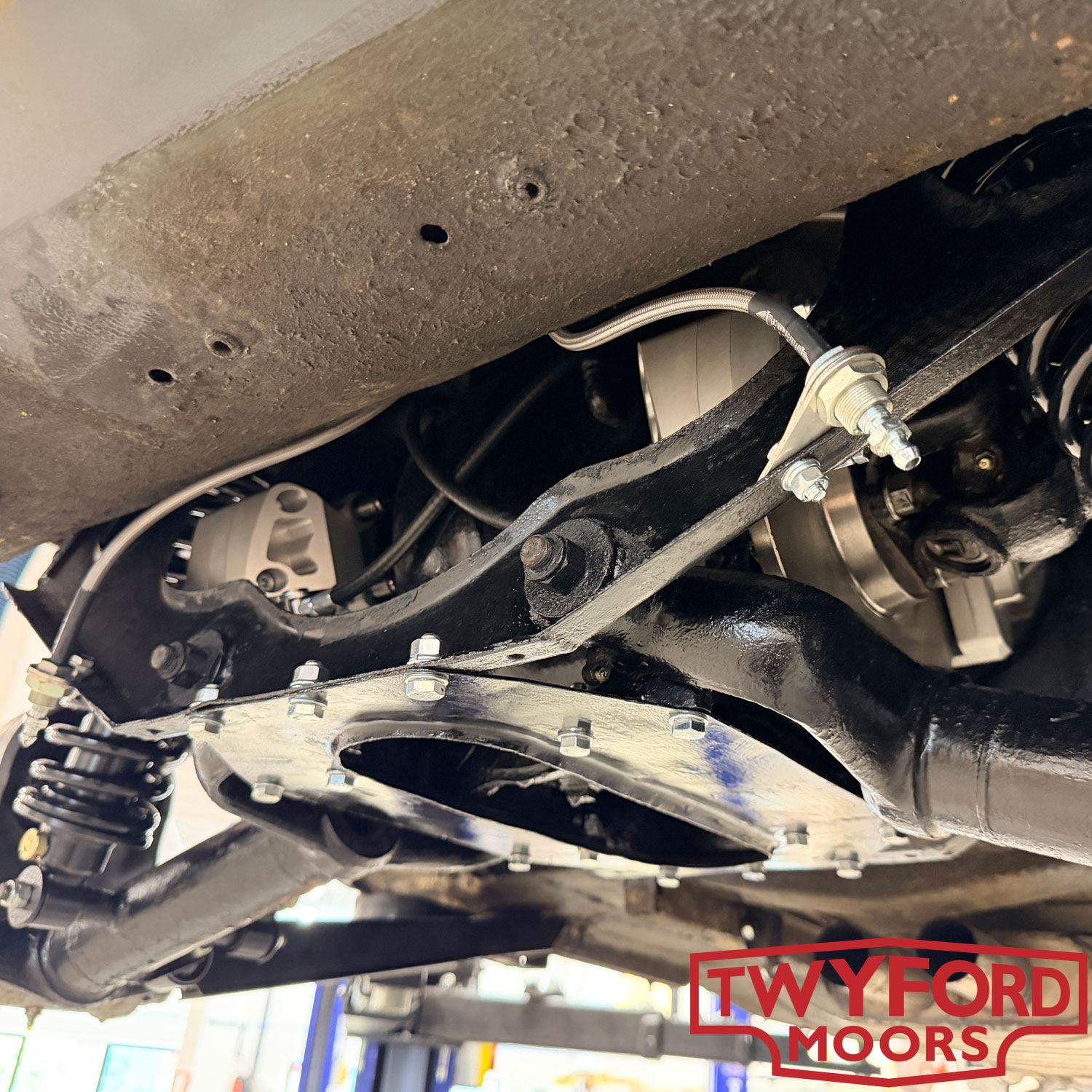
This picture shows the rear subframe of a Jaguar E-Type on which we have completed quite an extensive programme of upgrades. These upgrades included a full overhaul and upgrade of the braking system. It now has four-pot aluminium callipers front and rear, which significantly improve braking performance.
The thing I really want to highlight here though, is the handbrake callipers, which are the rather nice aluminium items on this side of the brake disc. Anyone with an E-Type will know that, even when well maintained and correctly adjusted, they leave much to be desired. If you know your way around an E-Type, you can make them reasonably effective by setting them up properly, but they are a fundamentally flawed design.
The upgrade pictured here provides much more substantial handbrake callipers, providing much better contact between the pad and the disc, along with an improved compensator. This provides a more powerful and reliable handbrake.
It may not seem all that significant to have a handbrake that works well, but it is all these small things that add up and come together to make a car really usable and enjoyable.
Jaguar XK150 servicing
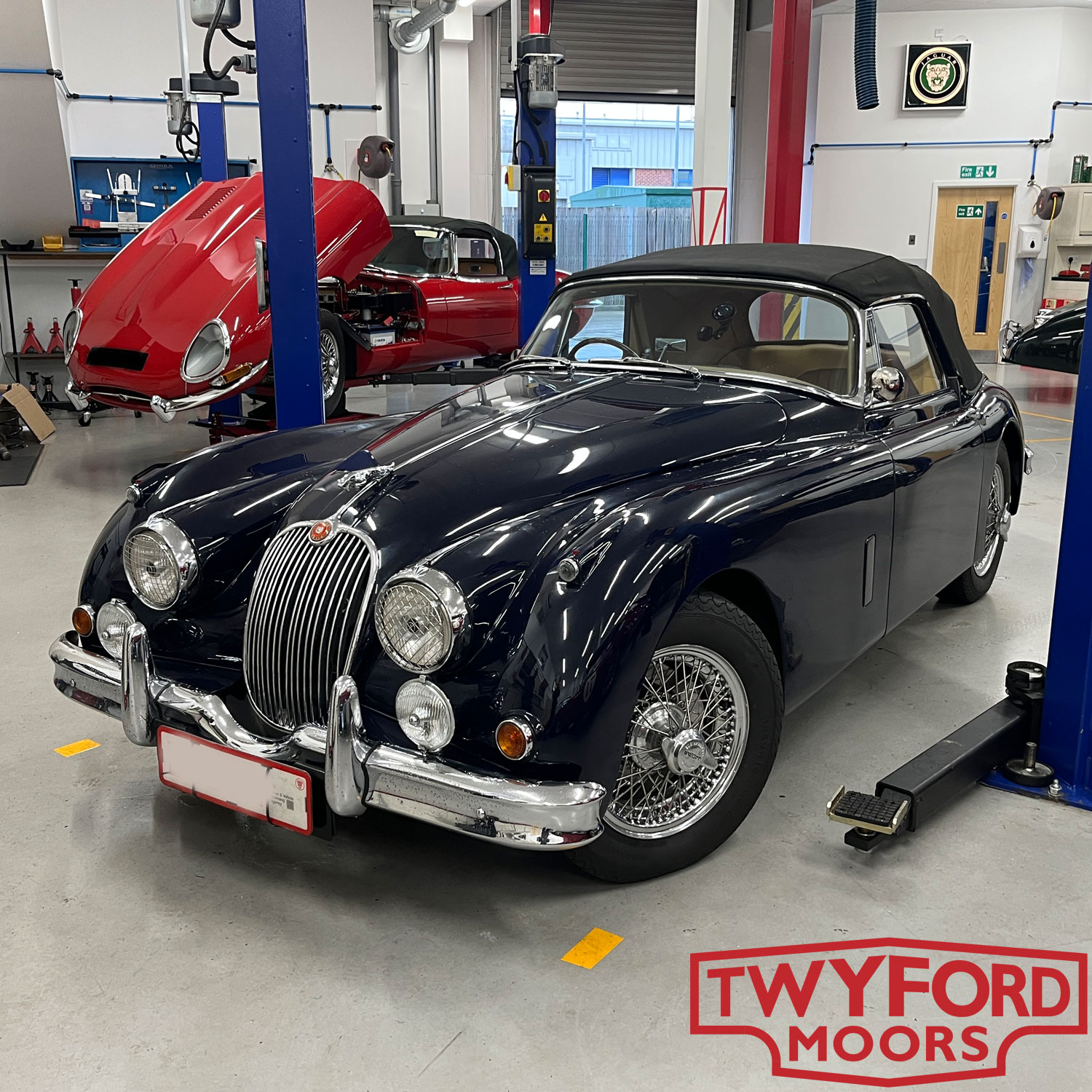
This Jaguar XK150 Drophead Coupé was in for a routine service and check-over. I felt it worth sharing this as, generally, we share cars where there is a problem which is of particular interest or some kind of upgrade work going on. Although problem-solving is the key to what we do, sometimes we do get jobs which are just straightforward. This was one of those.
This XK underwent a full 100+ point inspection and the customer was provided with a list of observations and recommendations to assist them in planning future work. There were a couple of items which required immediate attention, but the majority could be budgeted for in the future. The car then had a full service, test drive and MOT before being ready to head back out on the road for another year of enjoyment.
Servicing and preventative maintenance make a huge difference to how reliable these cars are. Regular oil changes can genuinely extend the life of an engine, particularly these old XK engines. Conversely, deferred maintenance can quickly build up into lots of work needing to be done and a nasty surprise when you have to get it all done. If you would like your classic Jaguar checked over and/or serviced, please get in touch to book a slot.
Daimler Sovereign
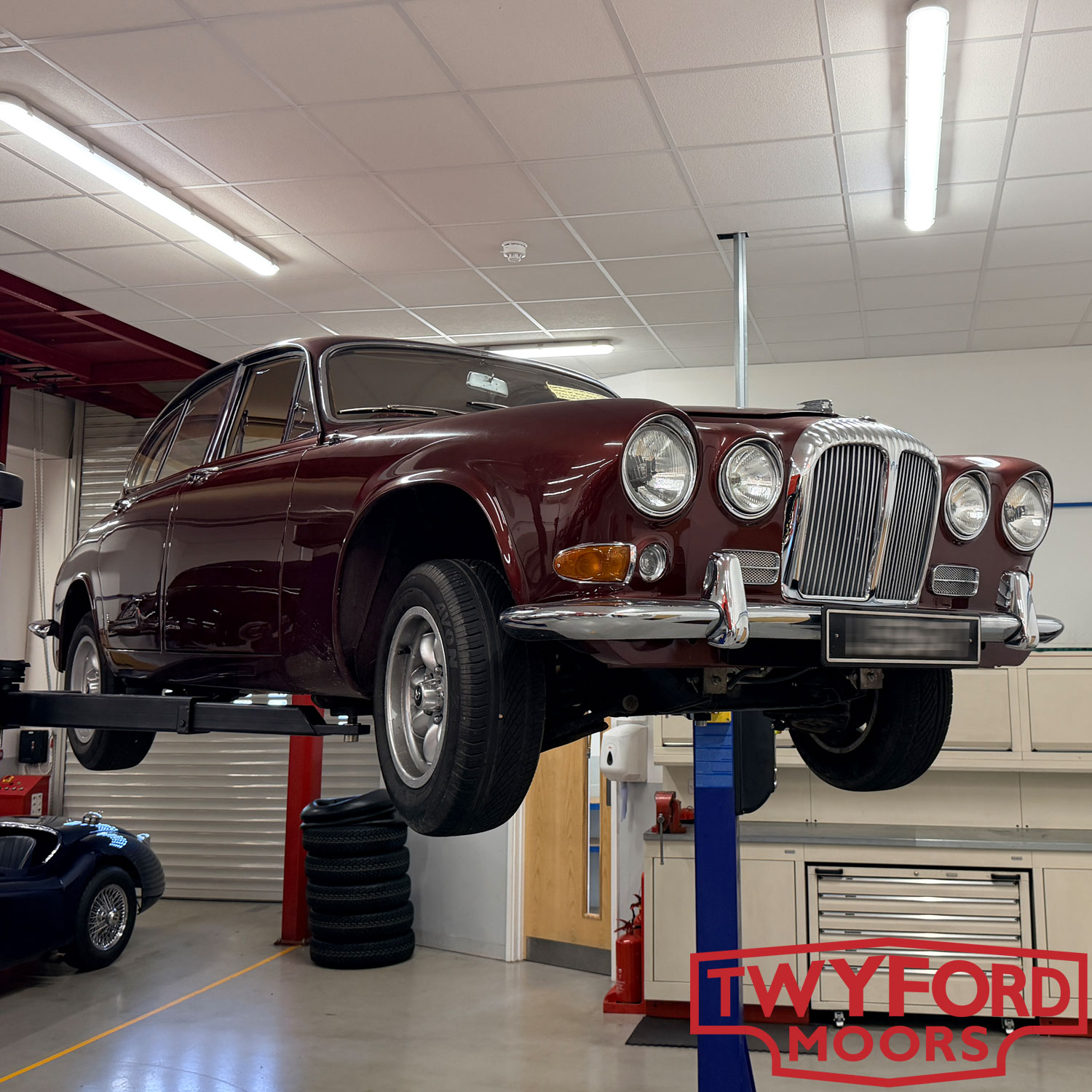
Regular readers may have seen this Daimler in previous posts. It visits us every year for a service and a few other jobs. The owner is extremely meticulous about how the car is maintained and always likes to deal with any problems before they become problems.
Unsurprisingly then, this is the finest example of a Sovereign, Jaguar 420 or S-Type you are likely to find. All three were essentially the same car, rebadged, with a few styling tweaks and the larger 4.2-litre engine. I would say all three of these models are generally overlooked and hugely underrated compared to the Jaguar Mk2.
They may not look quite as sporty as the Mk2; however, owing to the independent suspension system developed from the E-Type, they are significantly better to drive.
If you are in the market for a Jaguar saloon, these are a great choice and offer brilliant value for money. Do ensure you find a good one, though. Worn and perished suspension and subframe bushes can really compromise the driving experience. This is often the case as owners don’t realise how they should drive, and many garages are reluctant to get involved with replacing all these bushes. It is fairly straightforward once you know your way around them though.
Also, be cautious of corrosion in the bodyshell, as this can be costly to repair.
Jaguar E-Type upgrades
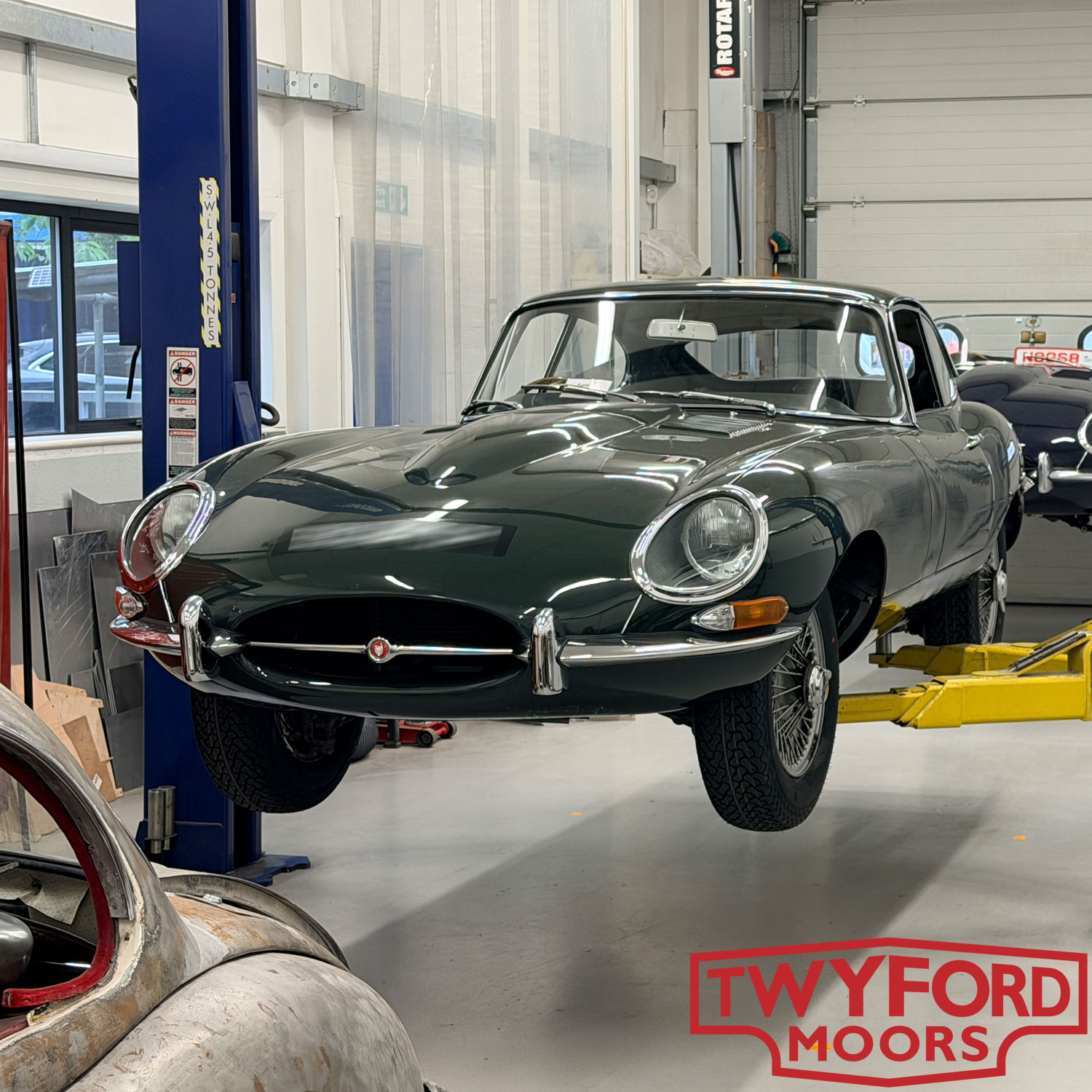
This Jaguar E-Type had been off the road for some time. It is a Series 1, 3.8-litre car with the later dished floor. Not the most sought-after model, but much more comfortable from a driver’s point of view.
We were tasked by the owner with recommissioning it and providing a list of potential upgrades to improve the ownership experience. Having gone over the car and discussed the options with the owner, we got a clear idea of what he was looking for, agreed a programme of work and got cracking. The focus was on improved reliability and safety.
The main areas in need of attention were the suspension bushes and brake components, which were all rather aged. This is quite common on cars which were restored over a decade ago, and the suspension bushes seem to particularly suffer on cars which are not used very much.
As such, we rebuilt all the suspension with polyurethane bushes, both to sharpen up the handling and to ensure they will last well. We also replaced a number of brake lines, flexi-hoses, etc., to ensure the brakes were all safe. The owner also opted to have upgraded brake callipers fitted.
Beyond that, a few other items were upgraded, including a new radiator and header tank and a number of components in the fuel system.
Jaguar XK120, XK140 and XK150
I often get comments on our photos along the lines of, “That’s an XK140, not an XK150,” or similar. For the most part, you can rest assured we do know the difference, though the occasional typo may trip us up.
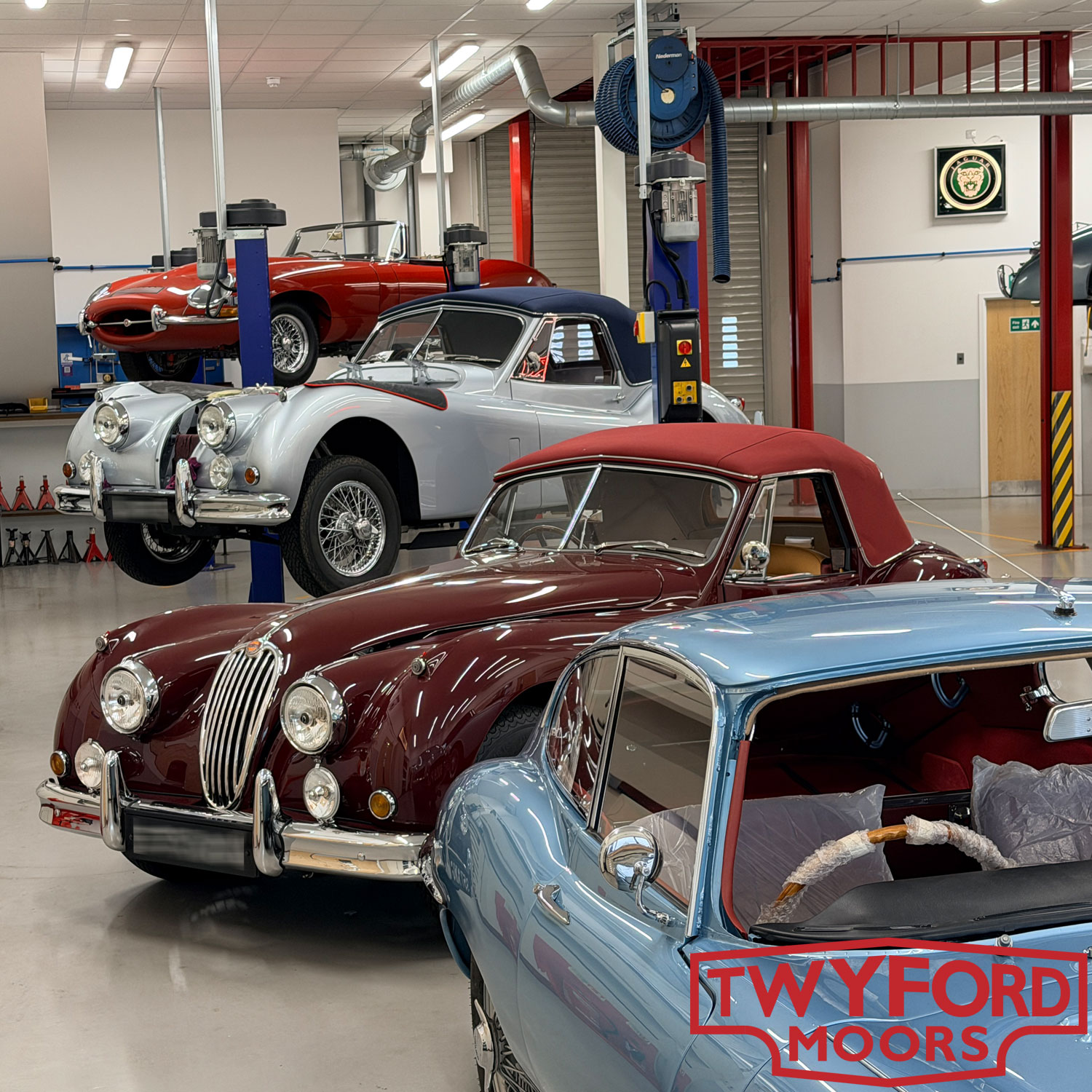
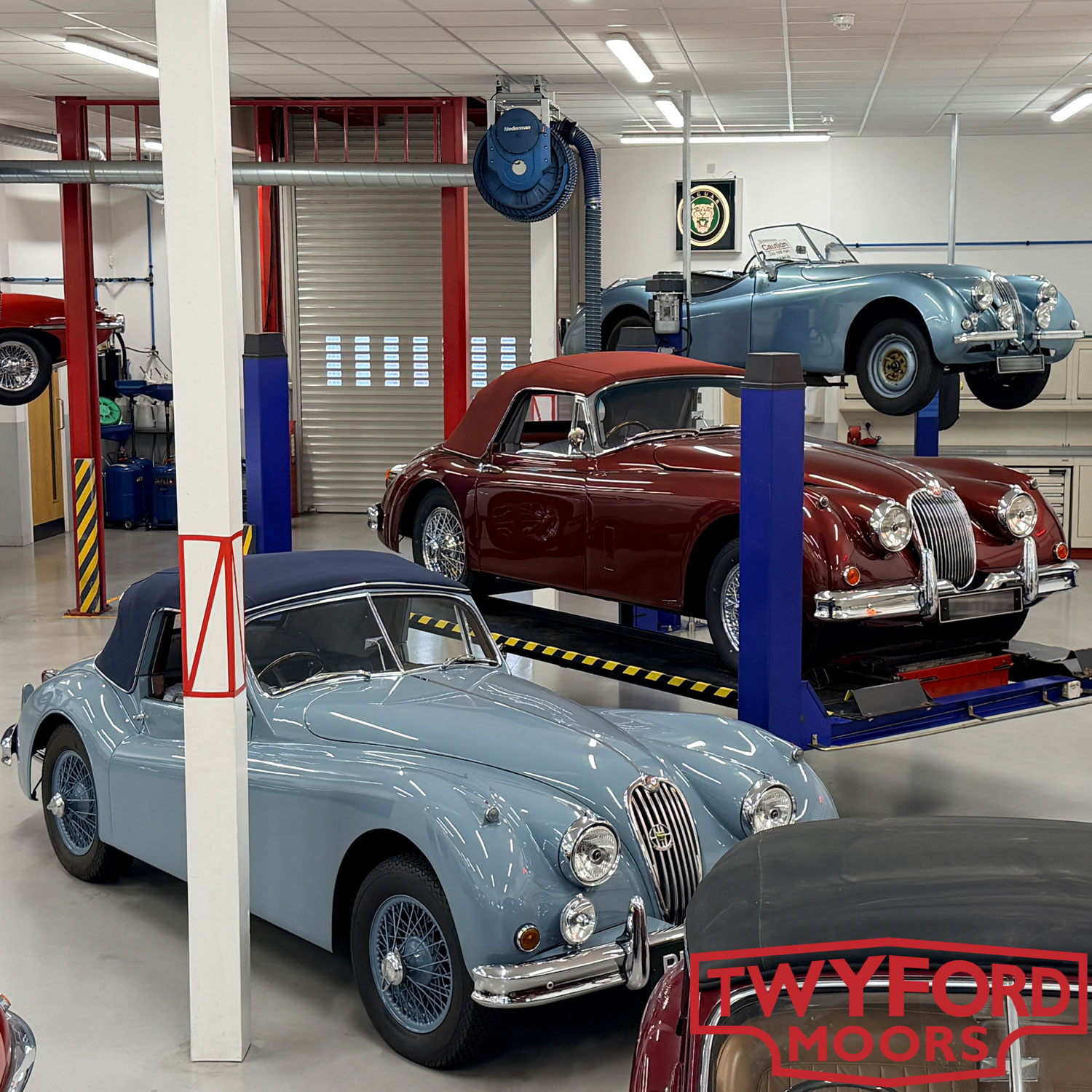
To help those not in the know, I thought this was a rather nice photo, as it highlights the differences between the XK120, XK140 and XK150.
Right at the back of the shot is a Jaguar XK120 OTS. This is quite an early car, so it has separate chrome sidelights and lacks the wing vents which appeared on later cars. The OTS models are also distinguishable by their separate aluminium windscreen surround, which was also fitted to the XK140 OTS.
The XK120 can be distinguished by its split windscreen, slim bumpers and overriders, narrow fluted grille and generally cleaner lines than the later cars.
In the foreground is a pastel blue XK140 Drophead Coupé. The Dropheads are more refined than the Roadsters, with a padded hood, winding windows and a walnut dashboard.
The XK140 can be identified by its sweeping lines and split windscreen, which it shares with the XK120, but it has more substantial bumpers, a chunkier cast grille and chrome strips down the bonnet and boot lid.
Finally, the XK150 Drophead Coupé sits in the middle of the photo. The XK150 is much easier to pick out from the bunch by its single-piece wrap-around windscreen. It also has a wider grille and straighter wing line, amongst other styling changes.
Jaguar XK140 crash repair
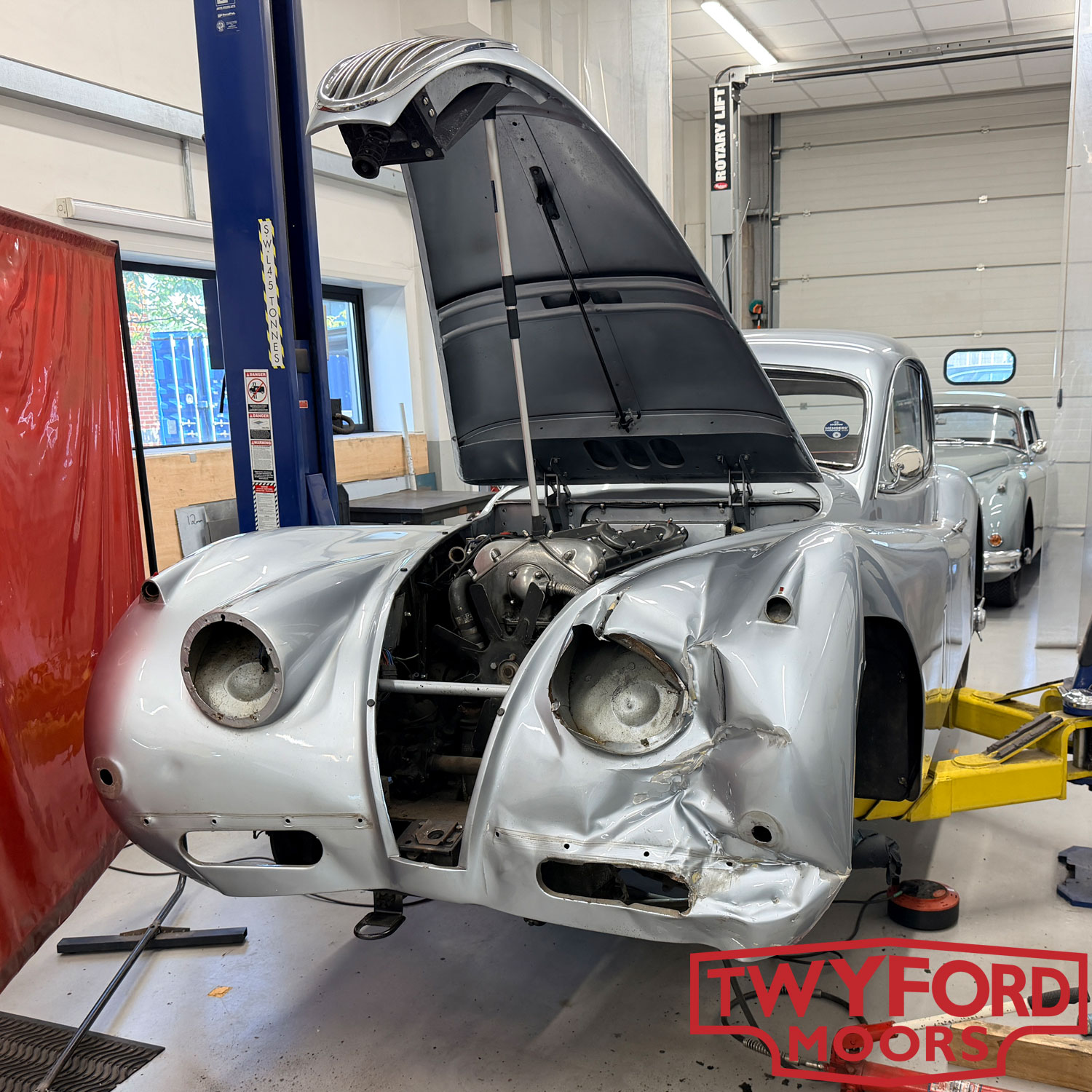
Unfortunately, accidents do happen sometimes, and if they do, we are here to help. This XK140 is in the process of undergoing repairs after a road accident. As you can see, the damage was on the nearside front wing, but it has also pulled the offside wing around and pushed the wing back into the door shut. There was also a lot of damage to the lights, chrome parts and the bumper irons.
We have a great deal of experience dealing with accidents and insurance claims and can help every step of the way. In this case, we were able to recover the car and then provide a detailed assessment and estimate for the repair work. We then coordinated with the insurance company and assessor to get the work agreed.
Now that the work has been agreed with the insurance company, we have begun to strip down the front end and straighten out the panels. Although the front section of the wing will need replacing, it is useful to leave it in place for the time being to help pull the panels back into position.
Once the work is completed, the owner will be invited to sign off that the repair has been completed to their satisfaction, and we will then settle the payment directly with the insurance company. No need for the owner to endure any more stress than they have already been through.
Jaguar E-Type Series 3 Commemorative
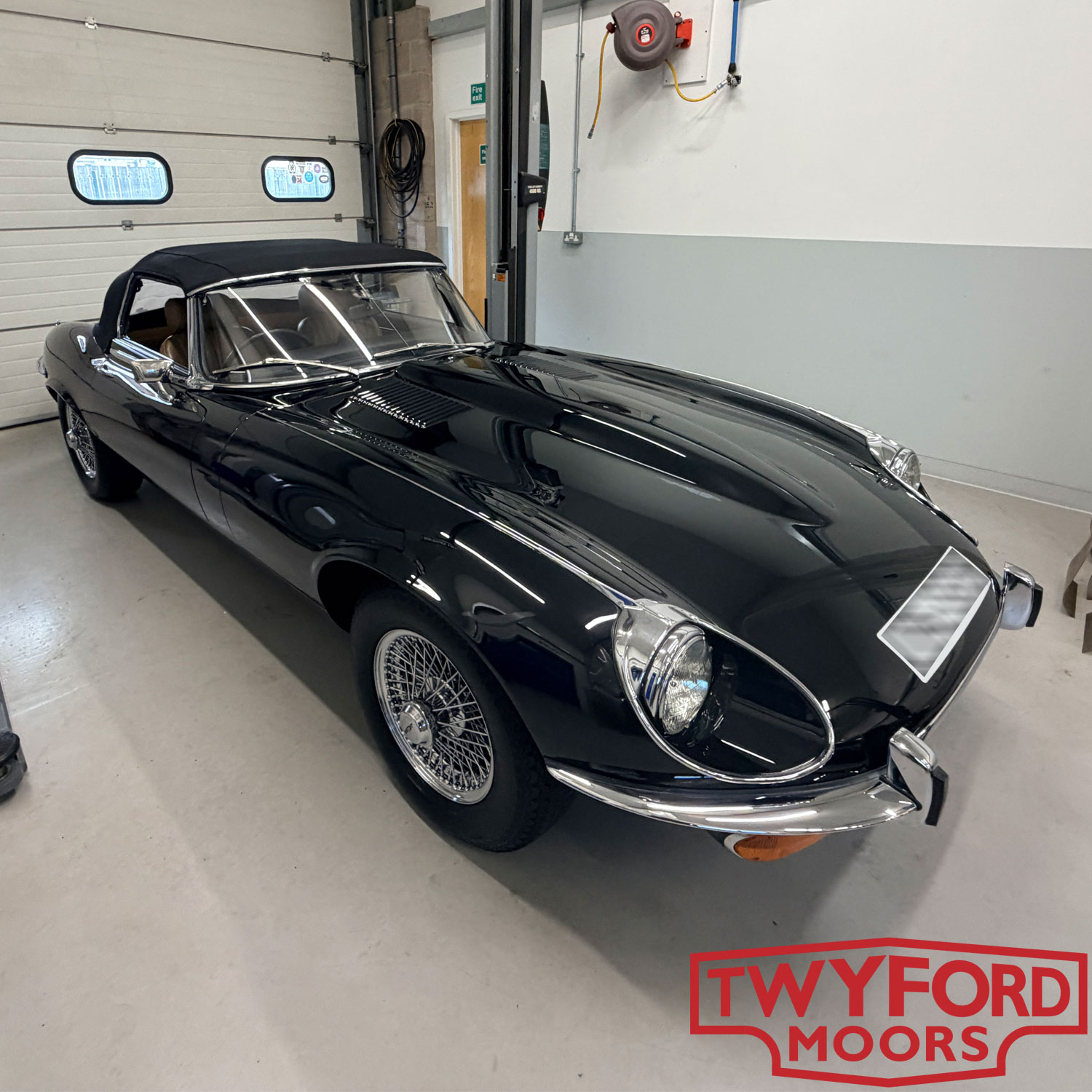
We’ve recently had the pleasure of carrying out some servicing work on this particularly special Jaguar E-Type Series 3 Commemorative.
The Commemorative models are amongst the rarest of the Series 3 E-Types, and this particular example is an especially lovely car. It remains in fantastic condition, with a wonderful level of originality and presentation throughout.
As with any E-Type, regular servicing is essential to keep these cars performing as they should, and we’ve given this one a thorough check-over as part of its latest visit to the workshop. It’s always a pleasure to work on cars that have been so well cared for, and this example is a real credit to its owner.
These Commemorative models have become very sought after in the past few years. I am not suggesting everyone rushes out and tries to buy one, as there are so few of them that they are hard to find, but if I were putting my money into a Series 3 E-Type, I would seriously consider hunting for a Commemorative edition.
It’s always a privilege to see rare examples like this one come through the workshop, and even better when they’re in such exceptional condition.
Jaguar XK140 engine rebuild
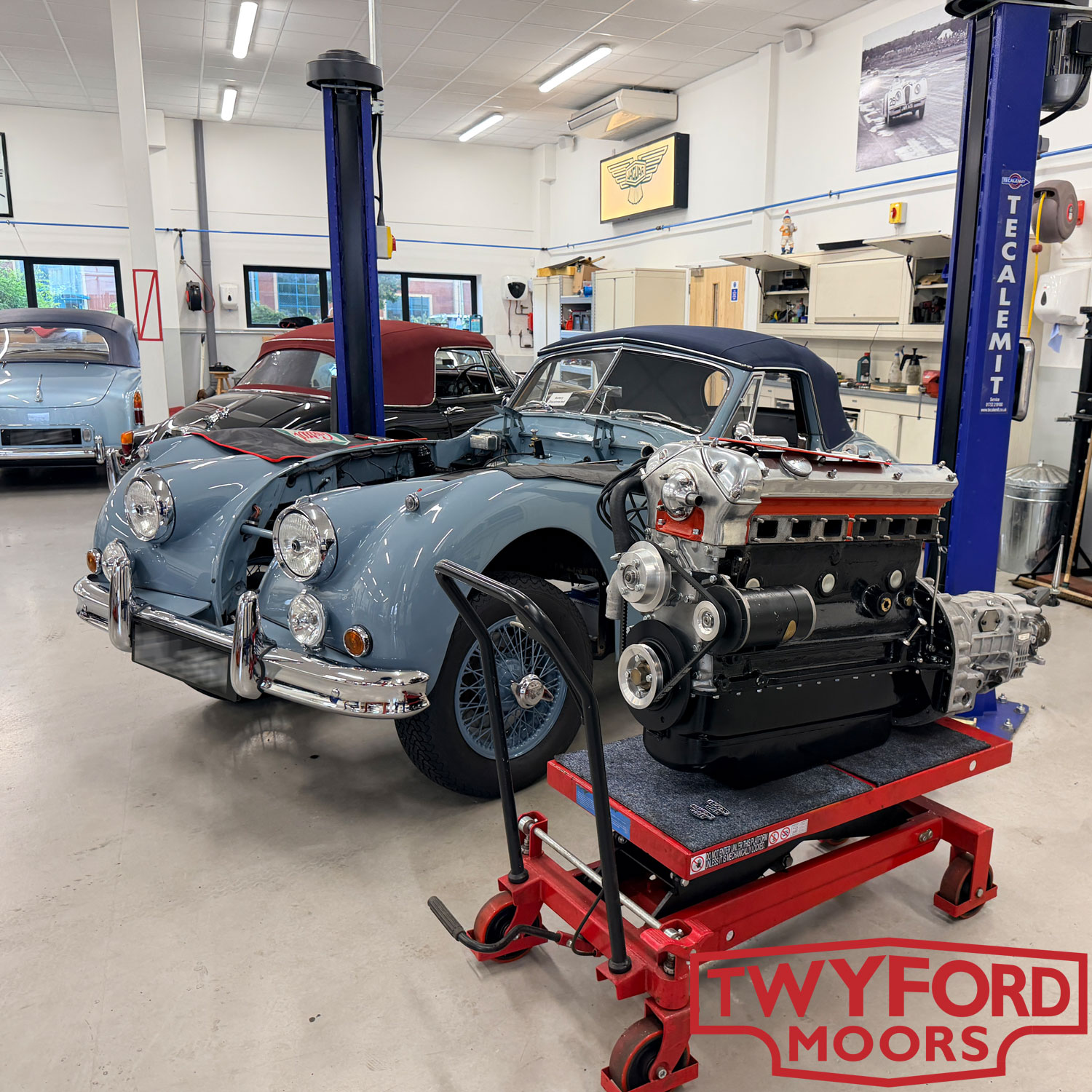
Pictured here is an XK140 engine, on our trolley, next to its car and ready to be fitted. It has already been tested on our test rig, so we know it is running well and ready to be used.
This engine build has been one of our favourite projects of the year so far. The customer was keen to unlock as much performance as possible from their XK engine, whilst keeping it practical, usable and reliable.
This engine is not a lumpy, race-spec engine which requires high revs to get any power out of. This is the ultimate fast-road specification engine, providing low-down power delivery, torque and smooth running. It provides power where and when you want it, in an effortless way.
All the engine internals have been balanced and lightened where necessary. The engine has been fitted with our upgraded rear main oil seal and a custom-made, lightened flywheel. The head has been upgraded with larger valves, polished and ported, and has fast-road-profile camshafts, along with oversized bucket guides and hold-downs on the exhaust side.
The car in question is one of our older restorations, so it already features uprated suspension, front disc brakes and a five-speed gearbox. It is, for the most part, already prepared to deal with the extra power.