Get Me to the Church on Time – Workshop Update
What a few months it has been! The workshop has been busier than ever, with a constant stream of fascinating cars arriving for servicing, restoration and repair.
One of the highlights was the Mike Hawthorn Memorial Track Day at Goodwood. Despite the rain, it proved to be another fantastic event with a brilliant atmosphere. If you'd like to see what we got up to, head over to our YouTube channel—but be sure to finish reading this first! We're very hopeful the event will return next year, so keep an eye on our social media and website for booking details. It really is an occasion not to be missed.
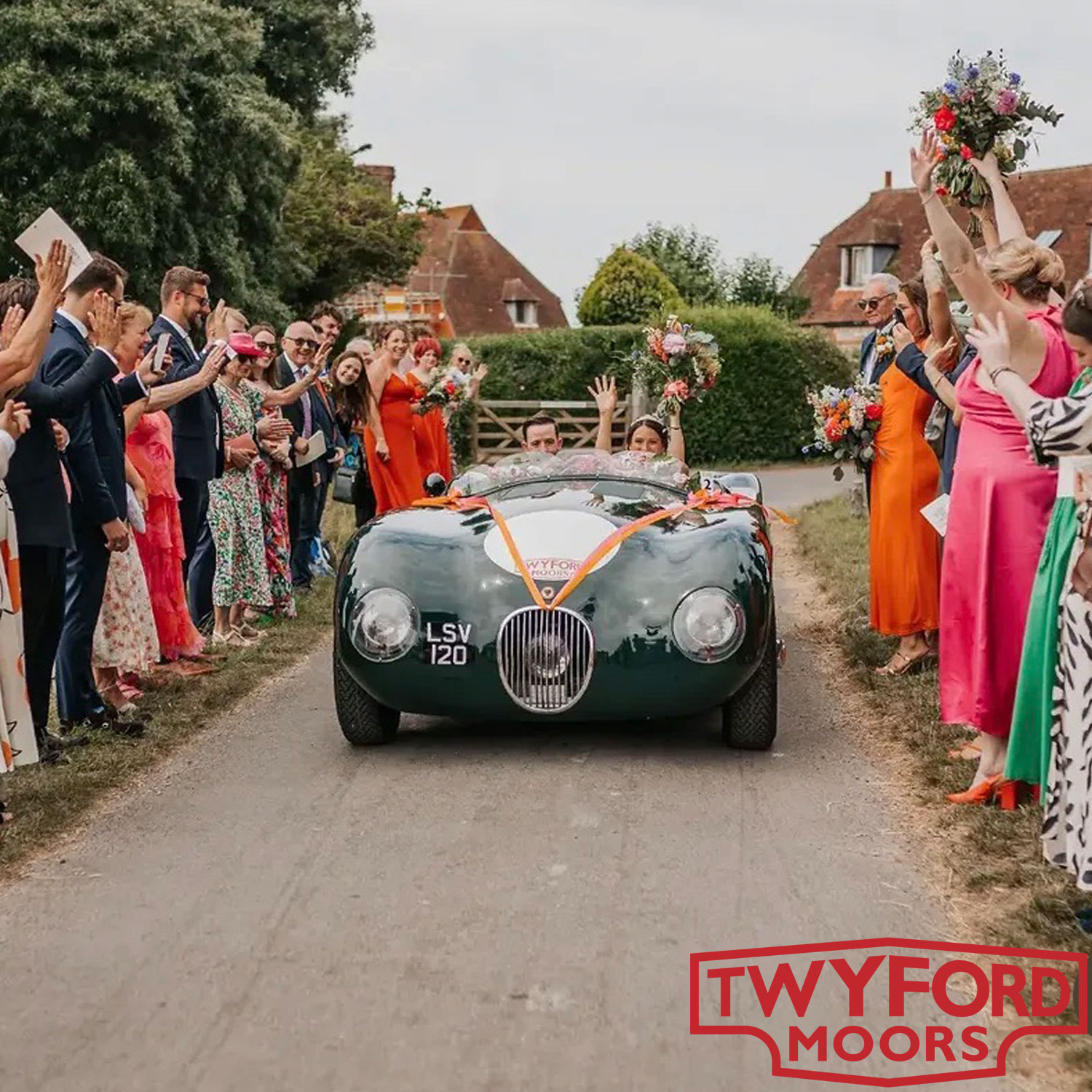
Away from the workshop, we've also attended several concours events, enjoyed the Festival of Speed and have plenty more shows planned over the coming months. Most importantly, we've been making the most of the glorious summer weather by getting out and enjoying these wonderful cars as they were always intended to be used. Our Jaguar C-Type even had the honour of transporting a bride to her wedding—more on that later in this update.
This edition features everything from early Jaguar XKs and E-Types to modern XK models, an XJS, a Mercedes, an MGB and even a vintage Vitalite tub. Read on for a flavour of what we've been working on recently.
E-Type Air Filter Bodge
Who remembers the Vitalite adverts from the 1990s? I certainly do. Out of curiosity, I recently looked the brand up online and was rather surprised to discover it's still going strong.
Now, I have to confess that I'm more of a proper salted butter person than a margarine enthusiast. While I'm all for eating healthily, I tend to think that's best achieved through good-quality food enjoyed in moderation, rather than some of the highly processed alternatives that have been marketed over the years. But I appear to have wandered slightly off topic...
There's an old saying that one person's rubbish is another person's treasure. In the classic car world, it might be more accurate to say one person's bodge is another person's masterpiece—or perhaps another person's fire hazard!
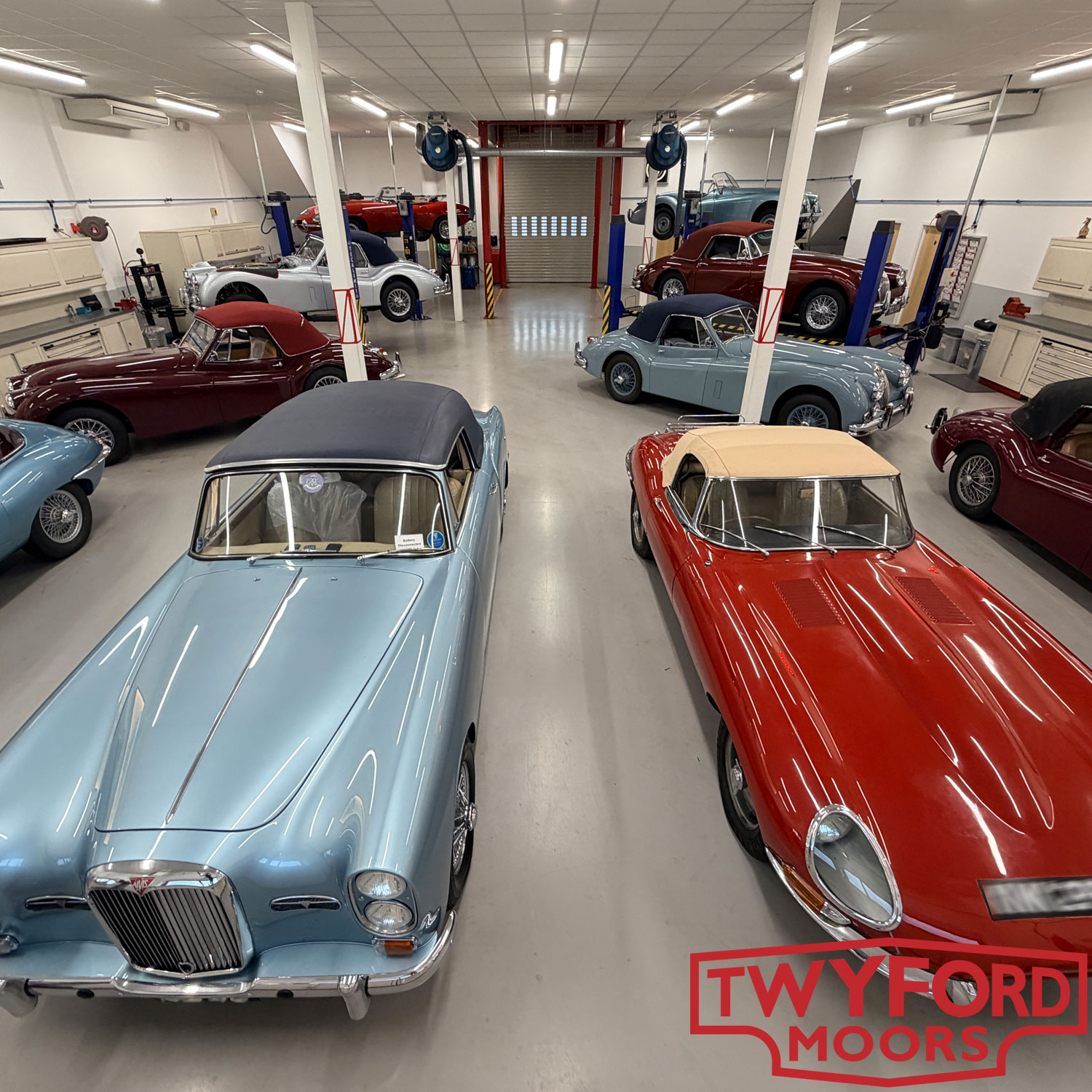
Pictured here is one of the more creative repairs we've come across recently: an old Vitalite margarine tub repurposed inside an E-Type air filter housing. In fairness, it has done exactly what it was intended to do, and judging by the age of the branding, it has probably been doing so for many years.
It's certainly inventive, and you can't help but admire the ingenuity. But is it an example of inspired recycling, or a classic case of sacrilegious bodgery? We'd love to hear what you think.
Jaguar XK120 "Death Wobble"
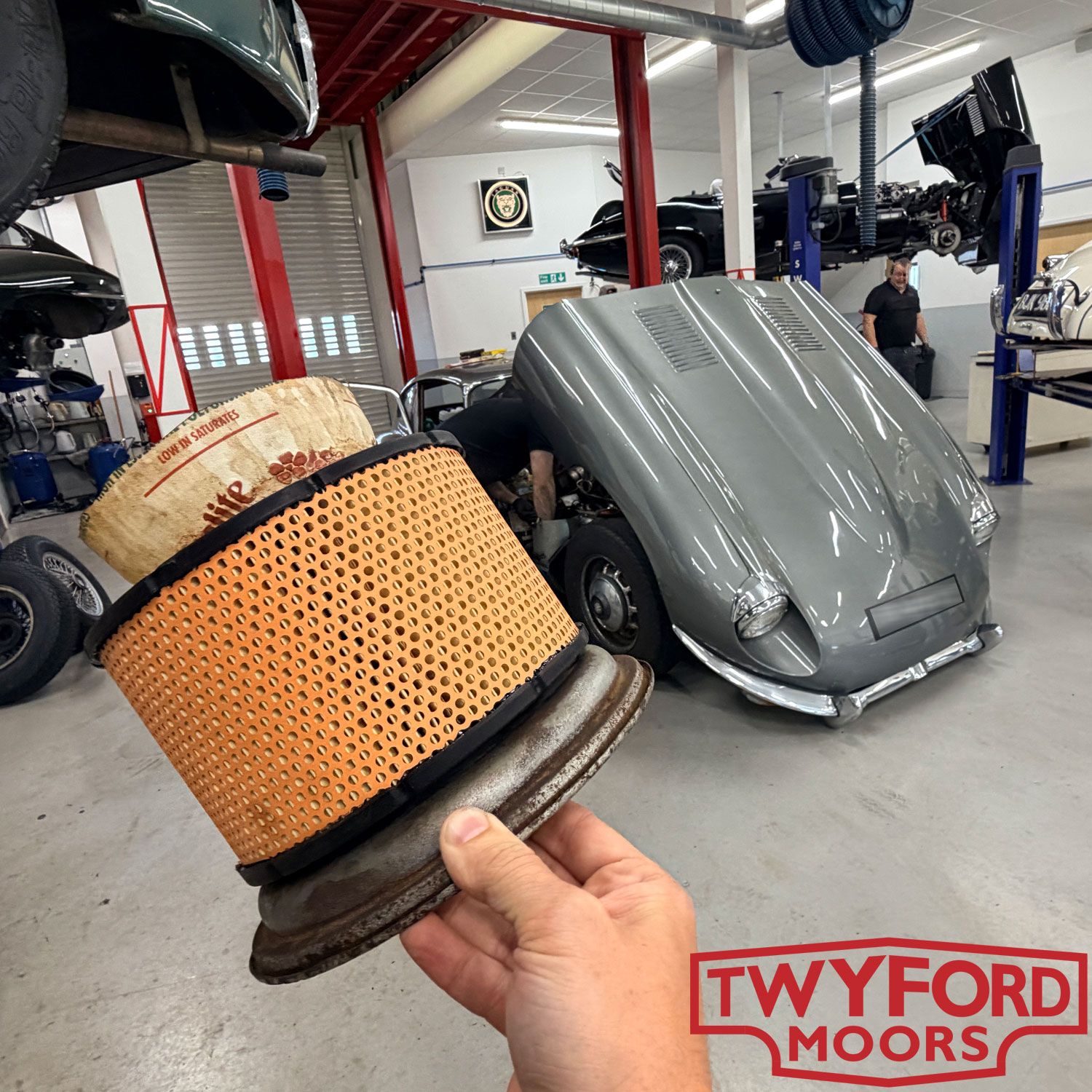
We've seen quite a run of Jaguar XK120s arriving at the workshop recently, all suffering from the infamous "death wobble". If you've experienced it, you'll know exactly what we're talking about.
The death wobble is a violent front-end oscillation, usually triggered by hitting a bump or uneven section of road. The front wheels begin shaking from side to side, sending the steering wheel into an alarming wobble. On today's roads—with potholes, drain covers and uneven surfaces almost everywhere—it's easy to trigger if the car isn't correctly set up. If it happens, the instinct is often to try and drive through it, but that rarely works. In most cases, the only solution is to slow down significantly or even come to a complete stop.
The good news is that this isn't a characteristic owners simply have to live with. A properly maintained and correctly set-up XK120 should not suffer from death wobble. The design of the XK120's steering box and idler system, together with its weight distribution, makes it more susceptible than later rack-and-pinion Jaguars, but the underlying causes are almost always mechanical. Worn steering or suspension components, incorrect suspension geometry, seized or over-greased joints and poor previous repairs can all contribute.
The lesson is simple: specialist knowledge matters. When correctly rebuilt and adjusted, an XK120 is a wonderfully rewarding car to drive.
Modern XKs
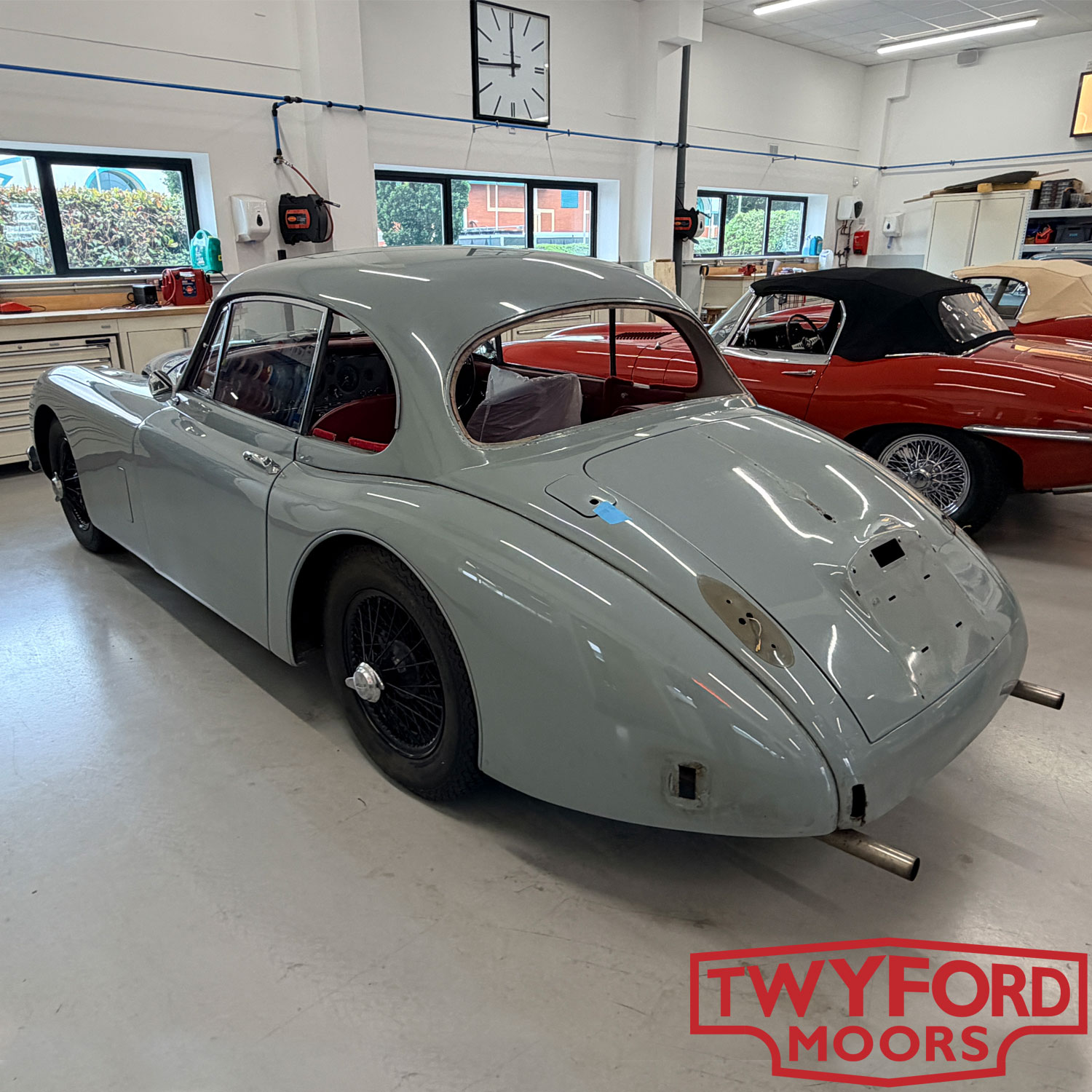
Pictured here are two generations of Jaguar's grand tourers: the XK8 (X100) and its successor, the XK (X150). Although considerably newer than the classic Jaguars we've traditionally specialised in, we've seen a growing number of enquiries from owners looking for experienced specialists to care for these cars.
There appears to be a genuine gap in the market. Main dealers are understandably focused on current models, while many independent garages are reluctant to take on increasingly complex Jaguars. Fortunately, there's a surprising amount of Jaguar heritage carried through these cars, particularly the X100. Its rear suspension design shares many of the same principles as the legendary independent rear suspension found beneath the E-Type and XJS—a testament to just how advanced Jaguar's engineering was in the 1960s.
As these cars age, corrosion is becoming one of the biggest challenges, particularly on the X100. We recently completed a full suspension overhaul, carried out structural repairs to the underside and finished the job with a thorough clean, detailing and protective wax treatment to help preserve the car for years to come.
Whether your X100 or X150 requires servicing, mechanical repairs, corrosion repairs, suspension work, welding or preventative maintenance, we'd be delighted to help. If you own one of these modern classics, please get in touch to discuss your requirements.
Jaguar E-Type V12 Timing Chain
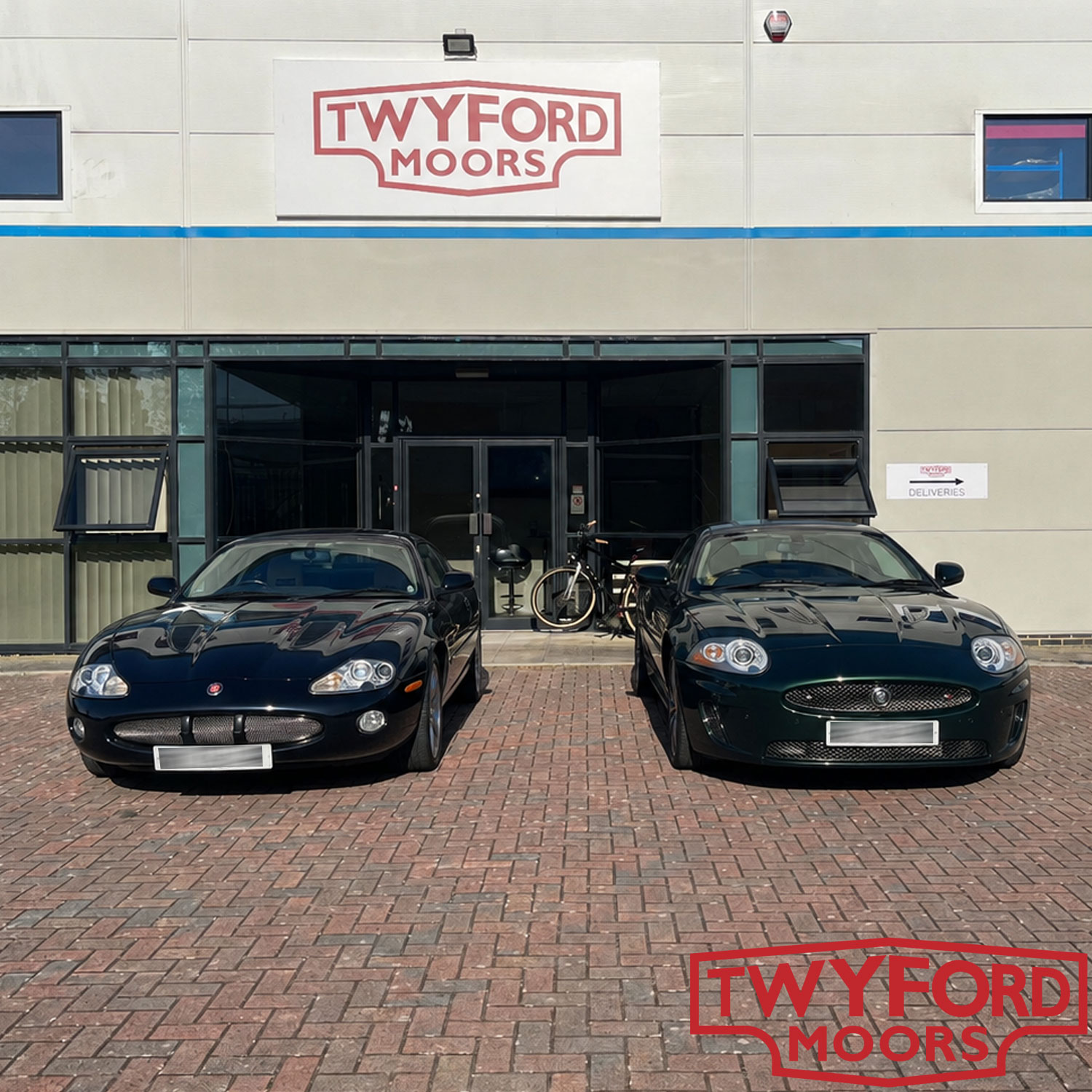
This rather mechanical-looking photograph shows the front of a Series 3 Jaguar E-Type V12 engine with the timing covers removed. The car came to us to investigate a number of oil leaks that were allowing oil fumes into the cabin. The most significant leaks were coming from the camshaft carriers, which are separate castings from the cylinder heads, along with several smaller leaks elsewhere on the engine.
While inspecting the engine and planning the repairs, our engine builder noticed a pronounced timing chain rattle. It's surprisingly common for owners not to realise their engine doesn't sound quite right, as these problems often develop gradually. Unlike us, who spend every day around these cars, most owners only have one V12 E-Type, so they have little opportunity to compare how a healthy engine should sound.
After discussing our findings with the owner, we agreed to replace the timing chain and tensioner while carrying out the oil leak repairs. Because much of the engine had already been dismantled, we were able to save a considerable amount of labour by completing both jobs together.
Once inside the engine, we discovered the timing chain tensioner had actually broken and the camshaft timing was one tooth out. Left unchecked, this could eventually have led to a much more serious failure. With a new chain, tensioner and correctly set cam timing, the engine is now smooth, quiet and delivering the performance Jaguar intended.
MGB GT V8 Servicing
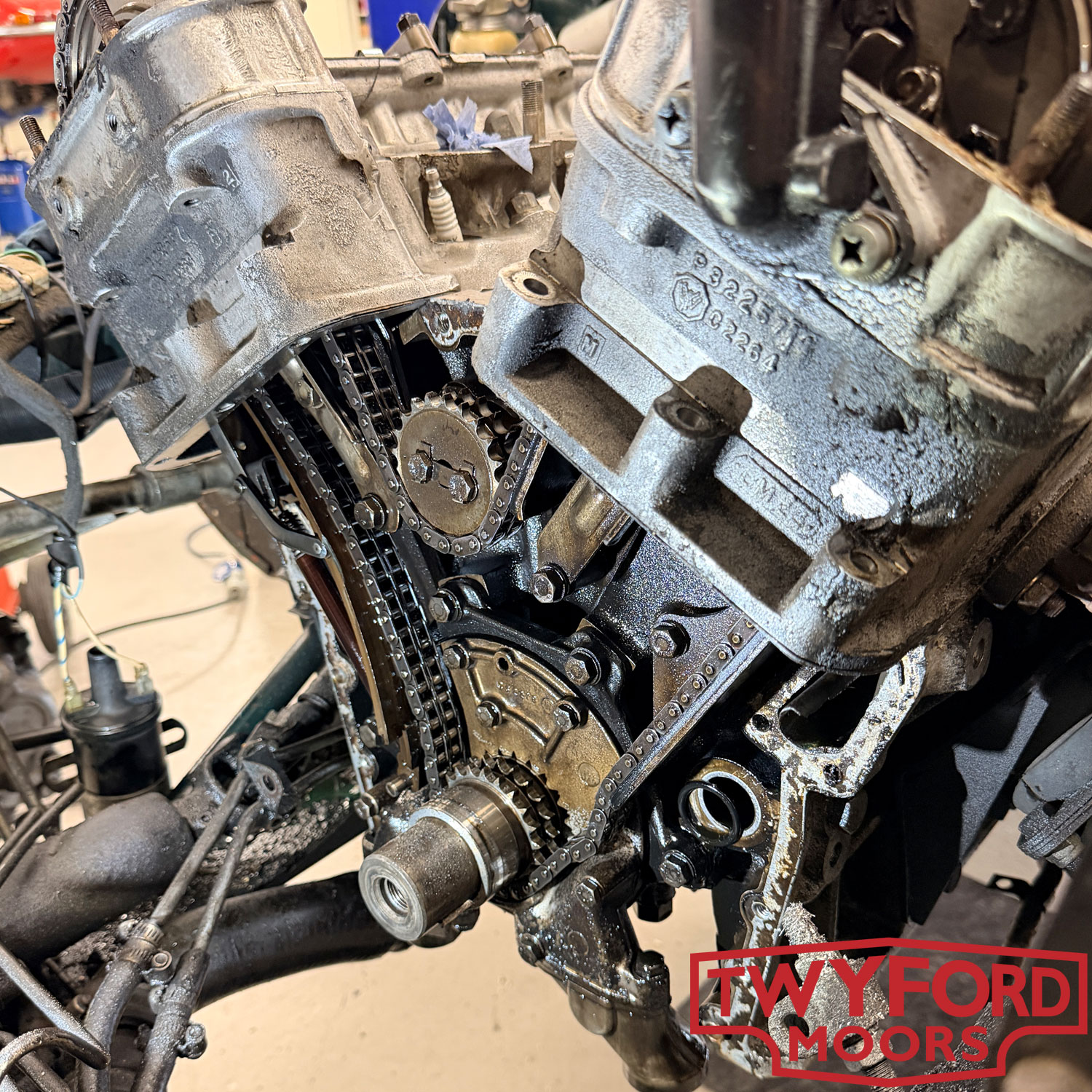
We hadn't seen this lovely MGB GT V8 for a couple of years. When we first moved into our current workshop, the owner stored the car with us during a house move before asking us to recommission it after an extended period off the road. At that time, we carried out a full service, MOT and careful tune-up.
After a couple of years of maintaining the car himself, the owner decided it was time to bring it back for another service, MOT and inspection. His reason was simple—he said the car had never run as well as it did after we tuned it previously.
Although we're best known as Jaguar specialists, our workshop is home to a wide range of experience and interests. Between us we have former race mechanics, American V8 specialists, dedicated V12 experts and several team members with a real passion for MG, BMC, Morris and many other classic British marques. That breadth of knowledge allows us to confidently care for a wide variety of classic cars, not just Jaguars.
On this visit we completed the scheduled service, prepared the car for its MOT and rectified a few minor faults. We also identified several items that will need attention in the future. After discussing the options, the owner decided to postpone that work for budget reasons. We completely understand that priorities and budgets vary, and we're always happy to help owners plan maintenance in a way that keeps their cars safe, reliable and enjoyable without unnecessary expense.
Jaguar XK150 Paintwork Refresh
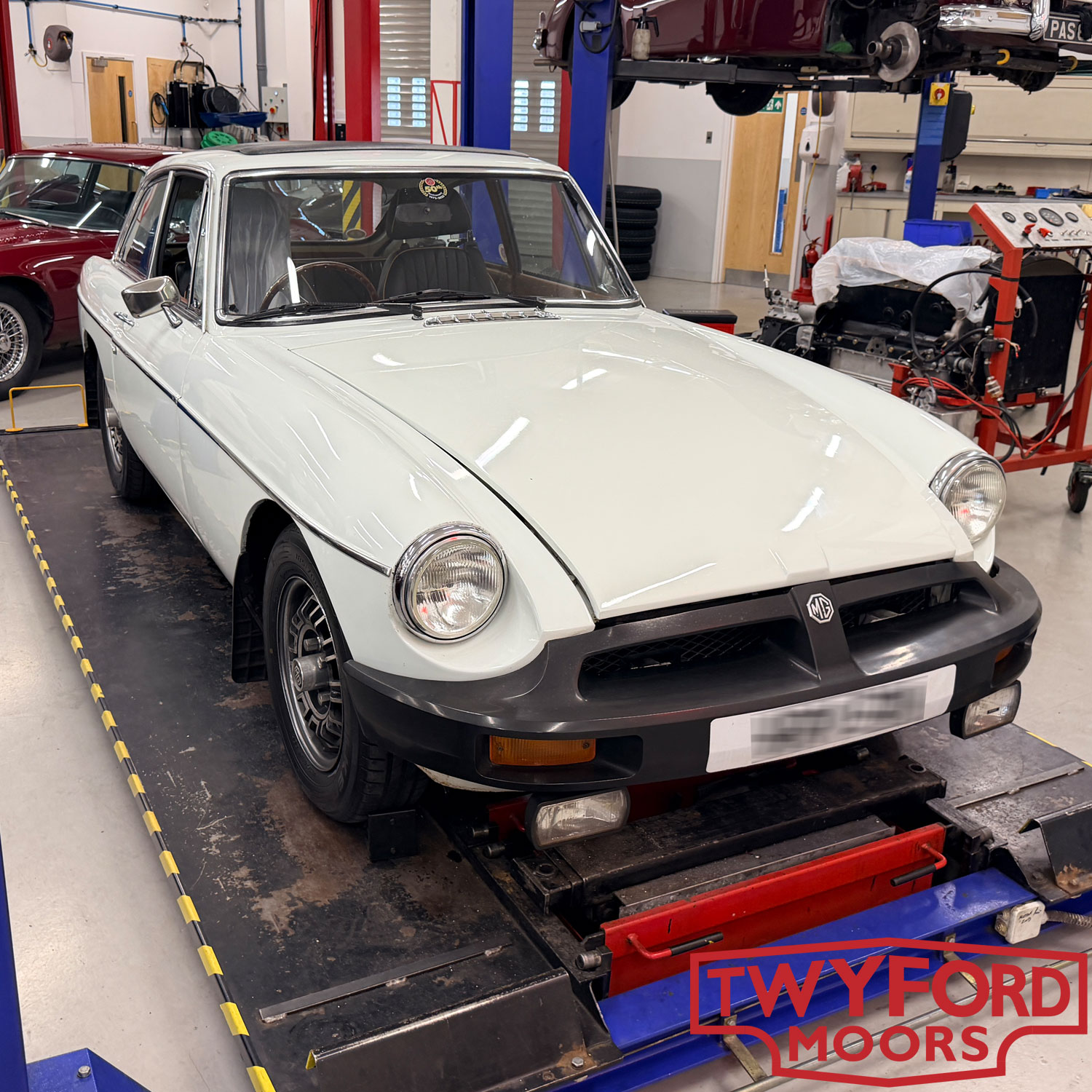
We've been looking after this delightful Jaguar XK150 Fixed Head Coupé for many years and, I have to admit, it's one of my personal favourites. I've always had a soft spot for XK150 FHCs, but the specification of this particular car is especially appealing. The elegant grey paintwork, painted wire wheels and understated styling make it a truly handsome Jaguar.
The car recently returned for its annual service and MOT after another successful year of touring and enjoying the open road. Alongside routine maintenance, we'll be replacing a set of ageing seatbelts and renewing several fuel hoses.
You may also notice that much of the exterior brightwork has been removed. That's because the car is currently being stripped to allow a programme of cosmetic paintwork. In this photograph, the rear bumper, lights, boot furniture and rear screen have already been removed, and the rear wings will follow shortly.
Fortunately, there are no major structural issues to address. However, more than twenty years after its restoration, the car has inevitably picked up a few stone chips, minor dents and scratches. We also found the early stages of corrosion where the rear wings bolt to the body—a well-known area on Jaguar XKs.
Rather than allowing these small imperfections to develop into larger problems, the owner has chosen to tackle them now. It's a sensible investment that will keep this beautiful XK150 looking its very best for many years to come.
Jaguar E-Type Series 3 Fixed Head Coupés
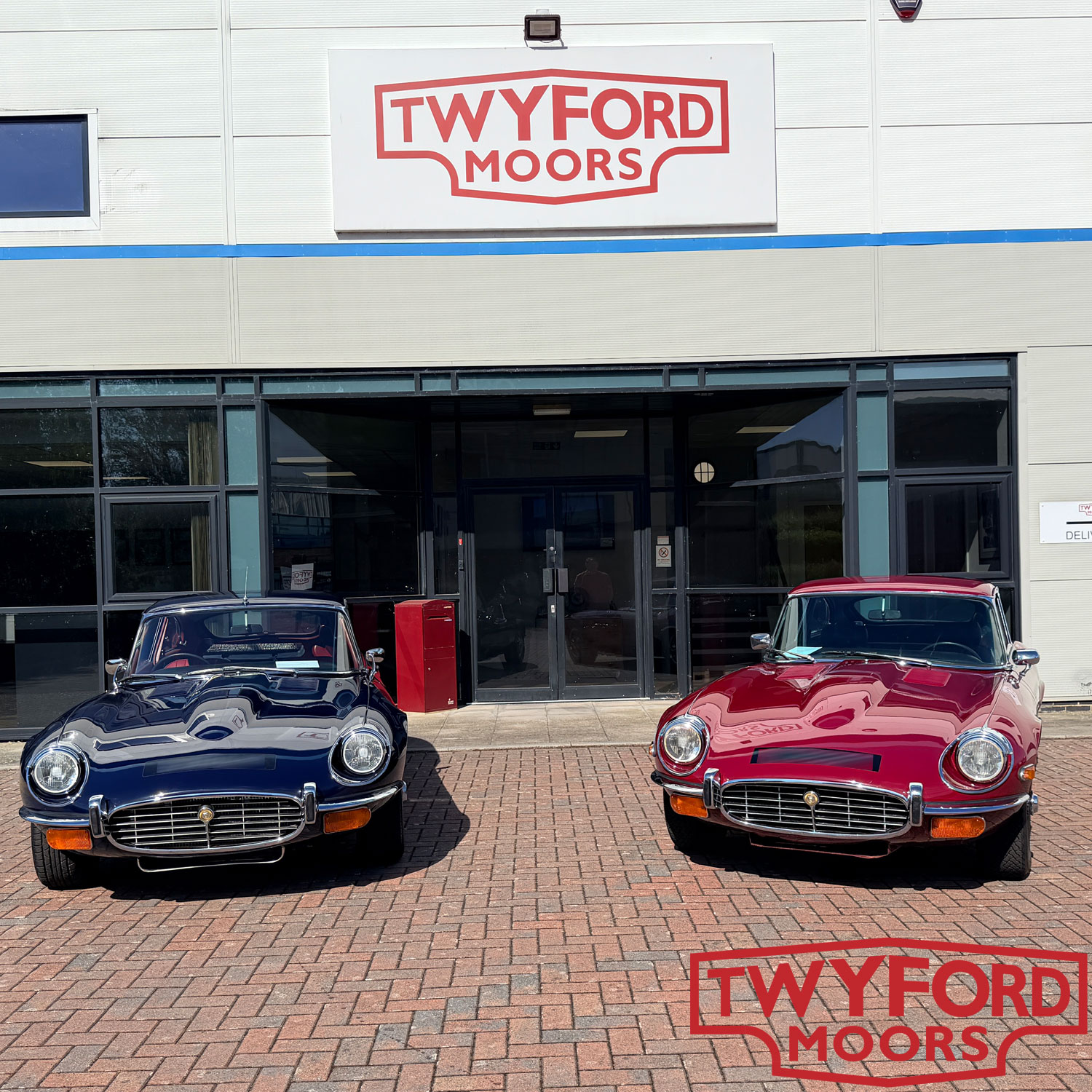
The other day we found ourselves with this wonderful pair of Jaguar Series 3 E-Types parked outside the workshop awaiting collection. At first glance they appear almost identical, but they each tell a very different story.
The red car is a left-hand-drive import that regularly stretches its legs on European tours. Having been in the same family for many years, it has accumulated countless memories and adventures along the way. Every mark on the interior is part of the car's history, telling the story of a Jaguar that has been thoroughly enjoyed.
By contrast, the blue car presents almost as new. It recently visited us for a series of cosmetic improvements as the owner wanted it looking its absolute best. While it was here, we also repaired leaking camshaft cover gaskets, carried out a full tune-up and fitted a period-style radio that offers modern functionality without compromising the classic appearance of the dashboard.
It was pure coincidence that both owners happened to collect their cars on the same day, giving us the perfect opportunity to photograph the pair together before they headed off in different directions.
The Series 3 E-Type has long lived in the shadow of the earlier six-cylinder cars, but we believe that's beginning to change. Properly maintained, these V12 grand tourers are wonderfully smooth, effortless to drive and represent outstanding value in today's classic car market.
Jaguar E-Type Engine Rebuild
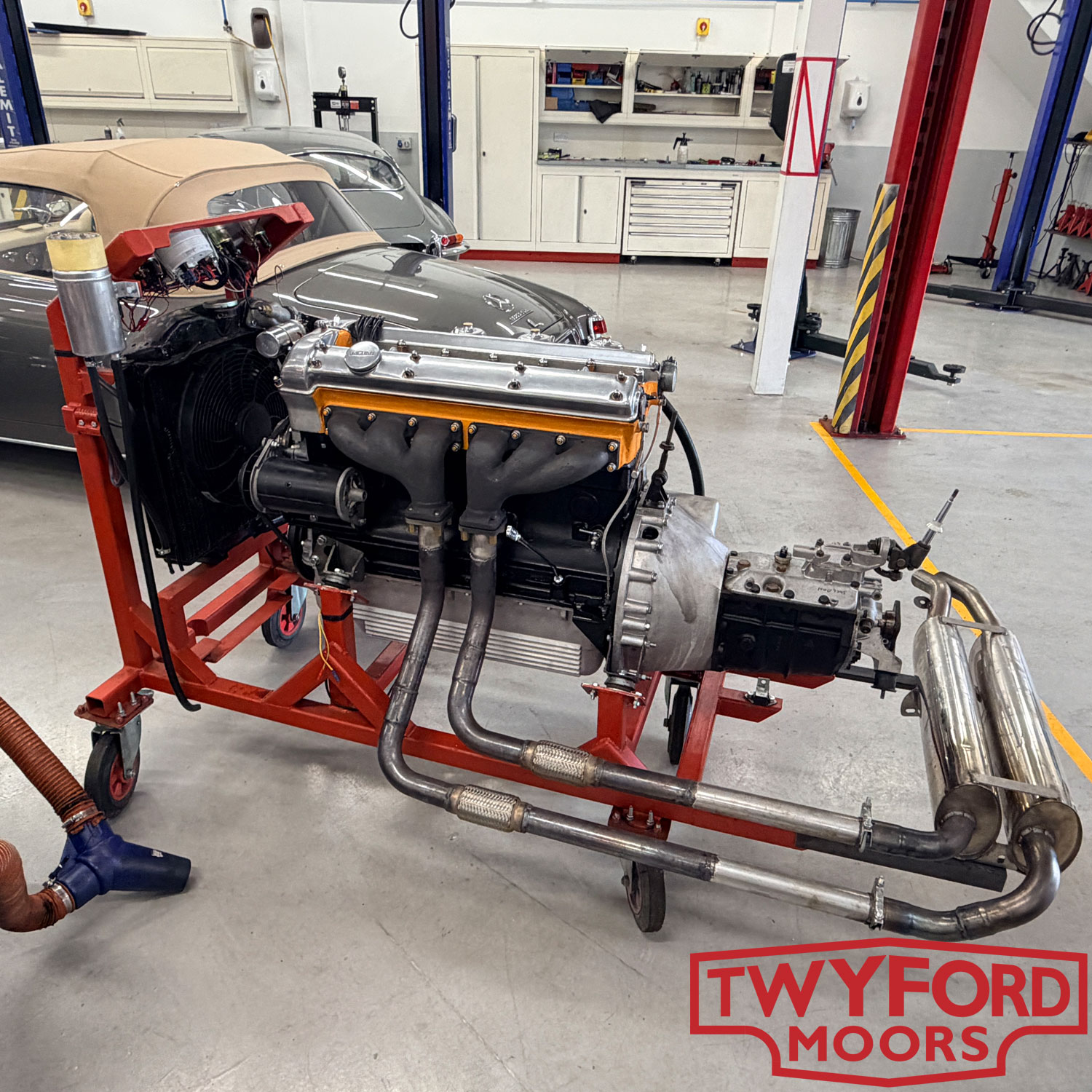
Pictured here is a 3.8-litre XK engine that has just undergone a full rebuild for an early Series 1 Jaguar E-Type. Enthusiasts will notice the distinctive pumpkin-coloured cylinder head, a feature shared with the earlier XK150 engines.
This particular engine has been built to our fast road specification. Every rotating component has been carefully lightened and balanced, complemented by fast road camshafts, larger valves and a gas-flowed cylinder head. The aim isn't to create a highly strung racing engine that only comes alive at high revs, nor one with an unruly idle. Instead, we've developed a specification that delivers smooth power, strong low-down torque and effortless performance exactly where it's most enjoyable on the road.
Over many years we've refined what we believe is the ideal combination of upgrades to produce an XK engine that is not only more powerful, but also practical, reliable and enjoyable to drive.
Performance is only part of the story. We also incorporate numerous reliability improvements, including an uprated oil pump, a larger-bore oil pick-up and improved oil feed lines. One upgrade we're particularly proud of is our one-piece rear crankshaft oil seal. XK engines have a well-earned reputation for leaking from the rear main bearing, and while several aftermarket solutions exist, we've found that a high-quality one-piece seal offers by far the best long-term results.
Jaguar XJS
Earlier we mentioned that we believe the Series 3 E-Type has been underrated for many years. If that's true, then the Jaguar XJS is perhaps even more overlooked.
It's remarkable that these cars still represent such outstanding value. You get timeless styling, genuine four-seat grand touring comfort and the choice of a silky smooth straight-six or one of Jaguar's legendary V12 engines. They're comfortable, refined, practical and many even feature luxuries such as air conditioning. The only real downside is the fuel bill—but that's hardly a surprise.
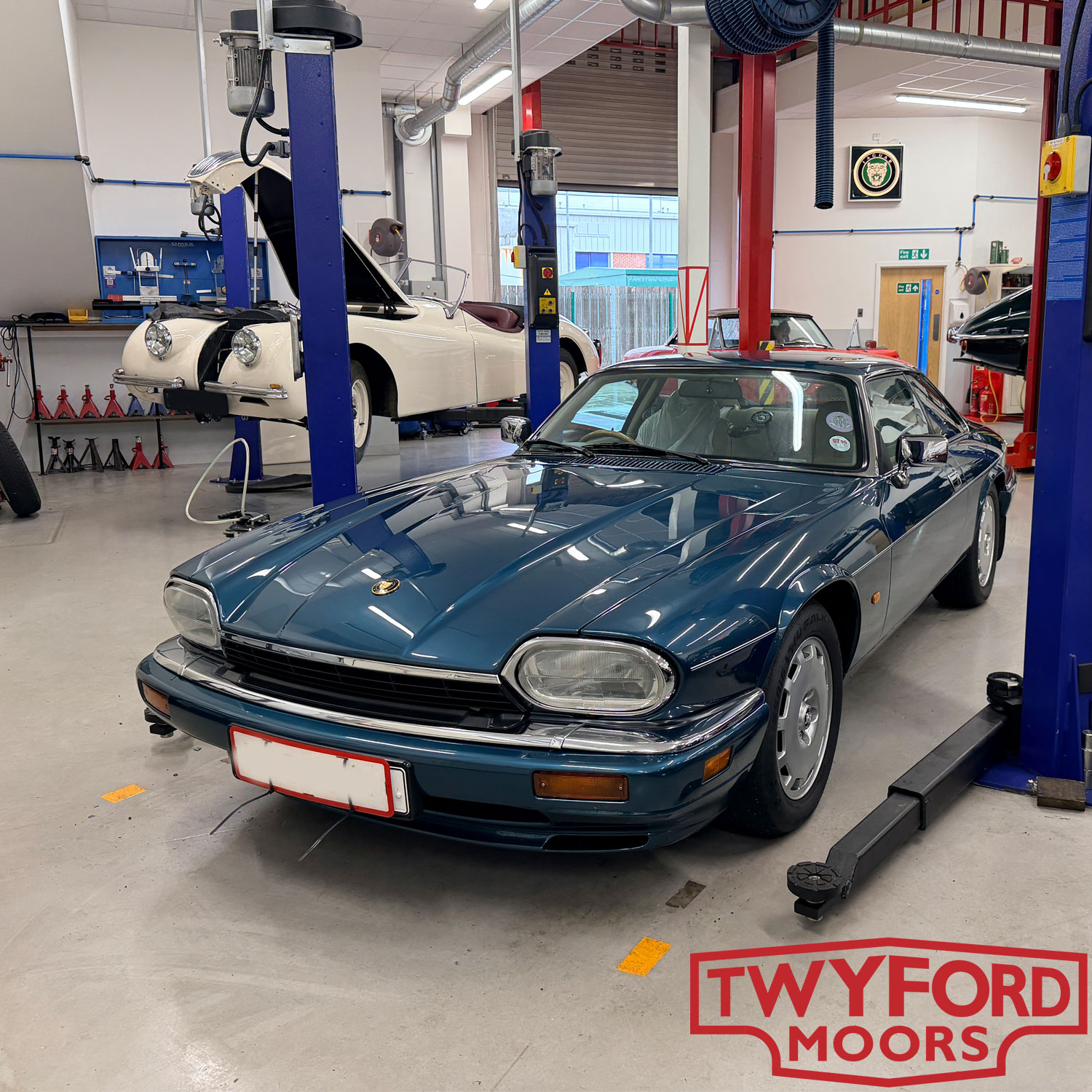
This particular XJS is one of the finest we've seen. In fact, when it was on the lift I commented to the owner that I'd never seen such a clean underside on one of these cars.
The owner brought the car to us with an irritating knock from the rear suspension that several specialists had failed to cure despite replacing bushes and rear shock absorbers. Fortunately, experience counts. Our technician quickly identified that the sleeves inside the upper shock absorber mountings were missing, allowing the shocks to move under load. It's an easy detail to overlook if you don't know these cars inside out.
With the correct sleeves installed and a thorough road test completed, we're pleased to report that the mysterious knock has finally been eliminated.
Jaguar XK140 Tour Preparation
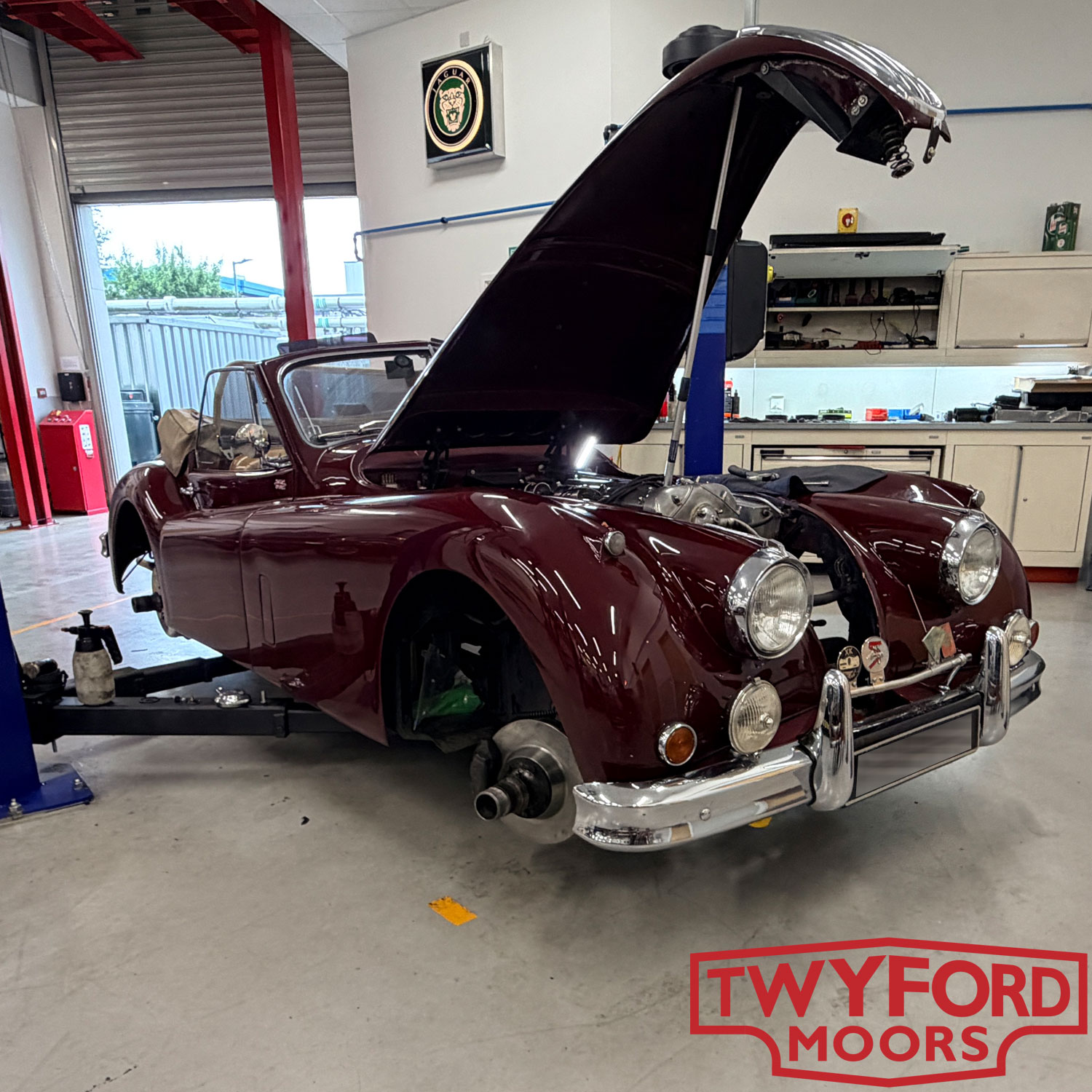
We've been looking after this Jaguar XK140 Drophead Coupé for the best part of twenty years. I suspect it must be one of the most widely travelled XK140s in existence, having toured extensively across Europe and much further afield.
The car now belongs to the grandson of the gentleman who originally undertook those adventures. Together with his grandmother, he's determined to continue using the car exactly as intended, creating a new generation of memories. Before its next trip, the XK has returned to us for a comprehensive pre-tour inspection and preparation.
This is a wonderfully thought-out touring car. Under the bonnet sits a fast road 3.8-litre engine with triple carburettors, providing effortless performance. One battery box has been repurposed to carry spare parts and engine oil, while bespoke storage behind the seats neatly houses tools and additional spares.
Further modifications include an auxiliary switch panel, a custom blade-fuse board, an integrated radio system, map light, map drawer and numerous other practical upgrades designed to make long-distance touring easier and more reliable.
We love cars like this because every modification has a purpose. Rather than spending its life tucked away in a garage, this XK140 has travelled the world, creating memories for generations of the same family. We hope it continues to do exactly that for many years to come.
E-Type Trio
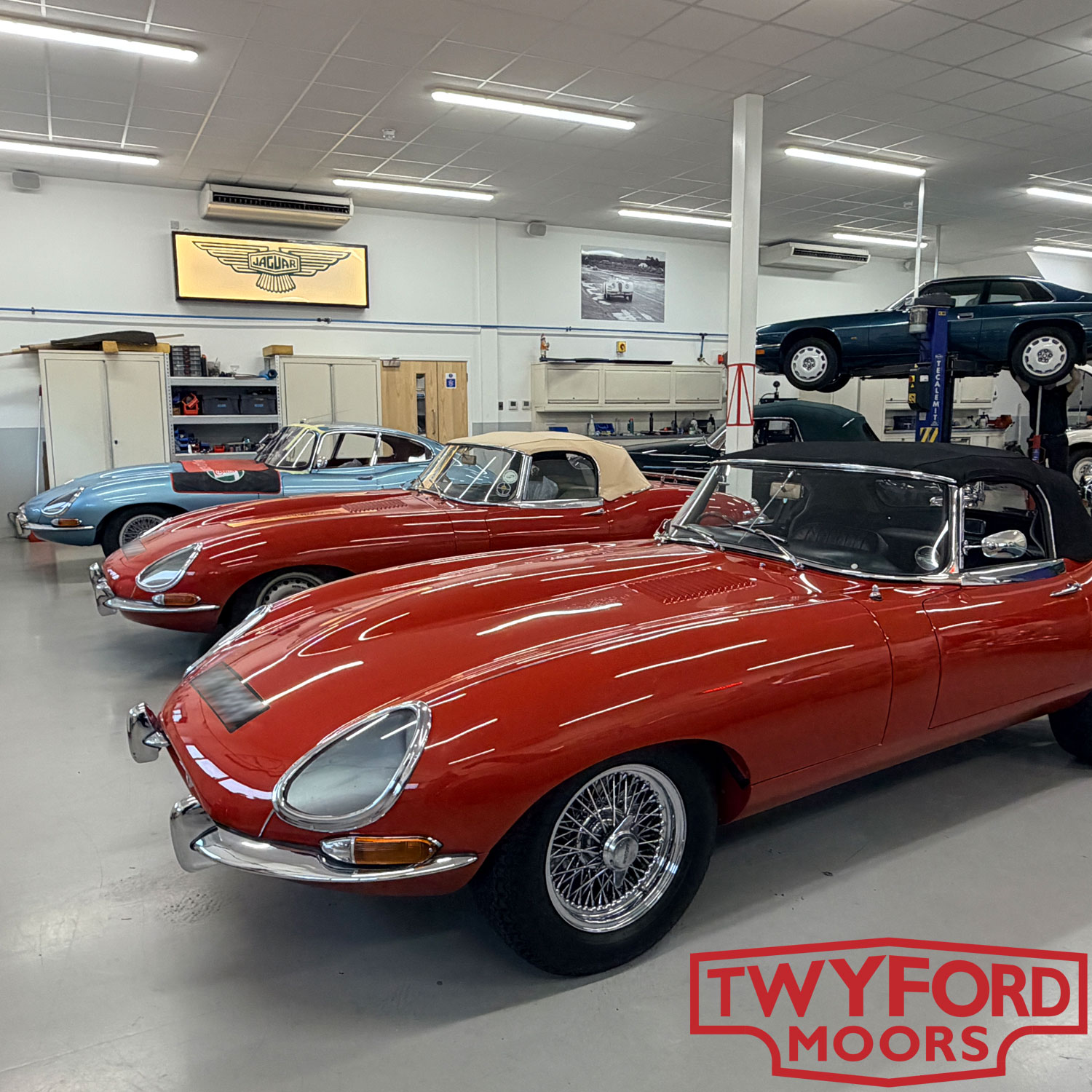
I couldn't resist taking this photograph of three beautiful Series 1 Jaguar E-Types lined up together in the workshop. In the background you might also spot an XK150 Drophead Coupé nearing the completion of its restoration and an XJS on one of the lifts. It's a wonderful sight and a reminder of just how fortunate we are to spend our days surrounded by such special cars.
The red E-Type in the foreground had been with us for its routine annual service and inspection. It's a beautifully maintained example that's driven regularly, so it required very little attention beyond its scheduled maintenance.
The second red car, fitted with the cream hood, had a very different story. It had spent many years off the road before arriving with us for recommissioning. Fortunately, it was immediately obvious that the car had been in excellent condition before being laid up and, just as importantly, had been stored somewhere clean and dry.
As expected, recommissioning involved replacing fluids, renewing several rubber hoses and seals, lubricating the chassis thoroughly and fitting a new radiator and header tank. With that work now complete, this lovely E-Type is ready to return to the road, exactly where it belongs.
Mercedes 190 SL Fuel System Repairs
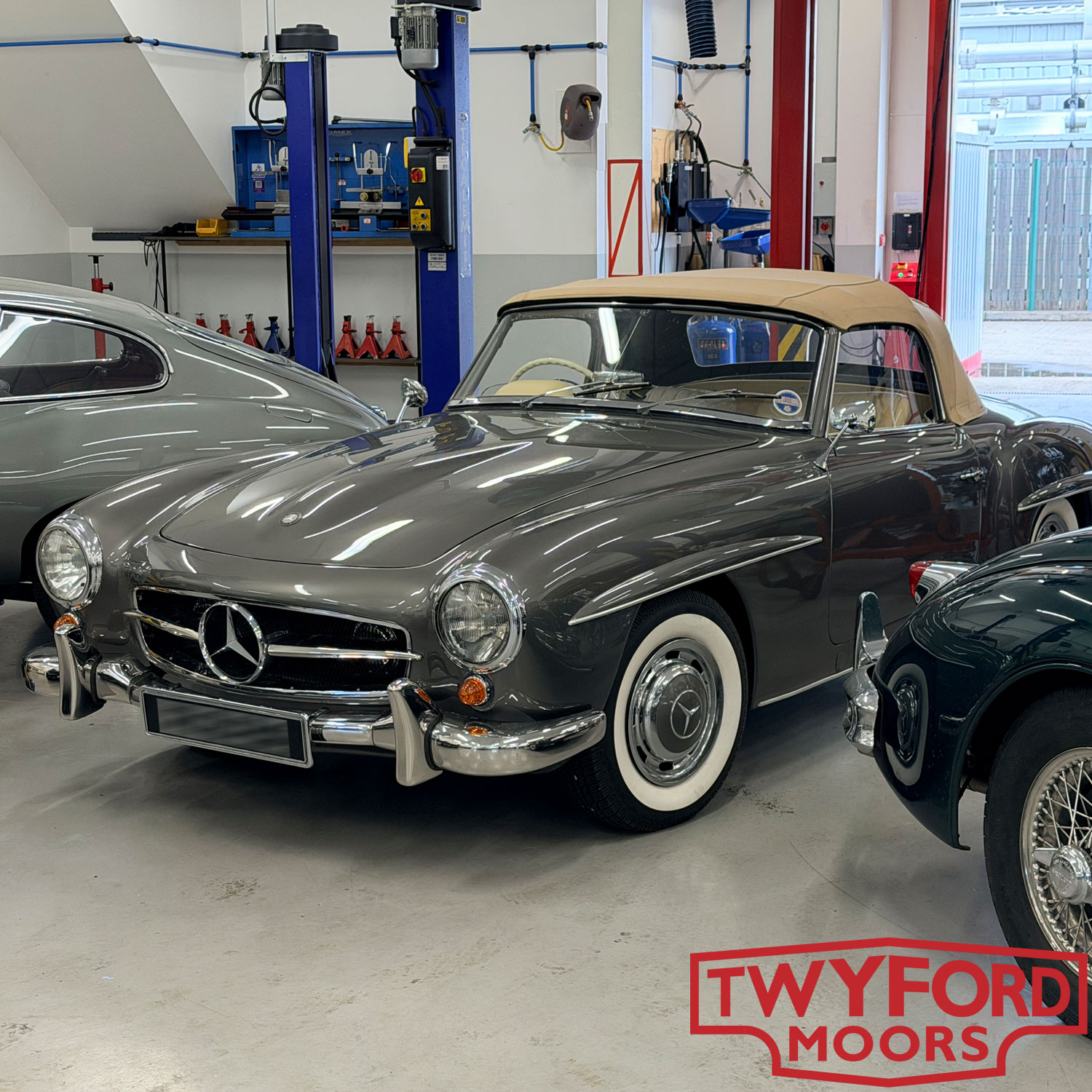
It was a pleasure to welcome this beautiful Mercedes-Benz 190 SL back into the workshop recently. We first looked after the car earlier this year during its annual service. After spending some time off the road, it returned with intermittent poor running caused by a fuel supply problem.
Following a thorough inspection of the fuel system, we traced the fault to the effects of modern petrol containing increased levels of ethanol. Unfortunately, this is becoming an increasingly common issue across many classic cars. Ethanol attracts moisture, can attack older rubber components and often loosens deposits that have built up inside fuel tanks and fuel lines over many years. The result is blocked filters, restricted fuel flow and unreliable running.
Once we'd identified the cause, we cleaned the affected components, rectified the fuel supply issues and carried out the necessary checks to ensure the engine was once again performing exactly as it should.
The result is a beautifully smooth-running 190 SL that's ready to be enjoyed once more.
As modern fuels continue to evolve, we're seeing more classic cars affected by ethanol-related problems. Regular servicing, together with preventative maintenance of the fuel system, can significantly reduce the risk of inconvenient breakdowns and help keep these wonderful cars running reliably for years to come.
Jaguar C-Type Wedding Car
Our Jaguar C-Type replica recently had the honour of serving as a wedding car. Perhaps not the most conventional choice, but for this lovely couple it was the perfect one.
As is often the case with classic cars, however, things didn't go entirely according to plan. While carrying out our routine pre-event checks just a few days before the wedding, the brake master cylinder decided it had reached the end of its working life.
This particular C-Type was built by Jim Marland of Proteus fame in the early 1980s as a proof-of-concept car, meaning some of its components aren't immediately identifiable. The original master cylinder appeared to have been fitted when the car was built—an impressive service life in itself. After a little detective work, we traced it back to an early 1980s MG Metro. Unfortunately, replacements and seal kits are no longer available.
Further research revealed that a very similar cylinder was fitted to 1990s Minis. We ordered one overnight, crossed our fingers and, after a little careful modification, it fitted perfectly.
With the brakes restored, the final checks completed and the car freshly cleaned and polished, our C-Type made it to the church exactly on time.
We were delighted to play a small part in the couple's special day, and I'd like to thank the whole team for pulling together to make sure everything was ready when it mattered most.