Shifting into top gear – workshop update
What a fabulous spring we had! The weather really has been played ball, so I hope plenty of you have been out and about in your classics. I certainly have, taking Reggie the XK140 for a run to Brooklands and to some other local events in an effort to rack up some miles while testing a few new upgrades.
We recently held an open day for some of the local club groups and we were blown away by how many wonderful cars turned up. We filled both our own and our neighbours’ car parks before spilling out onto the road outside the building (a very quiet dead-end road with no traffic other than us on a weekend). Thank you very much to everyone who came along. We are planning to hold another event next spring, so if you are interested, please do let us know and make sure you are signed up to our mailing list.
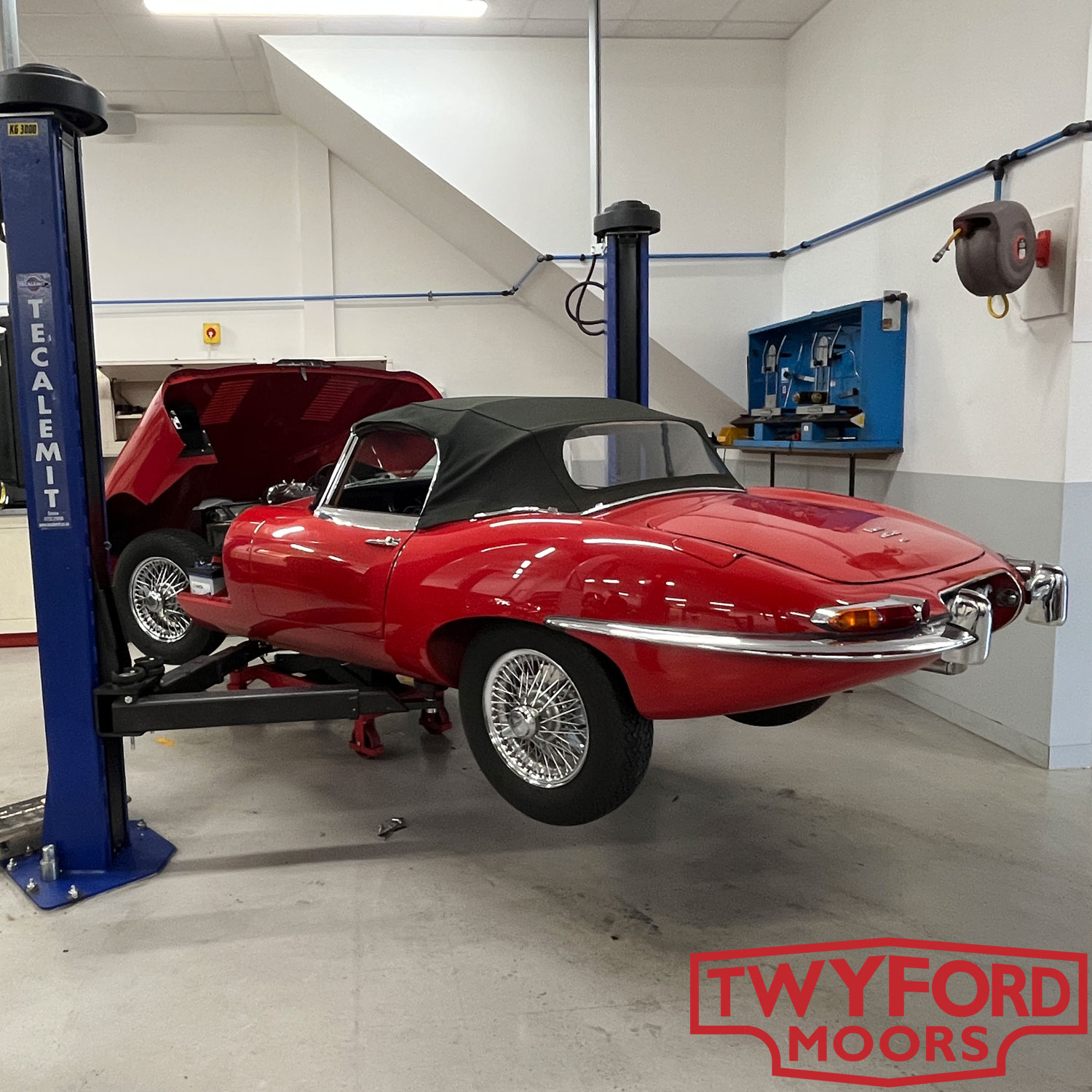
As you can see from this photo of the main workshop, with seven E-Types and six XKs (plus another three cars next door and thirty upstairs), we are very busy now that summer is fast approaching. We have shifted up into top gear, with all hands on deck to keep up with demand.
In this update, we have plenty of XKs, E-Types, an Alvis, engine rebuilds and upgrades.
Jaguar XK120 cooling fan repair
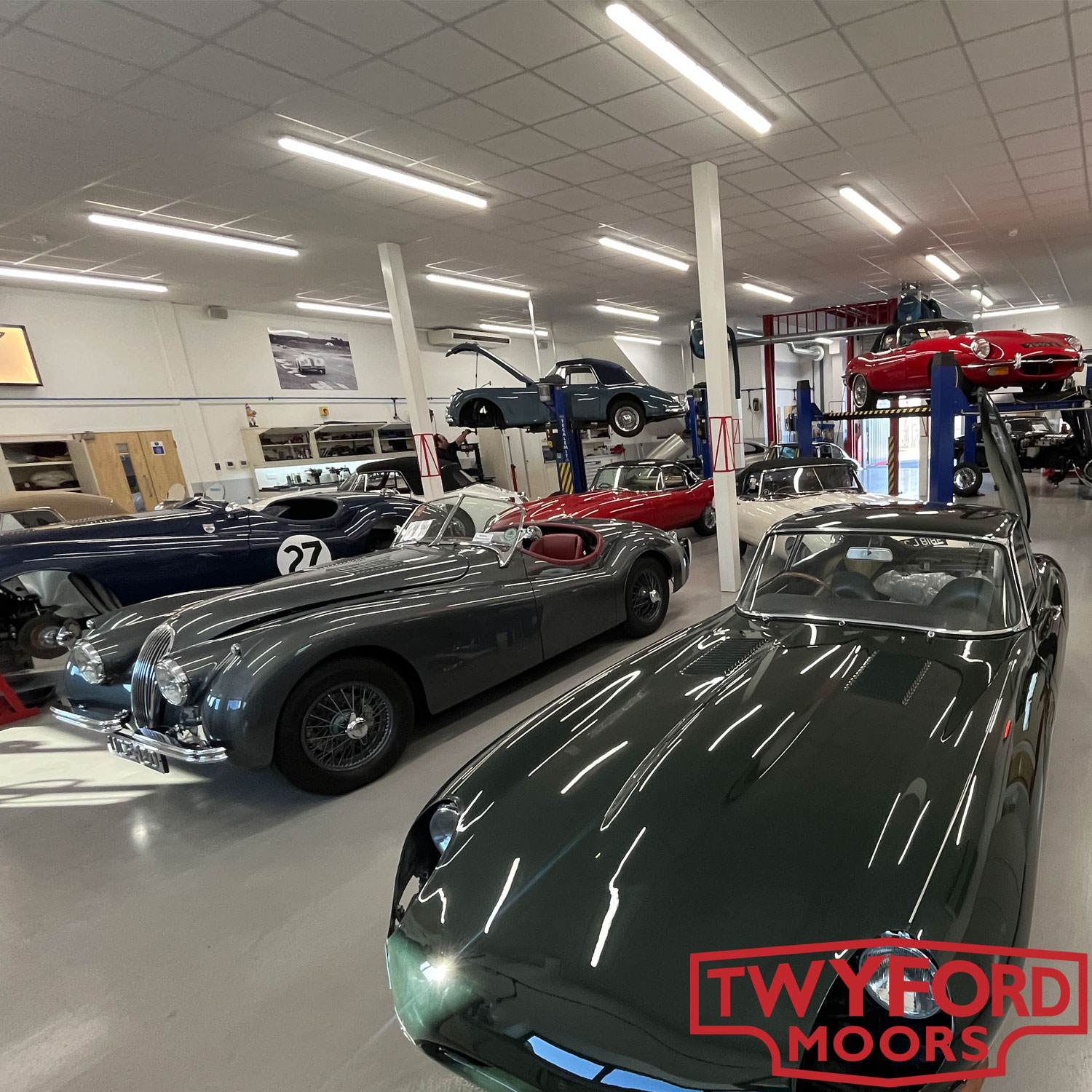
This Jaguar XK120 OTS belongs to a very good long-term customer. The car is used regularly and frequently takes part in international tours. To assist with this, it has been extensively upgraded, including a five-speed gearbox, disc brakes, an alternator and an electric cooling fan. While heading out on just such a tour, the electric cooling fan controller failed and, as a result, the fan stopped switching on automatically. This was an older-style Kenlowe controller which had simply reached the end of its life. After a brief phone call with us for guidance, we were able to remind the owner that, when we first started looking after the car, we had added a manual override switch for the fan to mitigate against precisely this sort of situation.
With the fan operating via the manual switch, the car was able to complete the tour without issue and has now returned to us for a new fan controller. With that completed, the car can head back out onto the road for the rest of a summer full of fun.
Alvis TE21 power steering
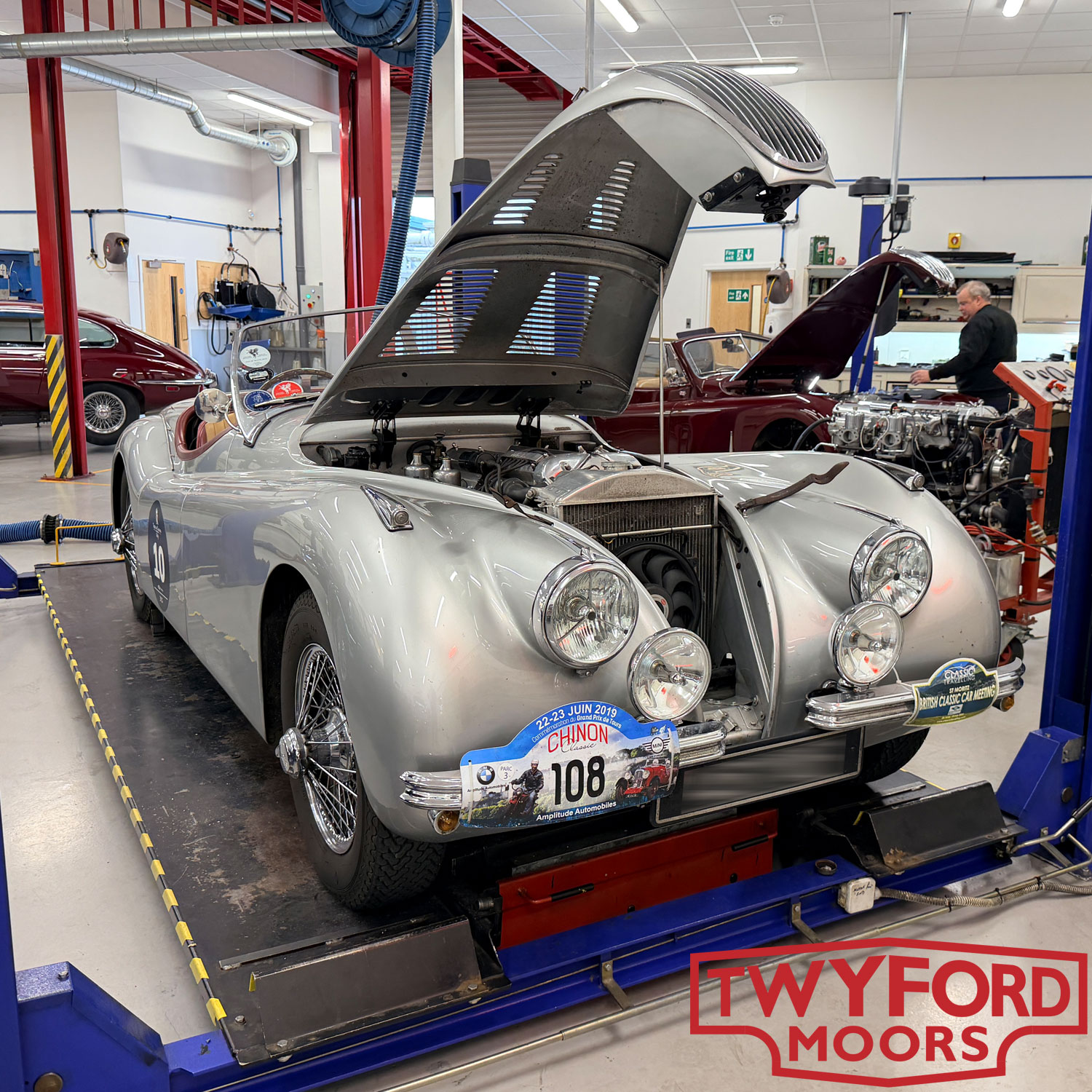
We have looked after a few of these magnificent Alvis models (Alvises? Alvii? Alvisisis?) over the years. They do a wonderful job of looking elegant despite being such large cars, and I am always impressed by the engineering of the hood mechanism. To drive, when in good condition, these are delightful cars, although they do have rather heavy steering by modern standards. To alleviate this, this particular car had electric power steering fitted by another specialist some ten years ago. The system was very neatly installed and still works well, but the owner finds that the steering wheel sits slightly too close for comfortable driving. Although the wheel can be adjusted in and out, it simply cannot be moved far enough away.
To resolve this, we are removing the upper section of the steering column and shortening it to suit the owner’s requirements. We will retain the adjustability, so the steering wheel will still be able to move outwards for other drivers, while also allowing it to be adjusted much further away from the driver when required.
Jaguar XK engine rebuilds
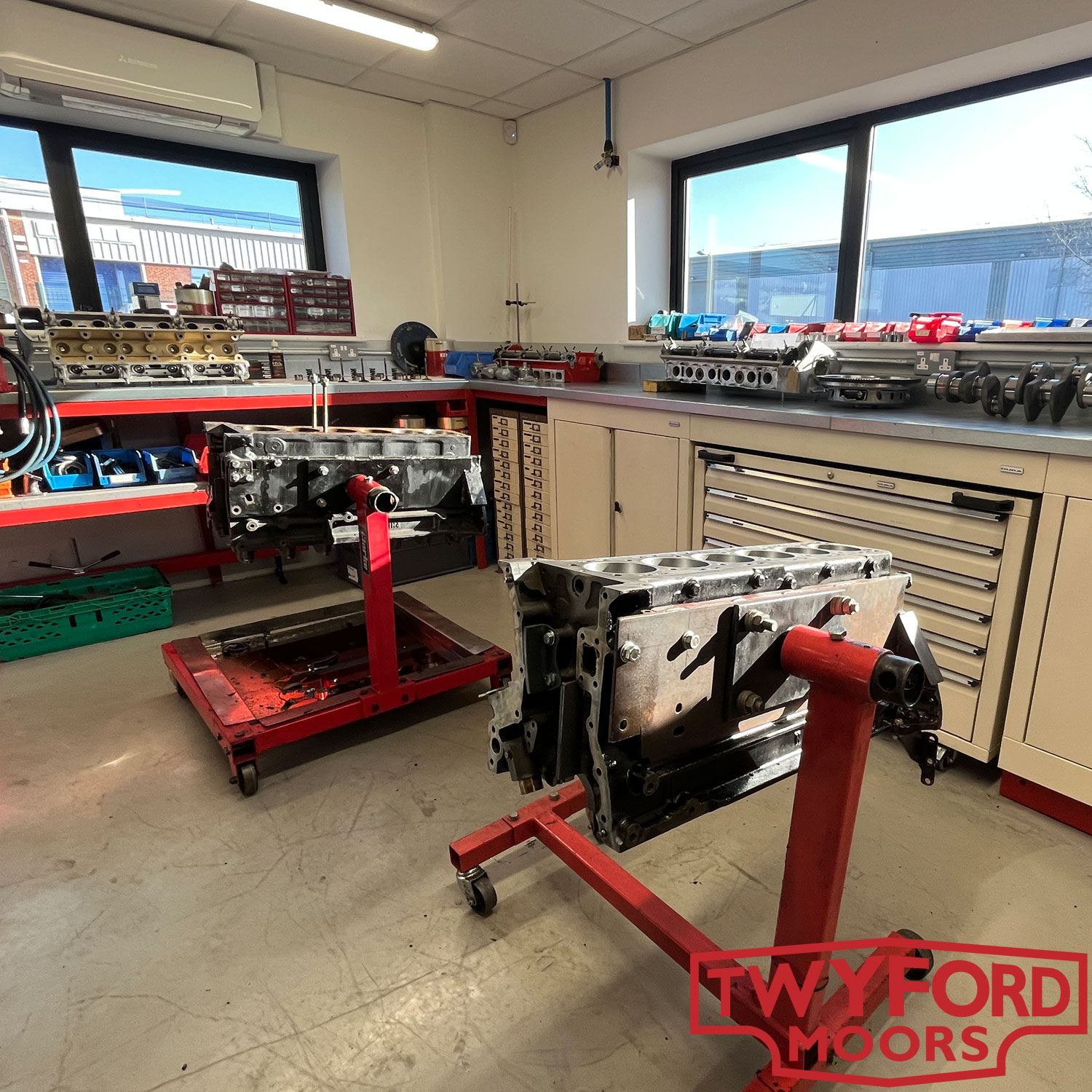
As mentioned in our previous update, we have had a real run on engine rebuilds lately, and this continues. Here is a shot of our engine-building room, with an XK 3.8 engine being assembled in the foreground and a 4.2 engine being stripped in the background. On the workbench are several cylinder heads, various valve gear components, a clutch and a crankshaft. Just out of sight is a carefully organised racking system with a space allocated for each engine currently in build. In addition to the full engine rebuilds presently underway, we also have a number of cylinder head rebuilds in progress.
We can undertake everything in-house, from full engine rebuilds to standard, fast road or race specification, through to cylinder head rebuilds, carburettor rebuilds and gearbox rebuilds. Our engines benefit from years of experience working with XKs, allowing us to develop lovely engines that produce power where you want it while remaining easy to live with. We have also developed upgrades to reduce oil leaks, including a single-piece rear main oil seal and improved cam cover gaskets. Please do get in touch if your engine doesn’t seem quite right.
Jaguar XK140 FHC wiper upgrade
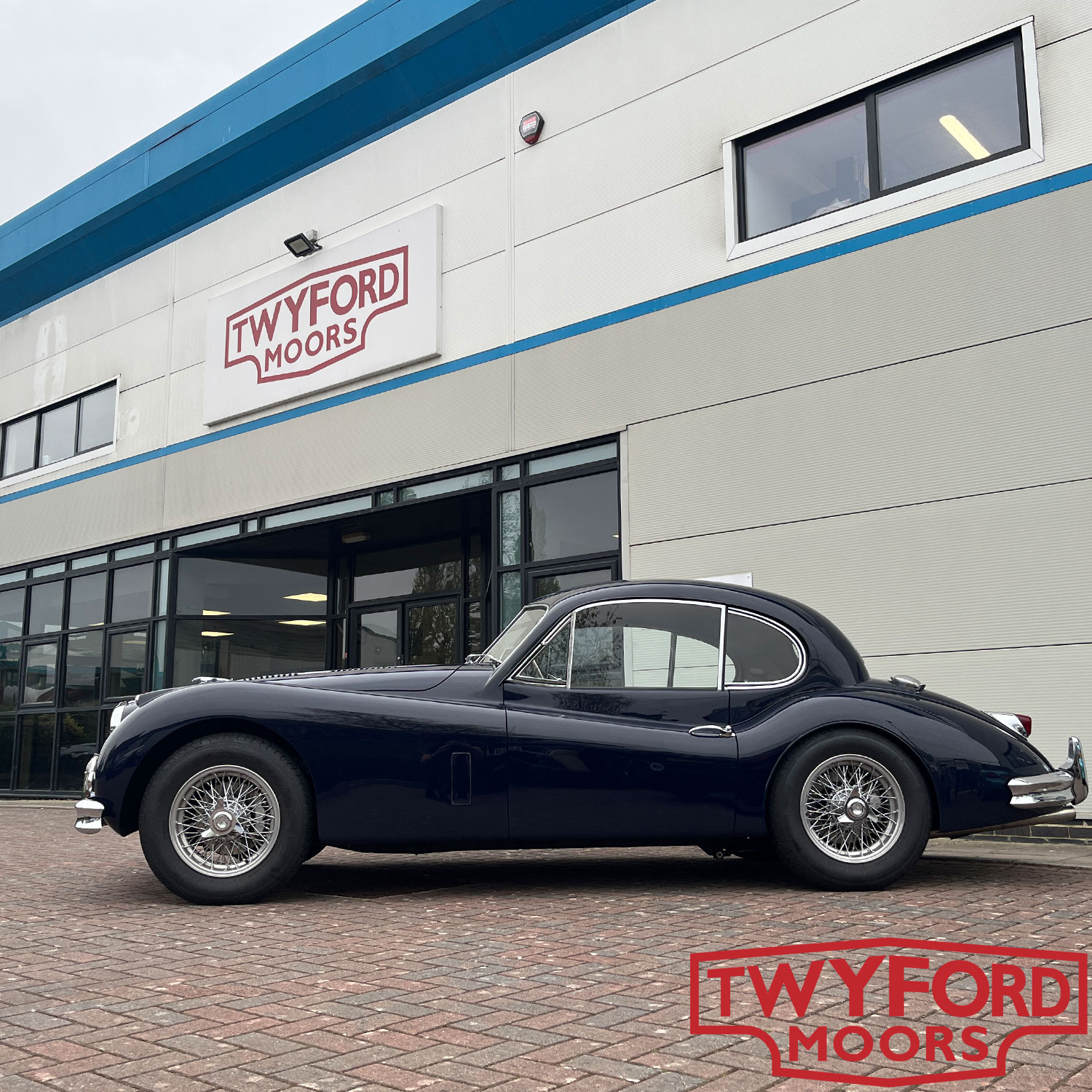
This Jaguar XK140 Fixed Head Coupé has been in with us to have our upgraded windscreen wiper system fitted. This system continues to prove consistently popular with XK owners. It replaces the original wiper motor and linkage with new, stronger and more reliable components. The system remains two-speed and continues to work with the original switch, but it does away with the park sweep, which XK owners will know means the wipers normally only clear around two-thirds of the windscreen. This upgrade also allows us to fit stronger wiper arms and blades, providing much better contact with the screen.
While fitting the system to this XK140, we noticed something rather unusual about the car. The entire body is aluminium. We have seen various aluminium-bodied XKs before, but never an XK140 FHC. What makes it even more interesting is that many aluminium reproduction bodies are relatively easy for us to spot. That is not to say they are poorly made, but they rarely look quite the same as the original steel-bodied cars. This car, however, looks absolutely spot on. What a delight!
Jaguar E-Type Series 3 servicing
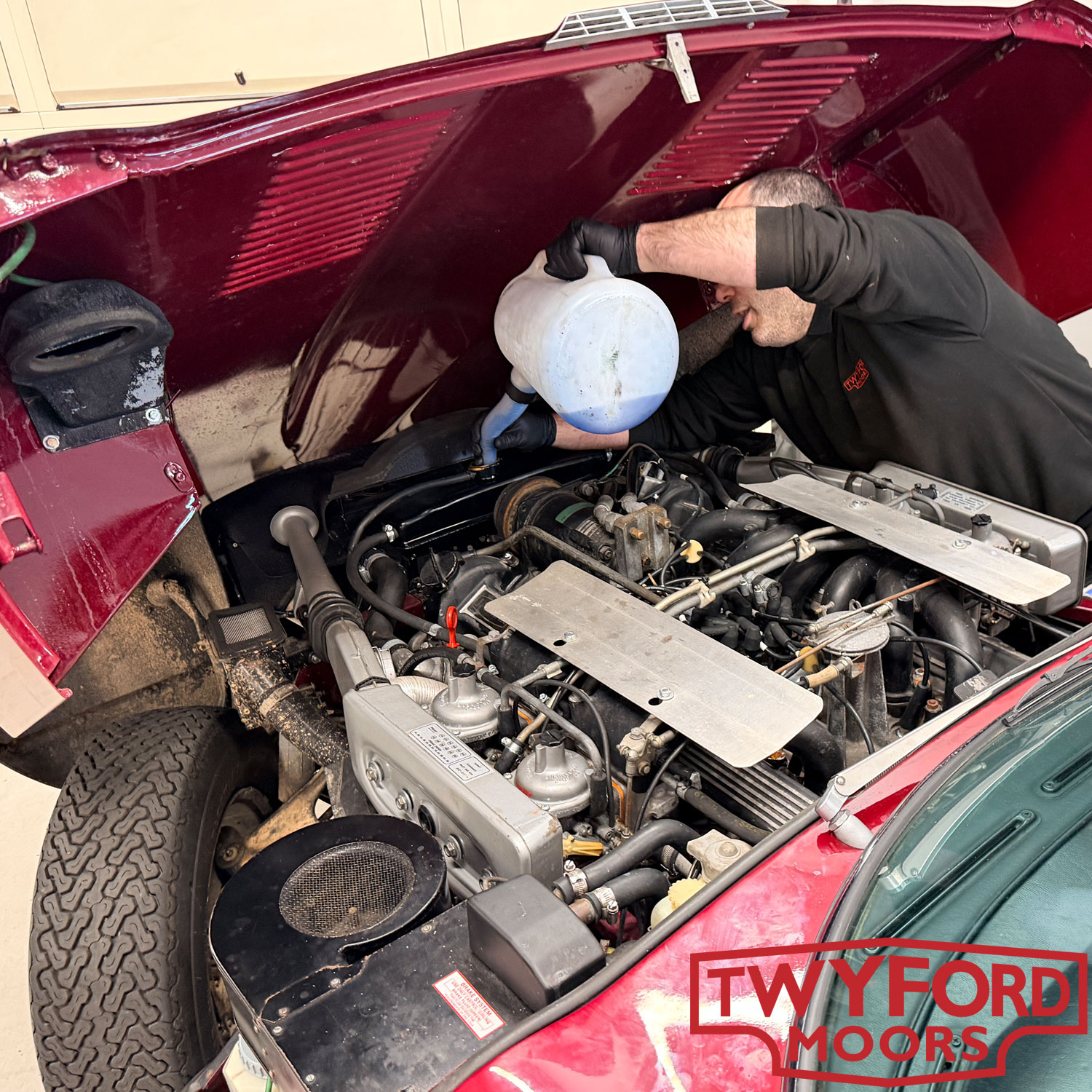
Here is the engine bay of a V12 E-Type, which is currently in with us for a service. Over the past few years, we have seen increasing demand from Series 3 E-Type owners. It seems there are very few specialists keen to work on these cars, and fewer still who are truly good at it. Many people look at the engine bay of a V12 E-Type and find it rather daunting, but once you know your way around them they are not nearly as intimidating as they first appear. Fortunately, we have two highly experienced mechanics who are not only very competent when working on these cars, but who also thoroughly enjoy them.
The Series 3 E-Type has, in the past, earned a reputation as being the poor relation to its predecessors. We think this is highly unfair. When judged on its own merits, the V12 is a wonderful car and I personally love driving them. I think part of the reason they earned this reputation is that they can drive quite poorly if they are not properly maintained. Deferred maintenance tends to add up over the years, and many cars were neglected when their values were much lower. Fortunately, these cars are now finding owners who truly appreciate them and are willing to invest in keeping them running and driving as they should.
Jaguar D-Type non-starter
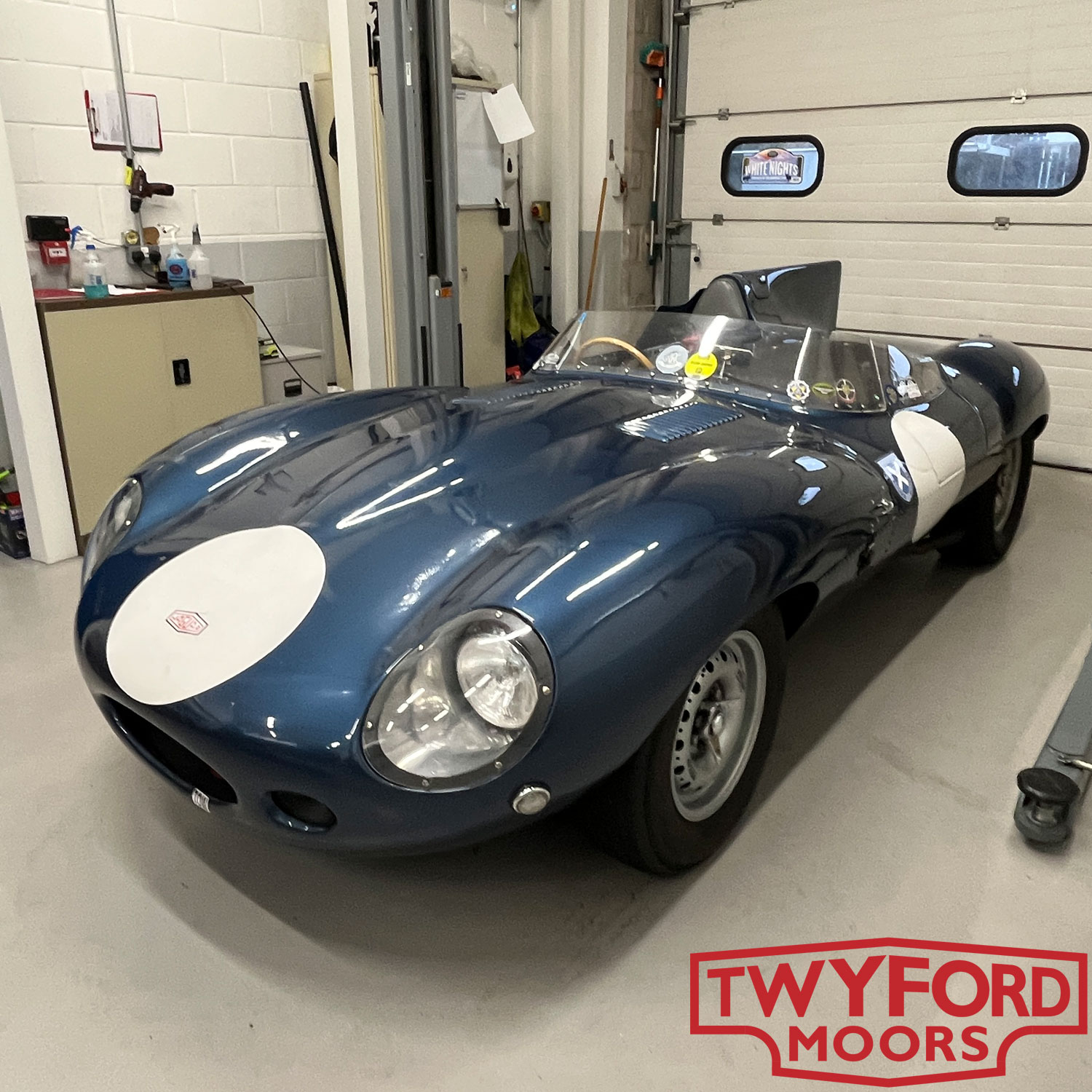
We recovered this Jaguar D-Type replica from the owner’s home using our enclosed transporter. If you cannot drive your car to us because it will not start, or simply because you are too busy, please do get in touch to discuss our collection and delivery service. Our experienced driver handles every car with the utmost care. He is highly experienced in recovering non-runners from garages, and we even have our 4x4 and trailer available for hard-to-reach locations. The reason we collected this D-Type was that it had become a non-starter after an extended period off the road.
With the car safely back at our workshop, we began investigating the reason it would not start. The first port of call was the battery, which was, of course, completely flat. It is worth noting that batteries really do not like being allowed to go fully flat, nor do they respond well to prolonged cranking without subsequently being recharged. At best, this will shorten the life of a battery, but more often than not it renders it unusable. We always recommend using a trickle charger when storing a car. With a good 12-volt supply reinstated, we set about checking that the car had both fuel and a healthy spark. We found the spark was present, but the fuel had badly deteriorated. This seems to be an increasingly common issue with modern fuels when left standing, as they appear to go stale remarkably quickly. With some fresh fuel and a tune-up, this D-Type was running happily once again.
Jaguar XK150 brake discs
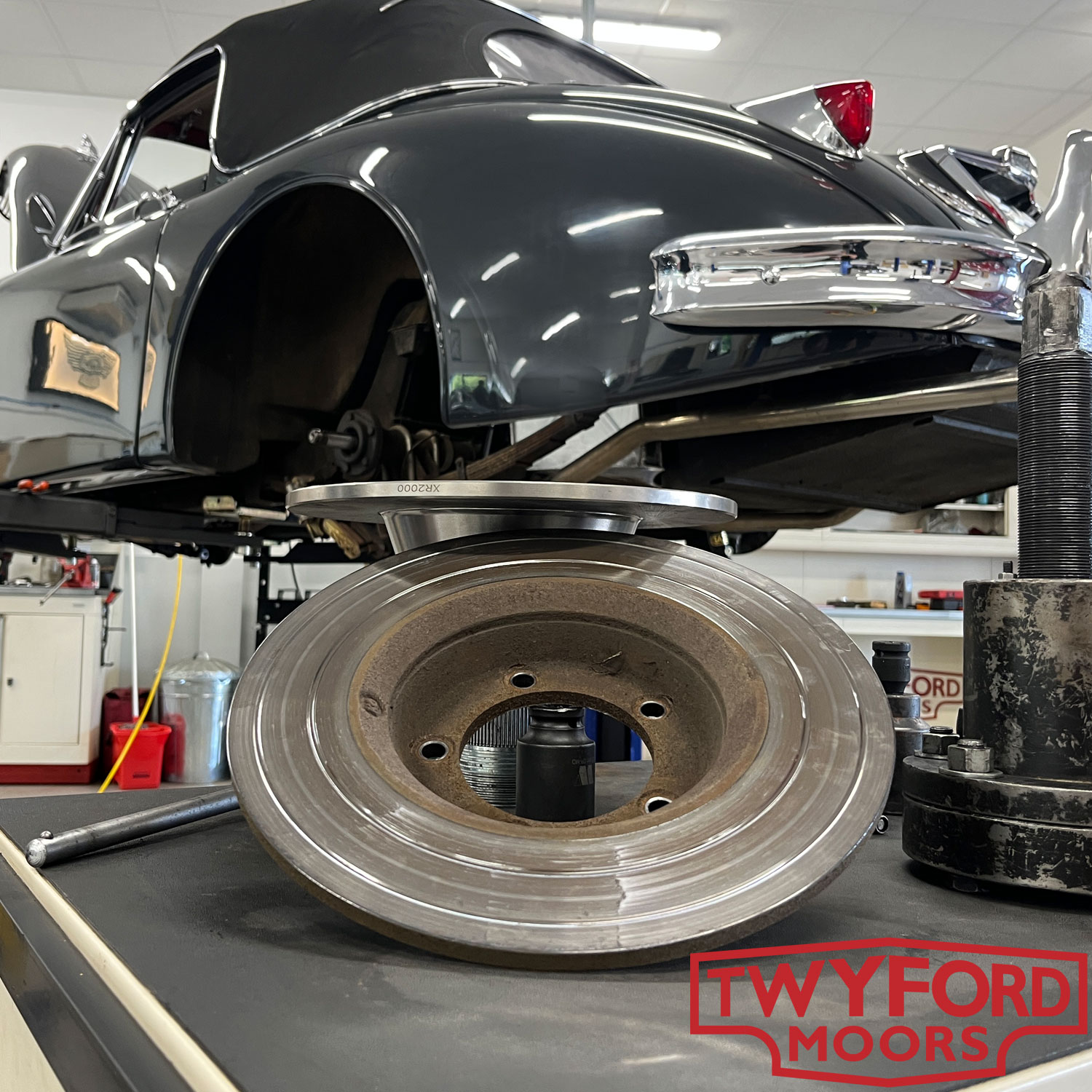
Replacing brake discs is a fairly routine part of servicing these cars, although they do tend to last for quite a few years. Generally, there is nothing particularly noteworthy about a car having its brake discs replaced. However, when I spotted this particular disc being removed, I could not pass up the opportunity for a photograph. This XK150 was with us for a routine service and the discs were flagged as being heavily scored and in need of replacement. I have to say, though, that these are probably the deepest grooves I have ever seen in a brake disc. Pictured in the foreground is the old disc, propped up and looking rather like the rings of Saturn. It may not be totally clear in the photo, but the grooves in the disc are exceptionally deep and quite astounding.
Behind the old disc is the new replacement disc attached to the upright, ready to be refitted, and off to the right-hand side of the photo is our specialist hub puller. It can be rather difficult to remove the hubs from an XK, but a combination of the correct tools and experience means we always get the job done properly.
Jaguar XK150 FHC restoration project
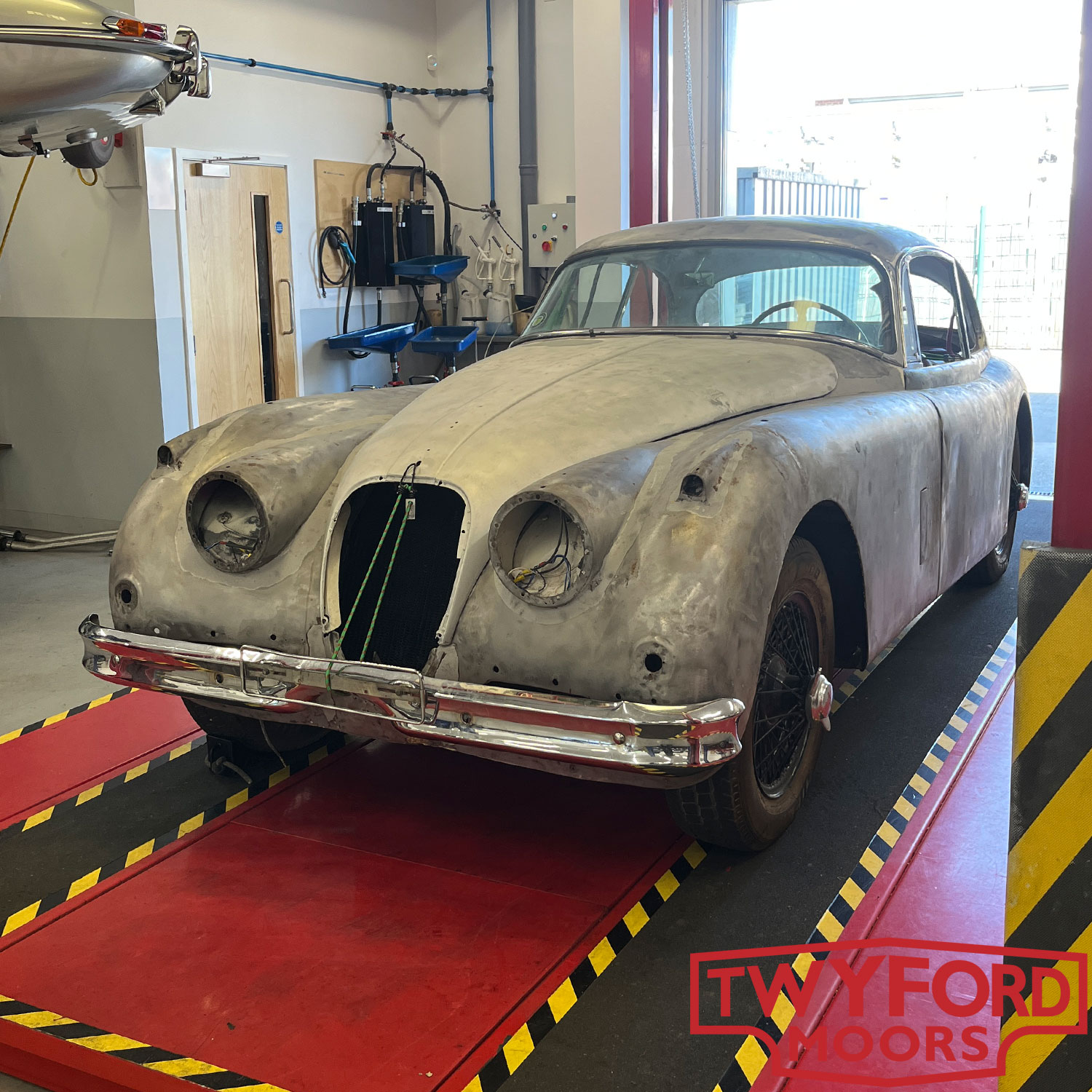
This Jaguar XK150 Fixed Head Coupé restoration project has just arrived with us from a European customer. As can be seen from the photo, the car was previously stripped by a restorer on the continent who began repairing the body but then lost momentum with the project. Over the coming days, we will be getting the car up on a lift to assess the vehicle thoroughly and report back to the owner. Once assessed, we can then agree on a programme of work to get the car to the standard and specification the owner desires.
Although we are best known for our full nut-and-bolt restorations, and in many cases this is the only realistic option, we also carry out many partial restorations and refurbishment projects. Initial impressions of this car, along with the owner’s requirements, suggest to me that this will be just such a project. One has to accept that the only way to achieve an absolutely first-class finish is through a full nut-and-bolt restoration, but in some cases this is neither justified nor required, and may not be what the customer is looking for. We are here to cater for all areas of the classic Jaguar market, so please do feel free to get in touch if you have a project you would like help with.
Jaguar XK120 pedal box
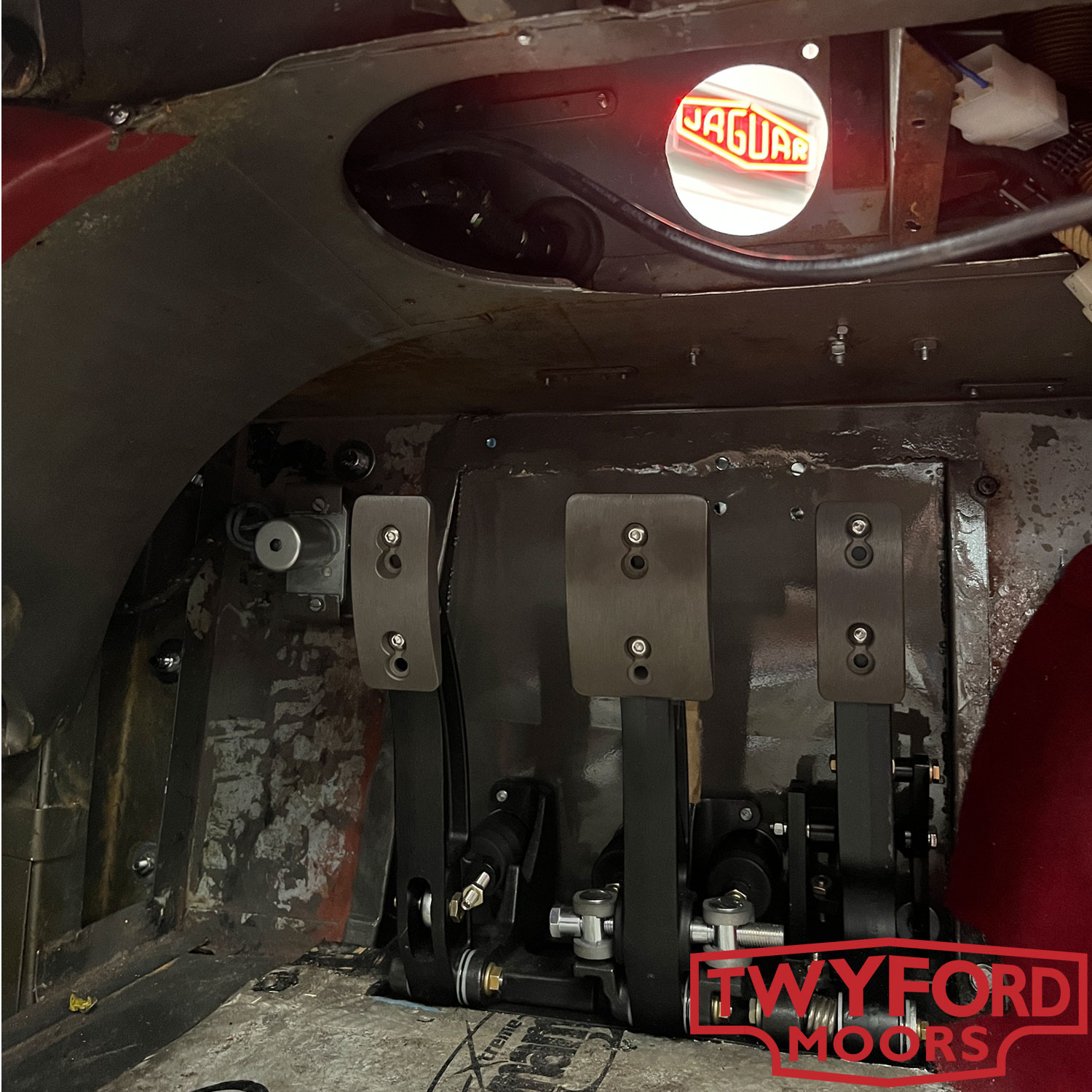
While working on this pedal box installation on an XK120 OTS, I caught a glimpse of our rather nice illuminated Jaguar sign through the steering column aperture. For no reason other than the fact it made for a cool photograph, I felt compelled to take a snap and share it here. This XK120 was undergoing an extensive range of upgrades to bring it up to the buyer’s desired specification. These included a five-speed gearbox, disc brakes, bucket seats, an extended pedal box, rack-and-pinion steering and electric power steering. This combination of upgrades makes an XK120 far more practical and enjoyable to use in a modern setting, allowing for relaxed motorway cruising and significantly improved stopping power. It is also a very driver-focused package, making the cockpit more spacious and comfortable while providing a more motorsport-inspired pedal layout, a smaller steering wheel and more responsive handling.
We offer an extensive range of upgrades for classic Jaguars, including everything from reliability improvements such as upgraded fuel pumps, to safety upgrades including seat belts and fire safety sticks, as well as performance and driver comfort enhancements. Please do get in touch to discuss your requirements.
Jaguar E-Type suspension setup
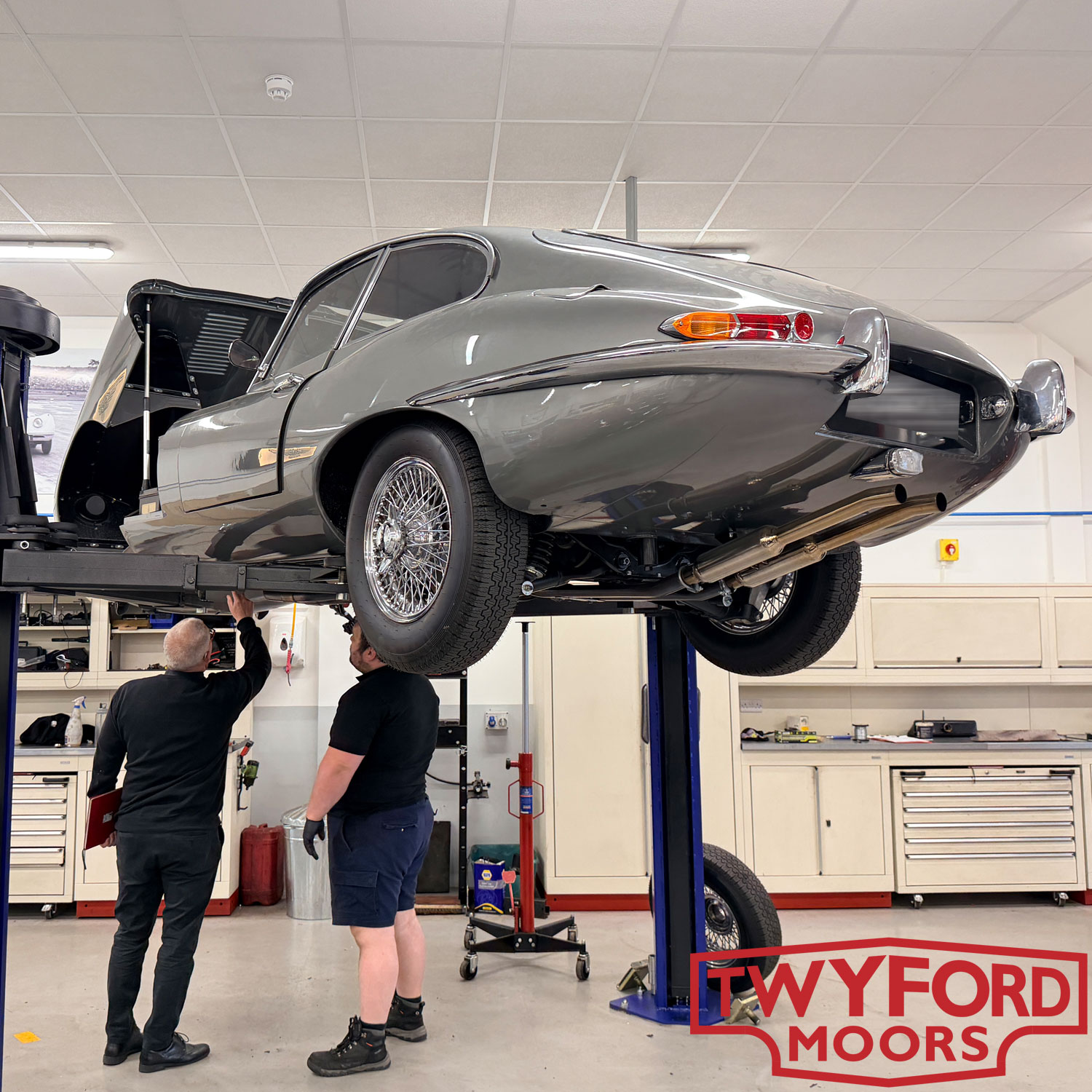
This Jaguar E-Type has recently been fully restored elsewhere and has come to us for some final checks and adjustments before hitting the road. In particular, we are setting up the suspension geometry to ensure it rides and handles exactly as it should. E-Types are first-class cars to drive, not just for their era but by almost any standard, and that is due in no small part to their wonderfully engineered suspension set-up. The front wishbone arrangement, which in many ways was a progression from the suspension found on the XK range, was far ahead of what many of Jaguar’s competitors were offering at the time. The real leap forward for the E-Type, however, was the independent rear suspension design. This was so successful that the fundamental layout went on to be fitted to countless Jaguars, including the S-Type, XJ6 range and XJS, continuing right through into the 1990s.
These systems do, however, need to be properly maintained and correctly set up to ensure the car drives as intended. We are always very happy to help fellow enthusiasts get their cars running and driving properly. Whether that is assistance with a restoration, bodywork, carburettor rebuild or suspension set-up, we have you covered.
Jaguar XK150 FHC and DHC
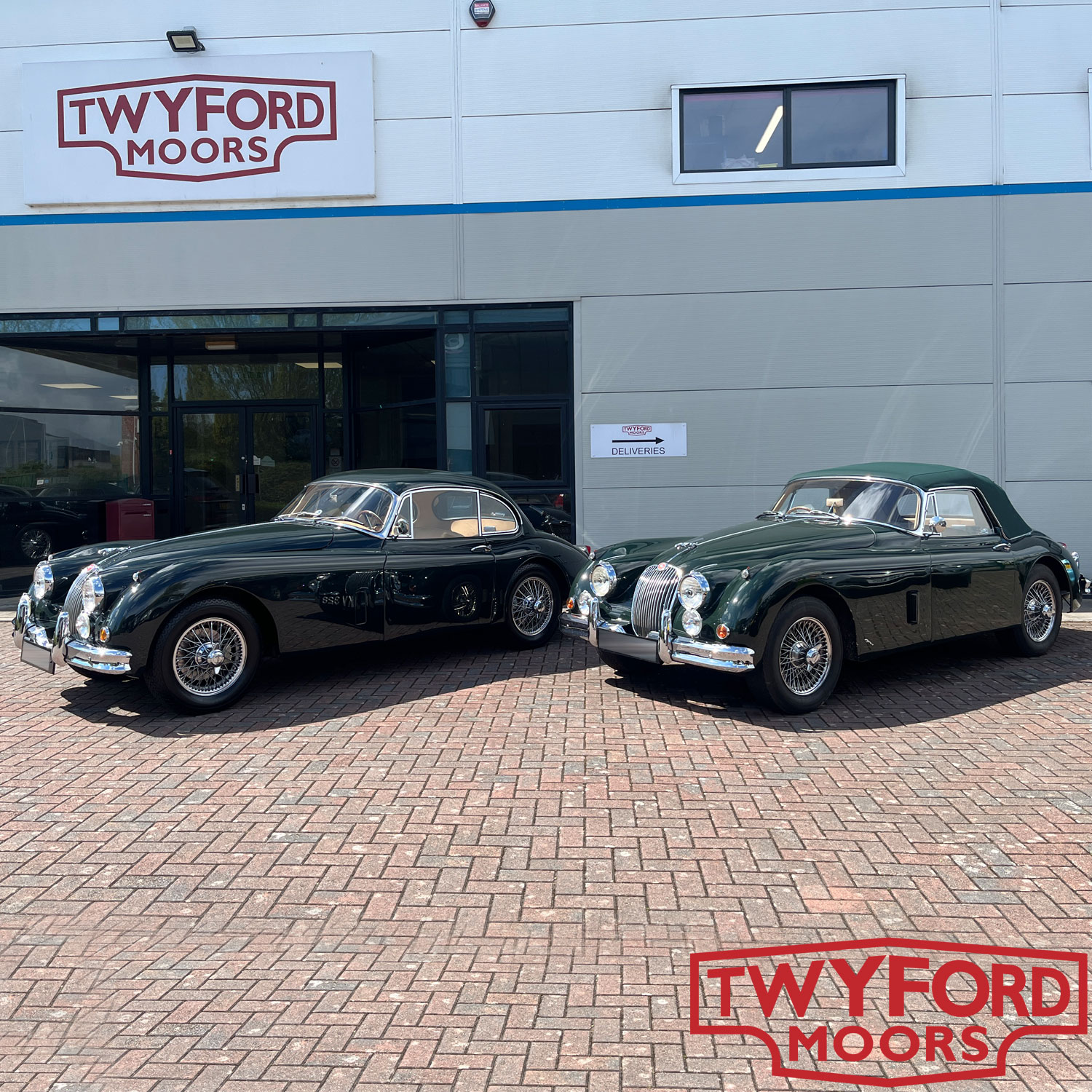
This seemed like too good a photo opportunity to pass up. Pictured on the left is a Jaguar XK150 Fixed Head Coupé and on the right is a Drophead Coupé. Interestingly, they are both British Racing Green, although, as you can see, they are quite different shades. Jaguar tended towards a very dark, almost black, green when painting cars in BRG. The FHC on the left is a recently completed restoration, with which we assisted the owner, while the car on the right was restored some twenty years ago. It goes to show just how well these cars can last when restored properly and maintained correctly.
One has to acknowledge that the Drophead Coupé has always been, and continues to be, the more popular, sought-after and therefore more valuable model, combining the open-top driving experience with the practicality of a padded hood that keeps you dry and insulated when the weather turns. I must confess, though, that I think it is hard to beat the lines of the Fixed Head Coupé. Over the years, I have seen many comments from people remarking that it was a shame Jaguar never built a Mk2 coupé, and I have seen various Mk2s converted into two-door coupés, some of which were very well executed and looked stunning. But why do that when the XK150 FHC already exists?
Jaguar E-Type 5-speed gearbox
This lovely Jaguar E-Type has been in with us for a five-speed gearbox conversion. Five-speed gearbox upgrades have long been among the most popular upgrades we offer. For the XK120 and E-Type, they provide that extra “overdrive” gear which was never available from the factory, making these cars far more comfortable for motorway cruising. For anything fitted with a Moss gearbox, the conversion also allows you to progress through the gears much more smoothly and quickly.
For this 4.2 E-Type, running the original gearbox with the UK-specification 3.07 differential, the engine would normally be turning at approximately 2,700rpm at 70mph. With our five-speed gearbox fitted, the lower gears remain almost unchanged, with fifth gear acting as an overdrive. This reduces the engine speed at 70mph to approximately 2,100rpm — a much more comfortable place to be for a long motorway journey.
These five-speed gearbox conversions leave the car looking externally standard, with the gear lever emerging in its original position. We offer several options for the gear knob: you can retain the original knob, choose a turned aluminium knob, or opt for an original-style knob with the five-speed layout marked on the top.