XKs, XJs, E-Types and Saloons – Workshop Update
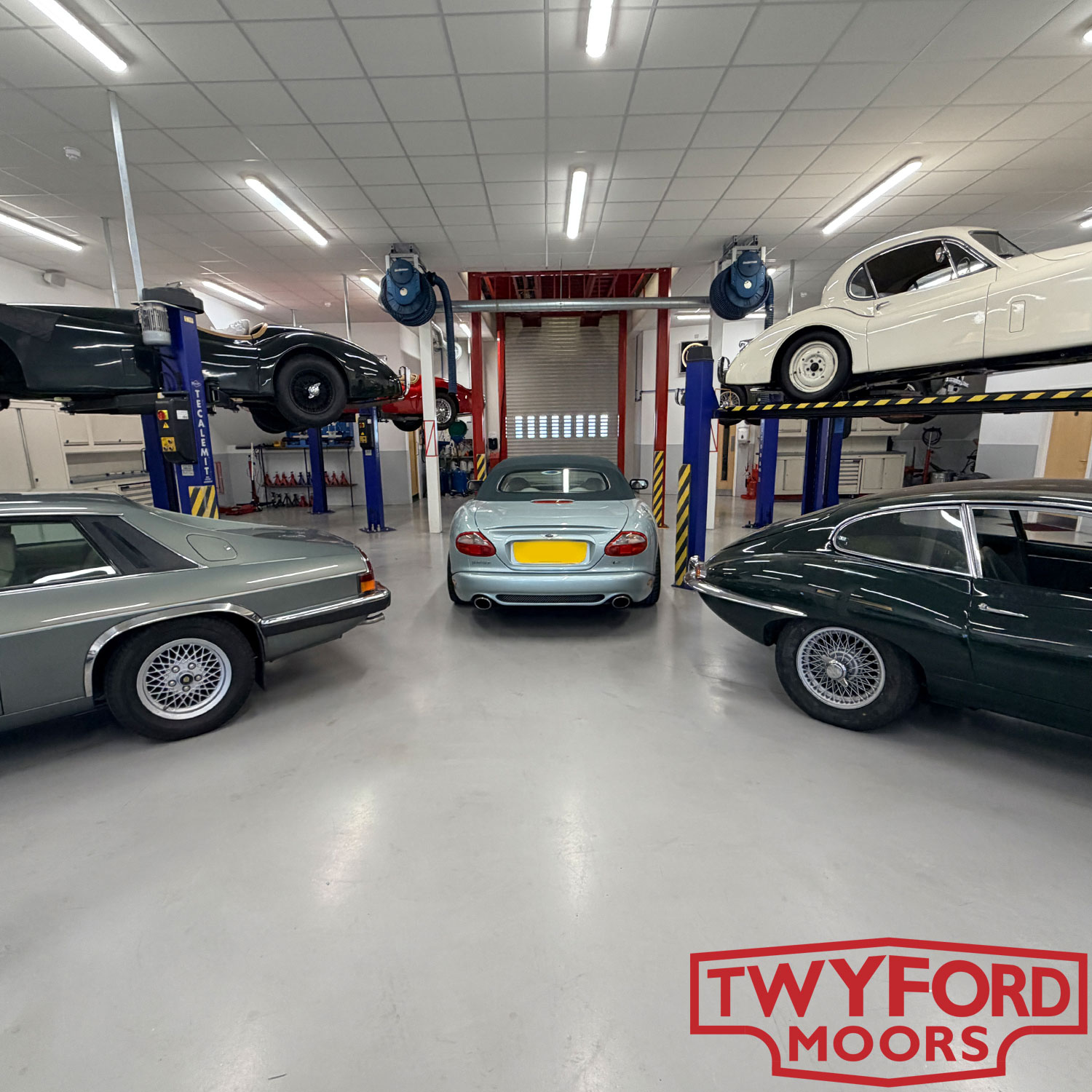
It has been a busy couple of months here. As you’ll see as you read on, we’ve had a rather diverse array of Jaguars in with us during this time. The picture here pretty much sums it up, with XK120s on the ramps, an E-Type to the right, an XJS to the left and an XK8 in the middle. What an attractive bunch of rear ends that is!
Despite this diversity in the workshop, I’m also pleased to report what feels like a stabilisation, and even a strengthening, of the classic side of the business. Sales of classic XKs seem to be doing rather well again, helped in no small part by values coming down, but perhaps more so by confidence returning to the market as people feel they have found their feet again.
Beyond this, we’ve not only had more restoration enquiries, but also more people giving the green light to start restorations. To me, these are all strong indicators of confidence returning to the market. With these cars more affordable in real terms than they have been for over a decade, I think people are recognising the value in classic Jaguars.
Read on to see what we’ve been up to.
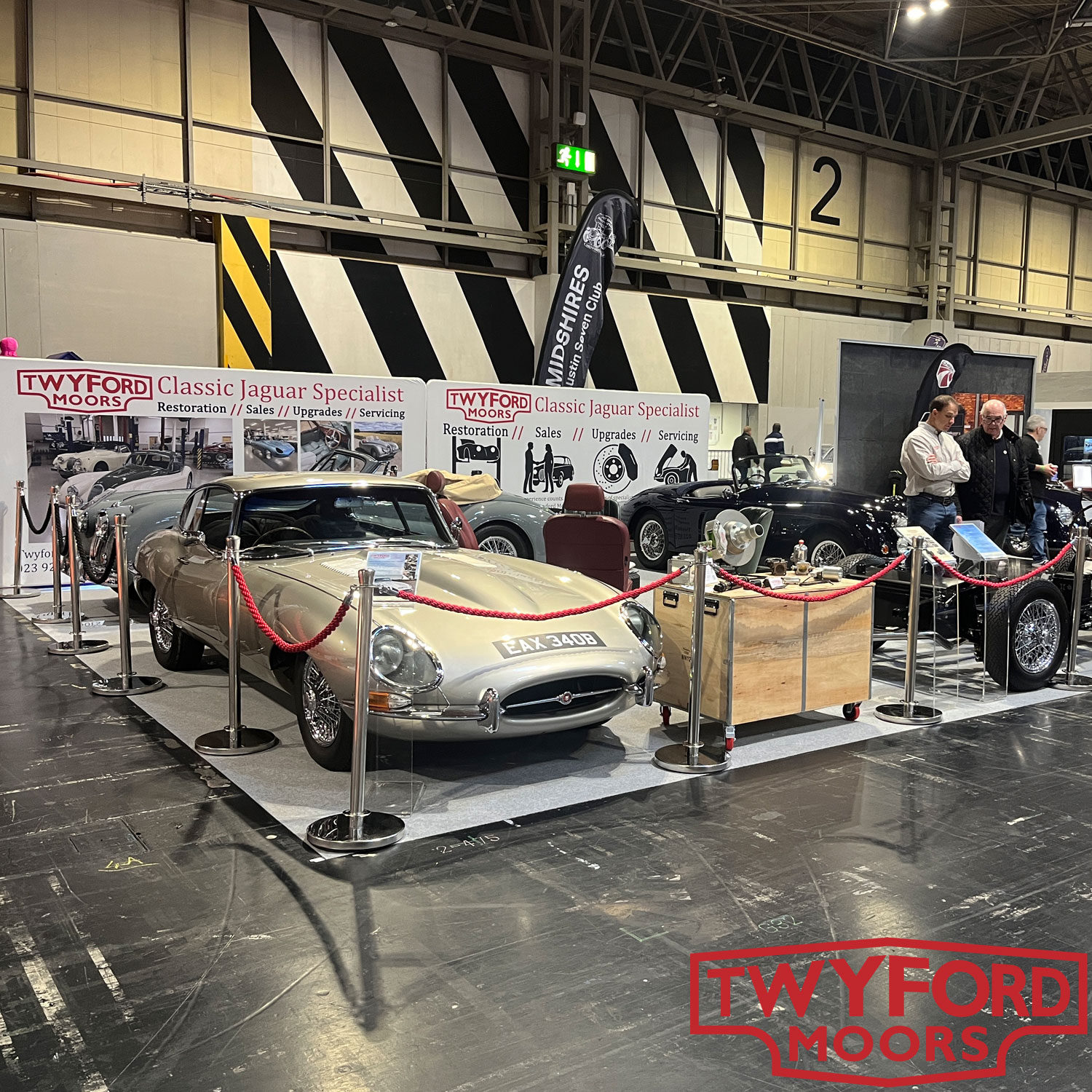
NEC Classic Motor Show
We don’t have long to wait now until the Classic Motor Show at the NEC in Birmingham, running from 13 to 15 November. Our stand has moved from previous years, so please don’t go looking for us in our ‘usual spot’. We’ll be in Hall 3, near the entrance.
The Lancaster Insurance Classic Motor Show returns to the NEC this November, bringing together thousands of classic car enthusiasts, clubs, specialists and traders for one of the biggest events in the UK classic motoring calendar. We are, of course, delighted to be attending again. We’ll have some beautiful cars on display, along with a range of parts and upgrades. The team will be on hand throughout the weekend to answer your questions and chat about all things classic Jaguar.
The show is always a fantastic opportunity to catch up with familiar faces and meet new enthusiasts. If you’re attending, please come and say hello – we look forward to seeing you there!
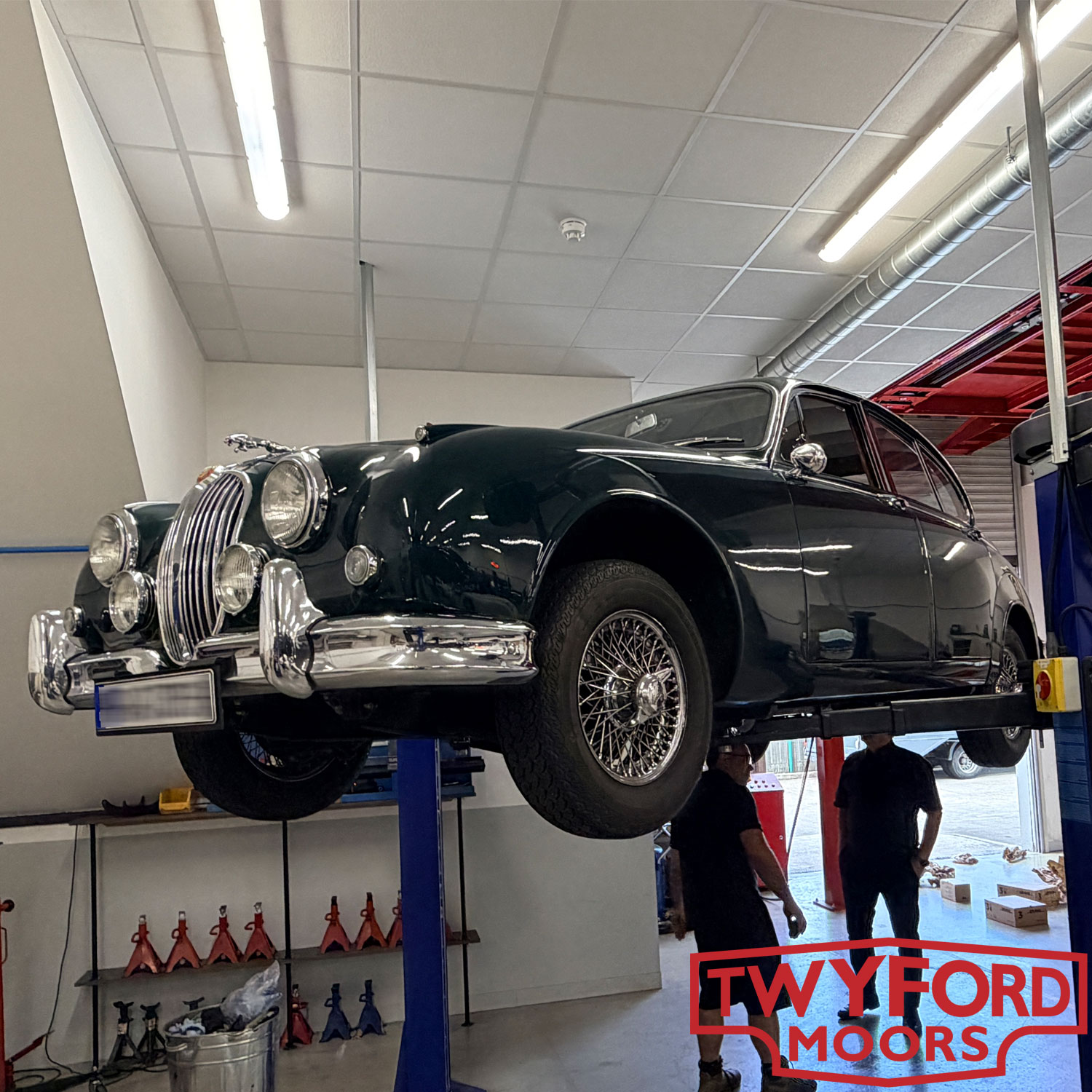
Jaguar Mk2 from Germany
This Jaguar Mk2 visited us from Germany in the run-up to the Goodwood Revival. The owner and his son had an epic trip planned, taking in various attractions across the UK before heading to Goodwood to enjoy the Revival, then driving home across Europe.
As they made their way across Europe, they contacted us as they were experiencing some rear suspension issues that threatened to derail their trip. Despite having a very busy workshop, we were able to set aside a workshop slot for them for a day. We also ordered in the parts we thought we might need to get them back up and running, including springs and shock absorbers.
With the car on the ramp, it quickly became clear that the problem was a combination of a pair of very tired dampers that were no longer doing their job, insufficient clearance between the wheels and the spats, and a rather heavily laden car carrying plenty of luggage.
We were able to create a little more clearance for the spats, fit some nice adjustable shock absorbers, road-test and set up the car, and get them back on their way. There was no need to fit new springs after all!
A week later, they popped by to see us at Goodwood and told us they’d had a wonderful trip around the UK.
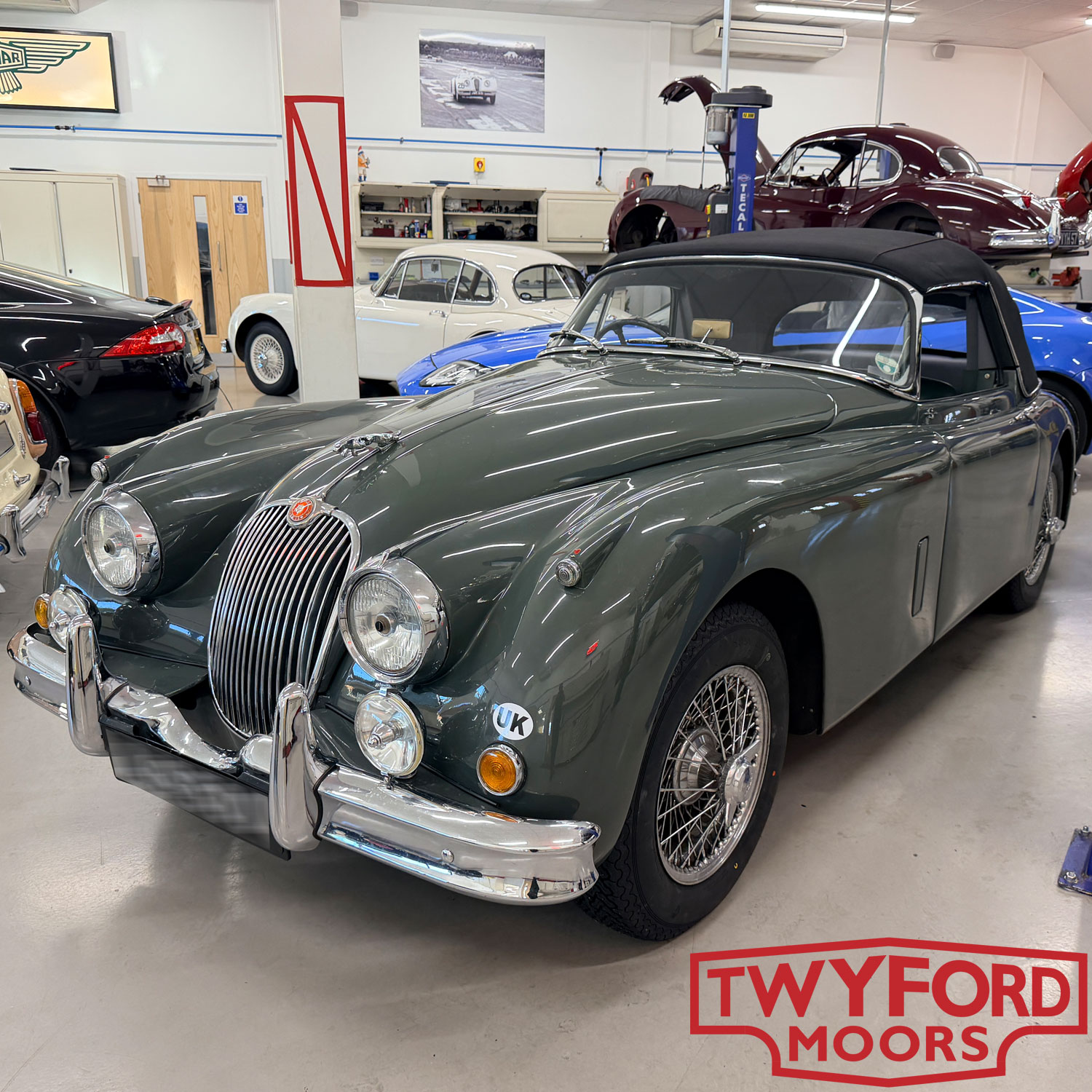
Jaguar XK150 Touring
This Jaguar XK150 3.8 S has spent the summer taking part in a number of tours across Europe, covering a few thousand miles along the way. Having performed well across several countries, it is back with us for a check-over and service before going into winter storage. There are, of course, a few other jobs to attend to as well: a door that needs adjusting, an improved boot release, that sort of thing.
Classic XKs make great touring cars, and the drophead coupes are arguably the best of the bunch for this purpose. They combine practicality with the open-top, wind-in-your-hair experience. How many sports cars from the 1950s feature a proper, padded hood that keeps wind noise down and even keeps out the vast majority of the weather? Anyone who has driven an XK on a motorway in heavy rain will know what I mean! They even have the luxury of winding windows.
The key to a good touring car like this is, of course, preparation. We went right over this car for the owner when he first brought it to us, upgraded it to suit his needs and tested it to ensure it would perform as desired. If you’re thinking of getting out touring next year, please get in touch to discuss your needs.
Bentley Power Steering
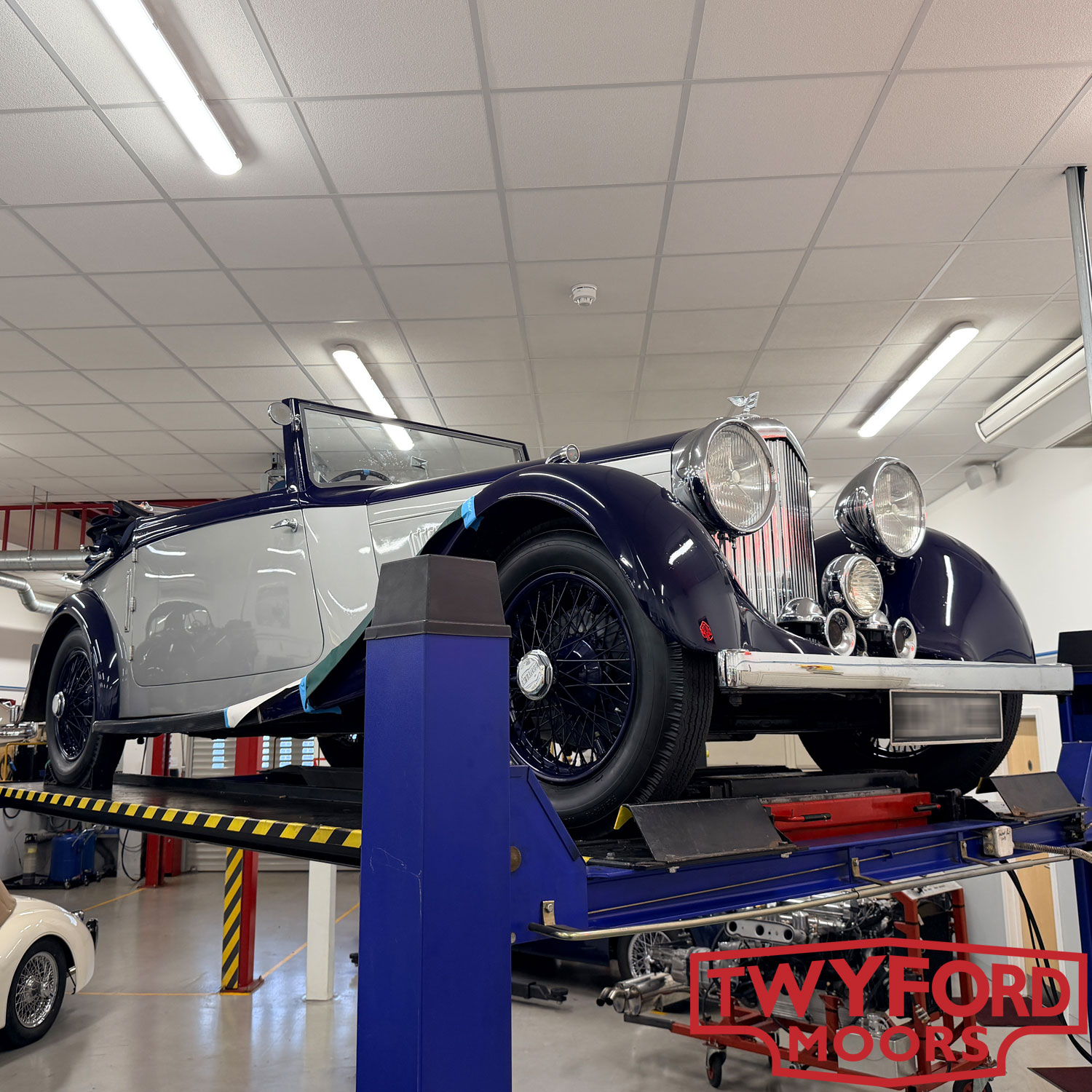
Regular readers of these workshop updates will know that there is usually something non-Jaguar lurking somewhere in the workshop. This Derby Bentley certainly made its presence felt, not just with its size but also with its stunning two-tone paintwork. You won’t be surprised to learn that it has attracted plenty of attention while here with us.
The Bentley came to us to have electric power steering fitted. We’ve been fitting these systems for years and over a decade ago worked closely with the manufacturer to develop them for Jaguars. As a result, we have considerable experience with them, and the manufacturer sends us some of the trickier installation jobs.
Pre-war cars like this present a particular challenge when fitting electric power steering because they have stator tubes running through the centre of the steering column. These allow controls such as the ignition advance and retard, fuel mixture and indicators to run up inside the steering column, remaining in a fixed position while the steering wheel turns around them.
This doesn’t make fitting electric power steering impossible, but it does introduce a number of additional technical complexities.
Fast-Road 4.2-Litre XK Engine
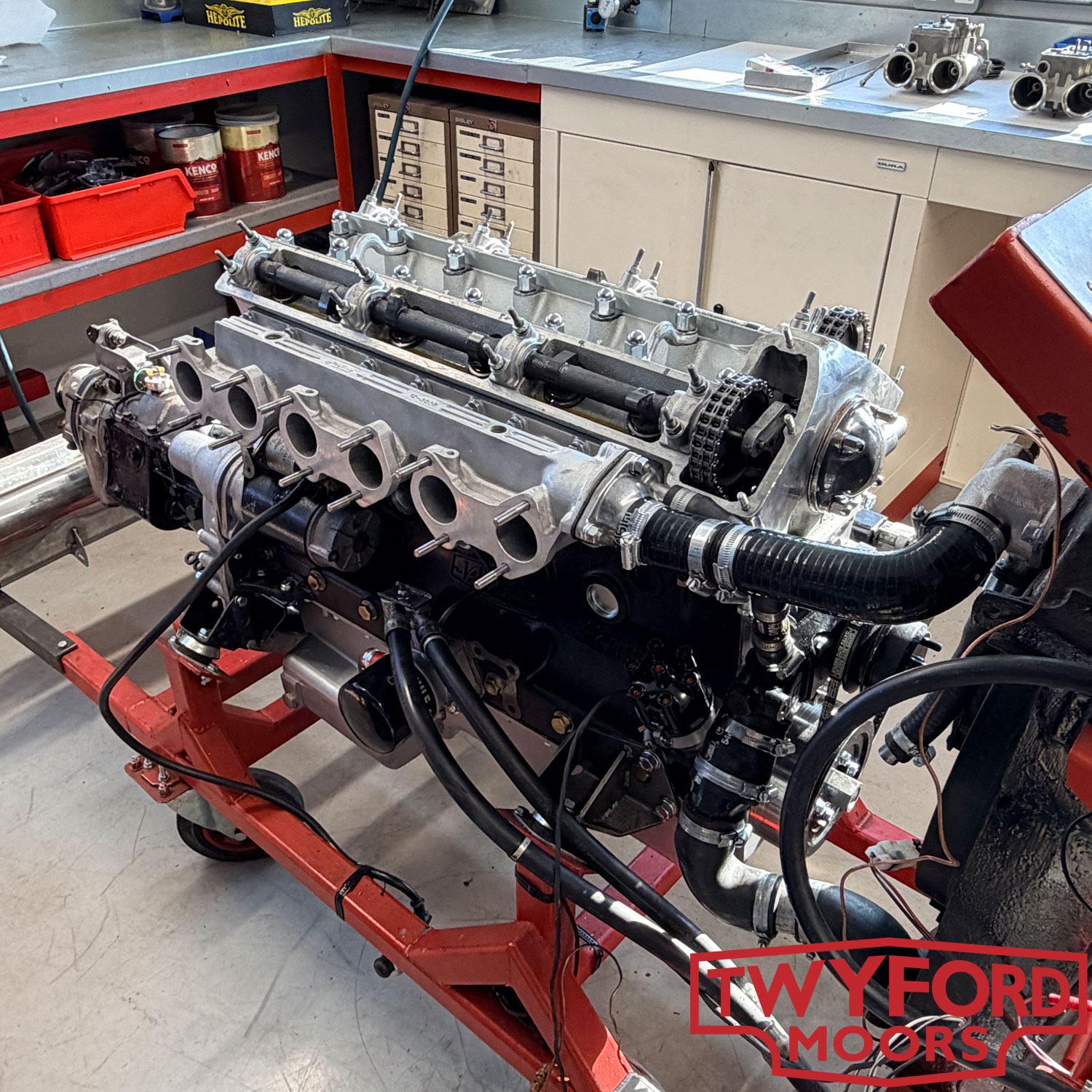
On our test rig, getting ready for its first start-up, is a fast-road specification 4.2-litre XK engine. It features pretty much everything you could wish for in a high-performance, road-going XK engine. Everything has been lightened, balanced, polished, ported and generally improved.
As you may be able to spot from the inlet manifold, the engine is waiting for its triple twin-choke Weber carburettors to be fitted. If you’re going for outright power, Weber carbs are hard to beat, although they are not without their compromises. I wouldn’t generally recommend them for a road car, as you lose some low-down power and smoothness. However, what you lose at the bottom end, you more than make up for in top-end power and induction noise.
We build engines to a variety of specifications, from standard road to full race. Generally, people opt for a fast-road specification, which delivers improved performance without compromising smooth running and low-end torque.
One area we really focus on is reducing oil leaks. From our upgraded rear main oil seal to top-of-the-range gaskets and bonded washers, we leave no stone unturned in our efforts to minimise oil leaks.
Jaguar E-Type Series 3 and Jaguar XK120
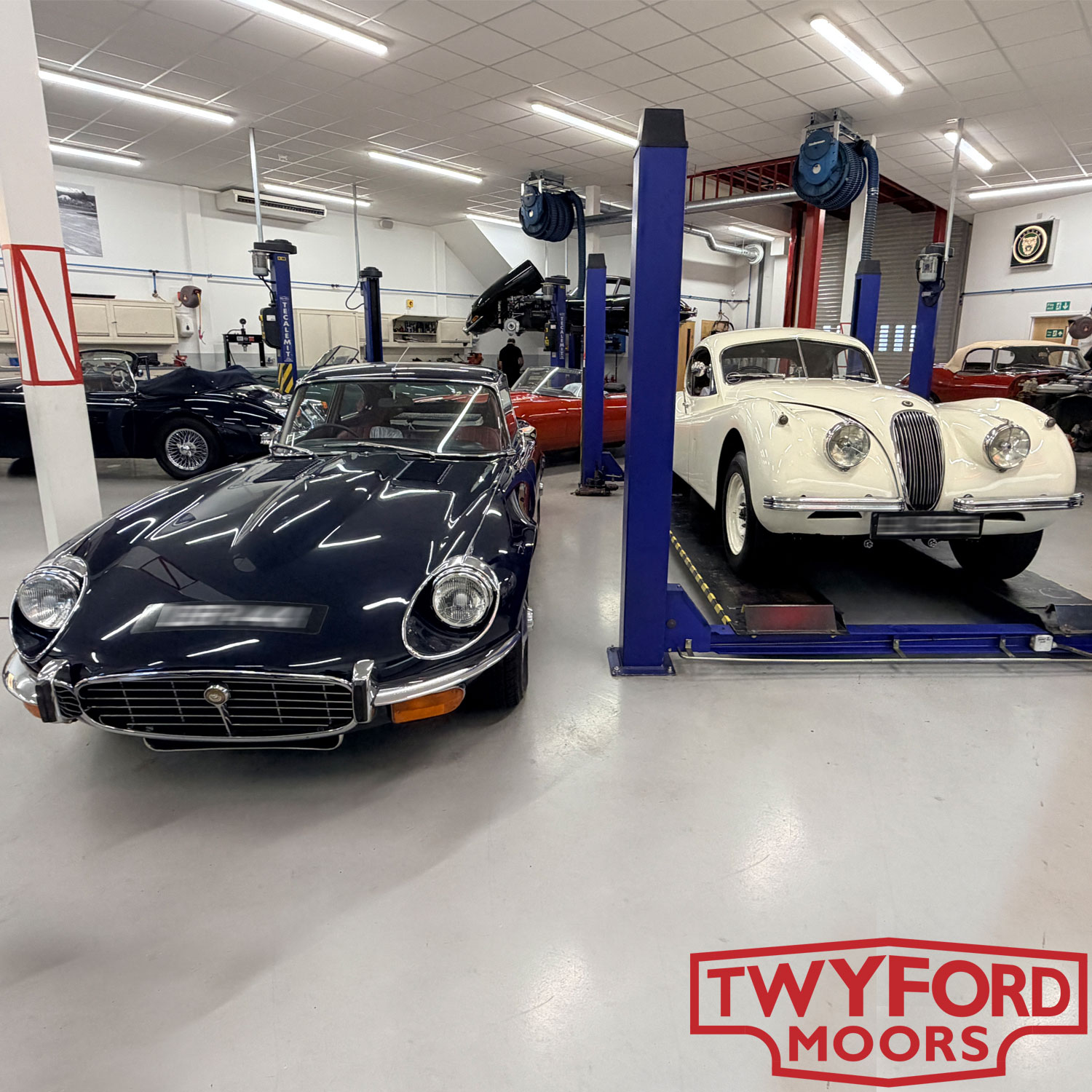
There are about 20 years between these two cars, and I think most would agree that they represent the 20 years that defined the Jaguar brand. In many ways, the differences between them sum up how Jaguar evolved and the direction the company was heading by the mid-1970s.
The XK120 is a sleek, clean sports car, combining cutting-edge engineering with stunningly simple lines. The Series 3 E-Type is undoubtedly a delightful car, but it is a larger, softer and more complex evolution of its predecessors. No longer the outlandish cad that the XKs and early E-Types were, it is more of a comfortable, refined gentleman of a car.
It seems to me that this trend continued over the subsequent decades, with the XJS, XK8 and XJ ranges. There are, of course, a few exceptions along the way, but I hope you can see the point I’m making.
Jaguar now seems to have doubled down on this trend towards ever-larger, more luxurious cars with the launch of the Type 01. Do we think this might, at some point, be accompanied by a sports car in Jaguar’s line-up again? I’m not sure.
Please don’t get me wrong, though. I think the V12 E-Type is a wonderful car, and I like the XJ-S range more than might be considered healthy! Jaguar has such a strong heritage, with brilliant cars stretching back through every decade, and we’re delighted to be able to care for them.
Jaguar E-Type Brake Calliper Upgrade
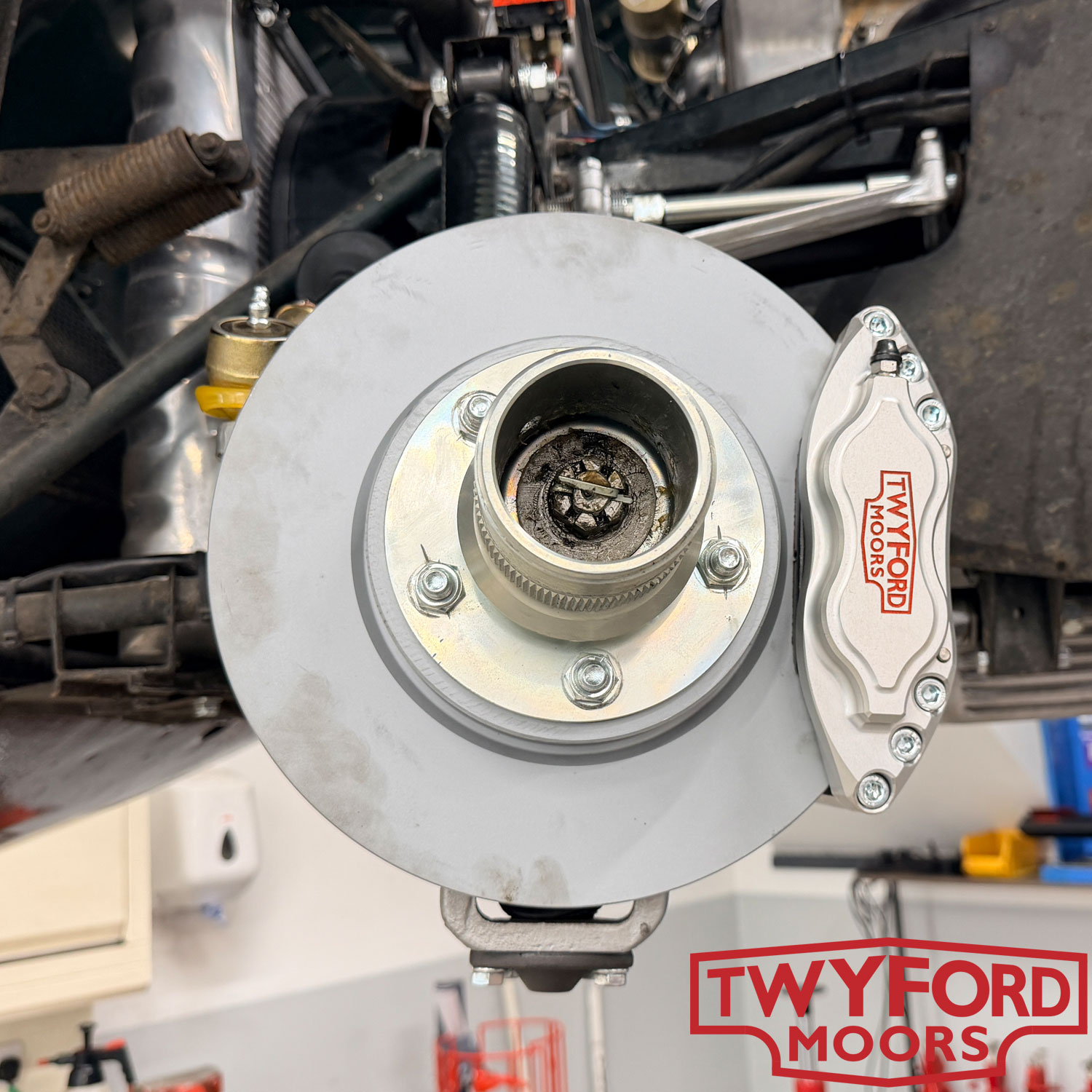
In our previous update, we shared a photo of a Series 1 E-Type having a whole host of upgrades fitted, including polyurethane suspension bushes, adjustable shock absorbers and upgraded brakes front and rear. There were quite a few questions about the brakes, and specifically the callipers, so I thought I’d grab a snap of another car having upgraded callipers fitted to share with you.
These four-pot aluminium callipers are designed to work with the original master cylinders on an E-Type. They provide increased brake pad area, helping to improve braking performance. Being made from aluminium, they are also lighter, reducing unsprung weight. They look fantastic too, if we do say so ourselves!
We offer a wide range of brake upgrades for E-Types and other classic Jaguars. As well as front brake upgrades for E-Types, we offer a rear upgrade with an improved handbrake mechanism. We also offer disc brake conversions for the XK120 and XK140, along with upgraded callipers for the XK150. In addition, we have a range of other upgrades, including our tandem master cylinder and servo upgrades.
Please get in touch to discuss your needs.
Jaguar XKR-S X150
We have been frankly overwhelmed by the response to our decision to start working on the later Jaguar XK models, the X100 and X150. So many people have been in touch asking whether we work on them, and we were aware that many of our existing customers owned these cars alongside their classic Jaguars. However, we hadn’t anticipated such strong demand straight away.
We were also surprised to learn that many of you didn’t know we work on the XK6, XJ-S and other Jaguars from that era. We must do better at communicating what we do!
Unfortunately, we only have limited space for these newer Jaguars, as we want to ensure we can continue to cater for our loyal customer base. We are offering a limited range of services for now, focusing on mechanical work.
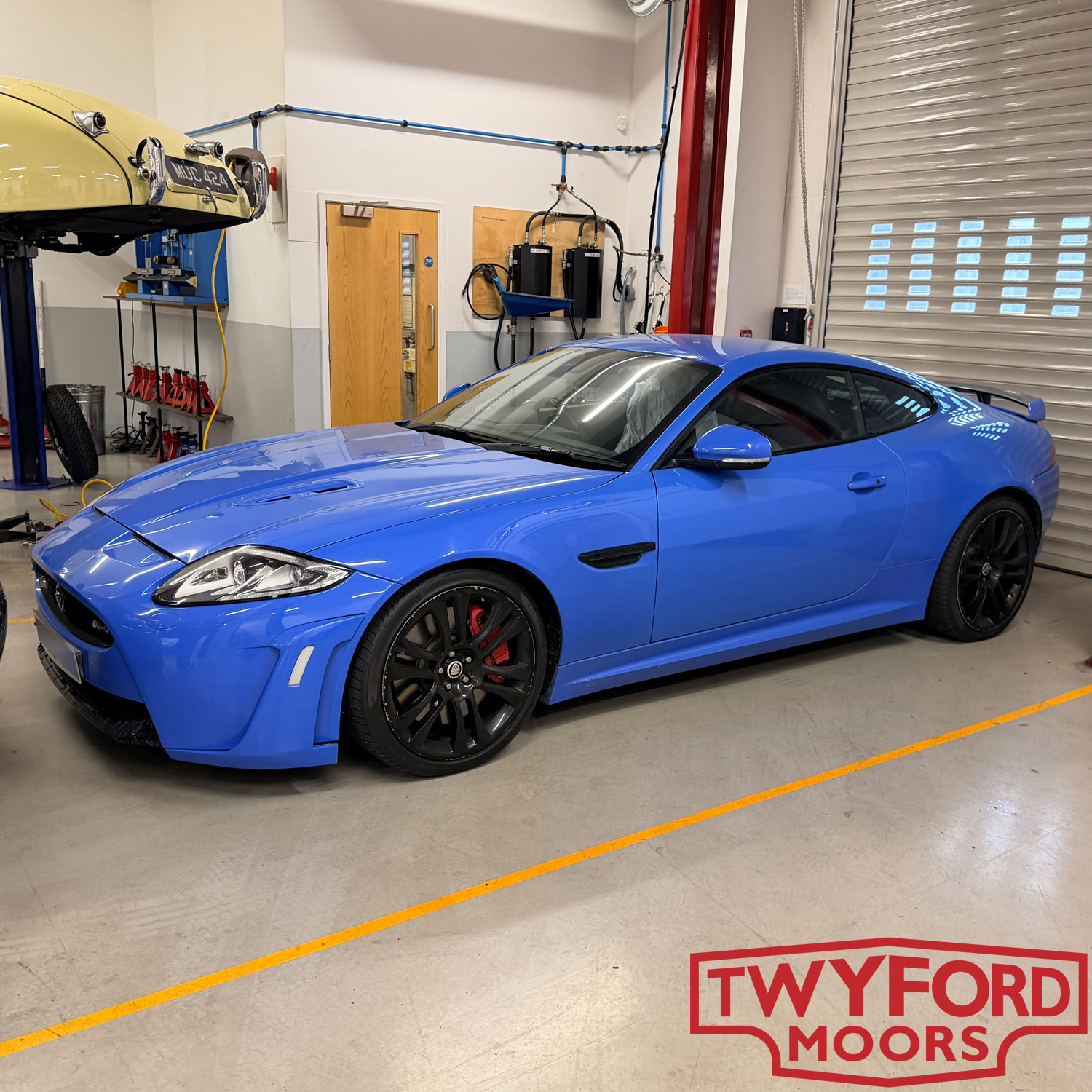
This Jaguar XKR-S is a good example of the modern XKs we have coming in. It belongs to one of our customers who also owns an XK150 – what a pair! Finished in the quintessential R-S colour of French Racing Blue, it looks stunning. However, despite having relatively low mileage, it is in a bit of a sorry state.
We’ll be carrying out a mechanical refresh, focusing on the suspension and brakes, along with some cosmetic work, including a wheel refurbishment.
Jaguar XK150 Restoration
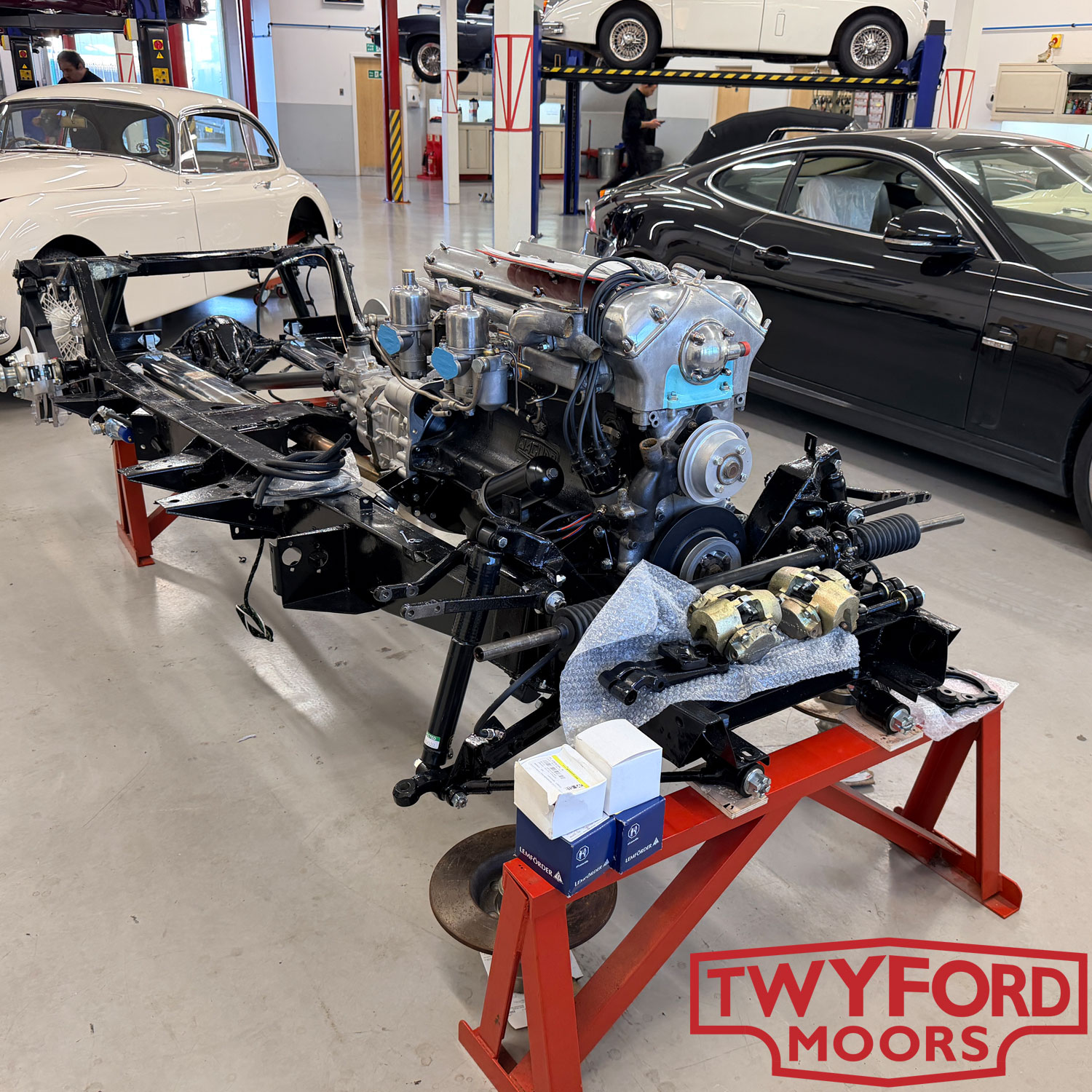
This chassis belongs to a Jaguar XK150 that is undergoing a partial restoration. Some components were in very good order, and the customer had budget constraints, so we worked closely with them to plan a programme of work that would deliver a car to the standard they wanted without refurbishing anything unnecessarily.
The engine, for example, was in good running order, so it hasn’t needed rebuilding. The chassis was also in good condition, so it has been cleaned up and repainted. Other components needed replacing or upgrading to get the car to where the customer wanted it. It has been fitted with one of our five-speed gearboxes. The suspension has been stripped right down, powder-coated and rebuilt with polyurethane suspension bushes.
Although this may not be one of our full nut-and-bolt restorations, it is still going to be a delightful car and, most importantly, one that meets the owner's requirements. It will look lovely, be a pleasure to drive and get them where they want to go.
We are always happy to cater for our customers’ specific needs. If you have a project in mind but aren’t quite sure how to approach it, please do get in touch. We’d be very happy to talk it through with you.
Jaguar XJ-S
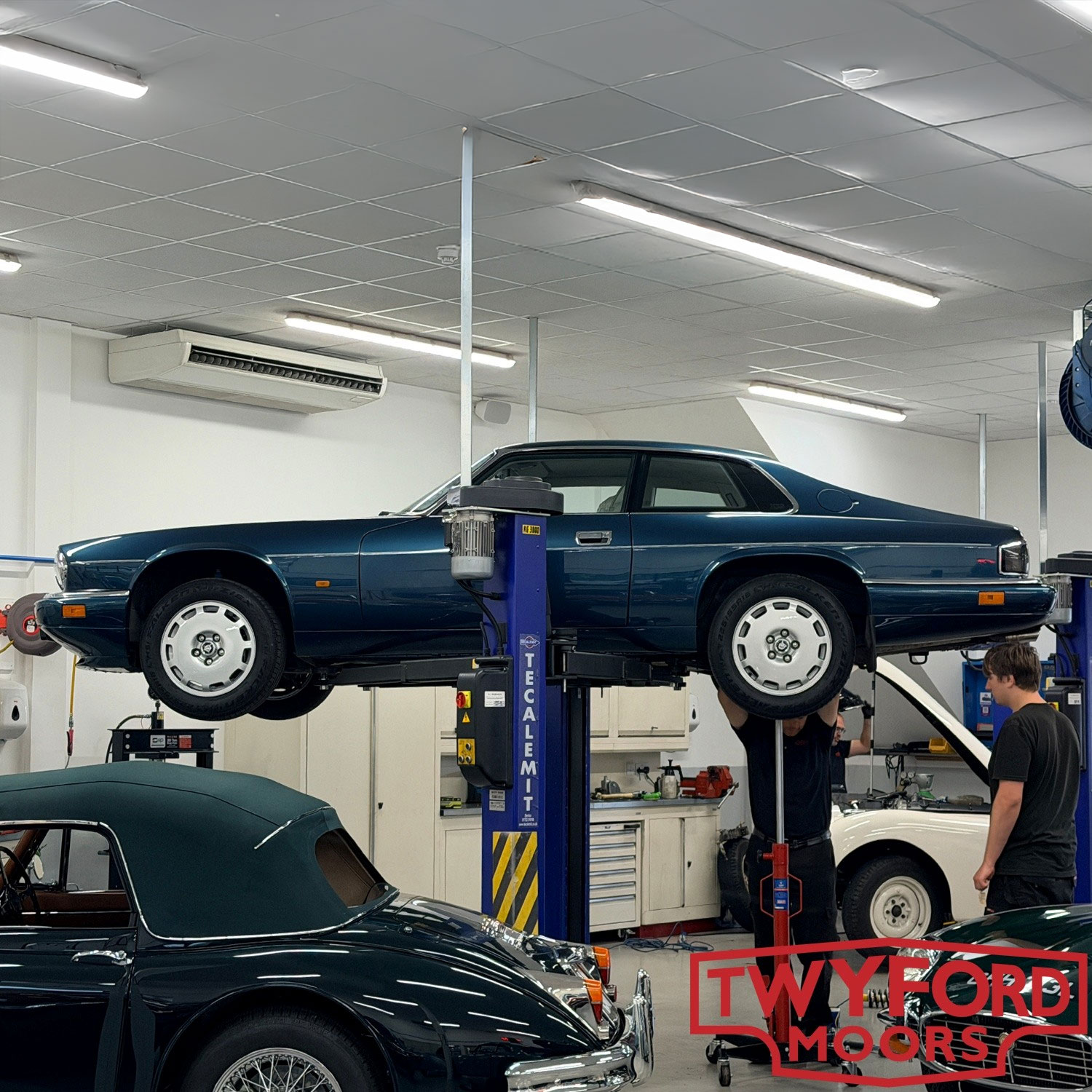
As mentioned in an earlier post, many people think we don’t work on the XJ-S. Quite the contrary – we love XJ-Ss, though we do struggle to pluralise them!
On a personal note, an XJ-S is the first car I can remember my father owning when I was very young, so they hold a special place in my heart. Whether it’s a straight-six or a V12-powered car, the team knows these cars well, and we’re very happy to be working on them.
Unfortunately, I don’t think the XJ-S has captured the public imagination in quite the same way as the E-Type before it, or the XK8 and XK models that followed. The XJ-S seems to have slipped through the cracks as a collectable car, but it has a great deal to recommend it.
They are refined and comfortable cars. They are also much more modern than the Series 3 E-Type, making them significantly more practical, with really effective air conditioning and a very good-sized boot.
They are also wonderfully evocative of their era, which perhaps some people are still trying to forget! For me, though, having been born in the late 1980s, I think they’re really cool.
So, perhaps for your next purchase, consider an XJ-S. And if you need someone to look after it, we’d be very happy to help.
Jaguar XK120 OTS
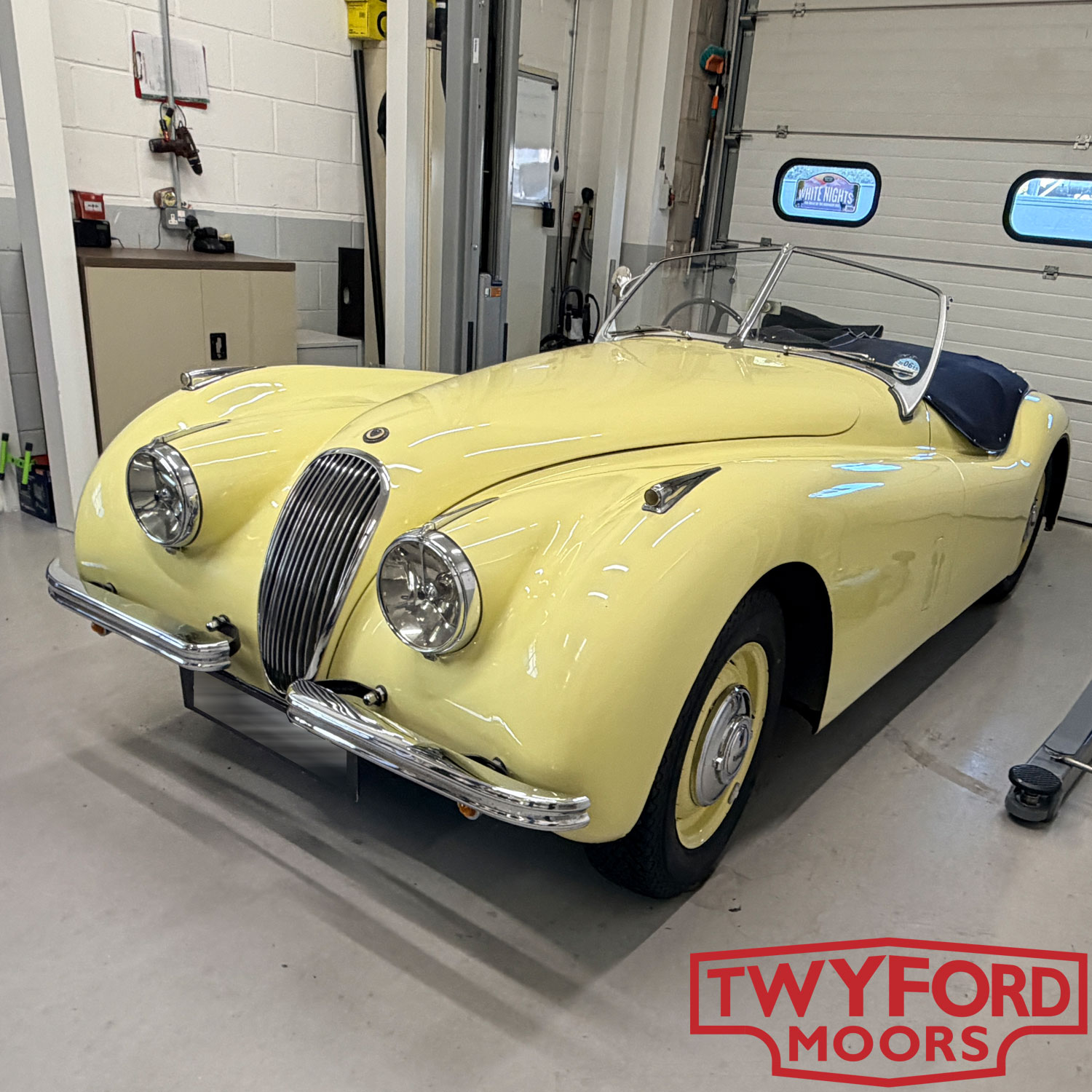
We sold this Jaguar XK120 OTS over a decade ago and haven’t seen it since. It has always been one of my favourite cars to have passed through the workshop. We believe it is the only XK120 to have been painted Primrose Yellow at the factory, and my goodness, it’s a pretty-looking car in this colour!
As a side note, I think Primrose Yellow is my favourite colour for an E-Type as well, although I know it can prove rather divisive. What makes this XK120 even more appealing is the fact that it still has its original steel wheels and spats fitted. The spats weren’t on the car at the time this photo was taken, though, as we were working on it.
The car was recently purchased privately by a new owner who, having used it a little over the summer and experienced a few issues, brought it to us for a full check-over. We provided the new owner with a report on the car’s condition and then worked together to agree on a programme of work to get it to where they wanted it to be.
Most of the work involved deferred maintenance: perished bushes, oil leaks and worn components. With the car now back in tip-top shape, it has been returned to a very happy owner.
Classic Car Storage
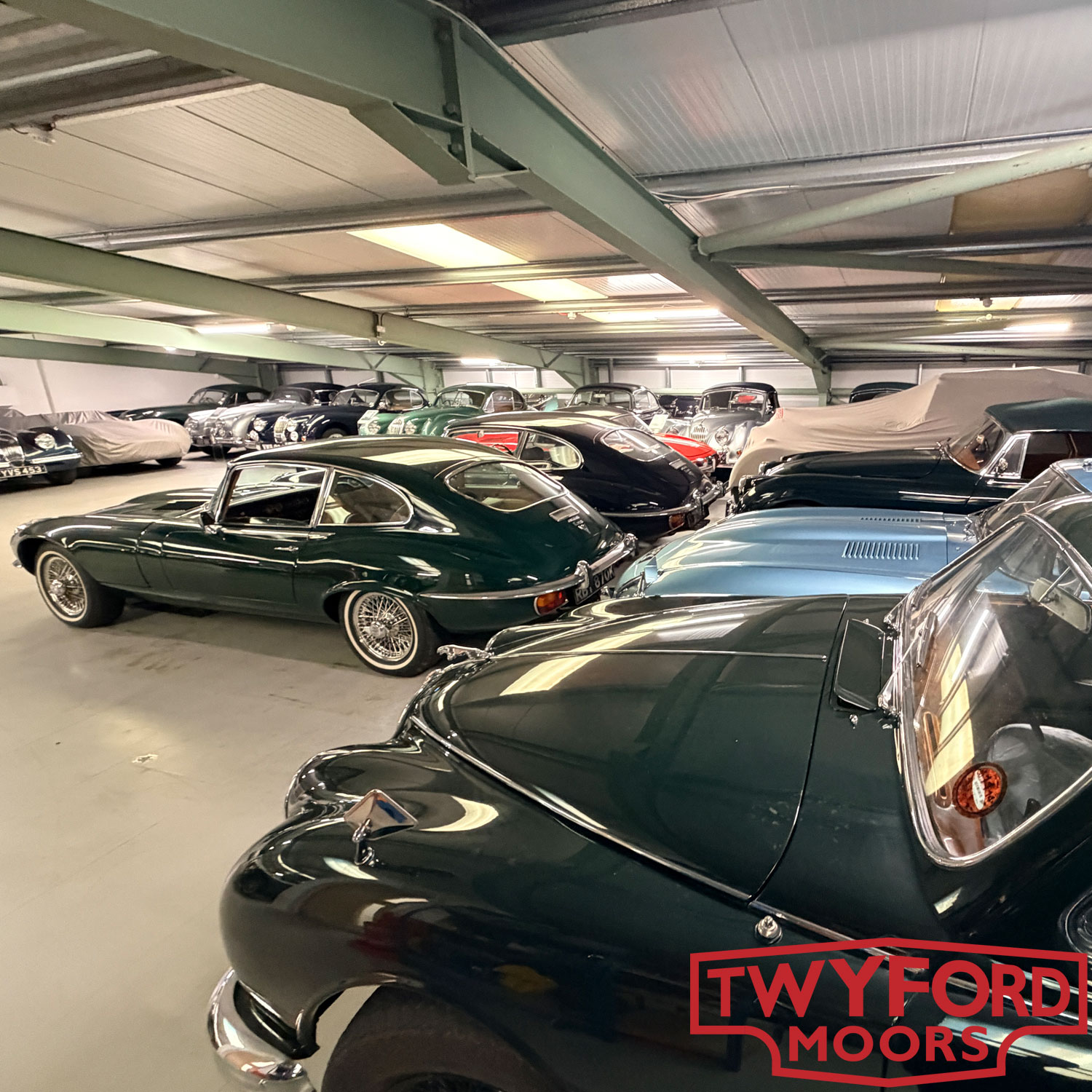
You may or may not know that we have a storage facility on-site. It is dry, secure and climate-controlled, just like the rest of our building. This is also where we keep our sales cars, along with cars awaiting work or parts. By storing them here, we can keep the workshop running smoothly and avoid the unnecessary risk of damaging cars by moving them around the workshop.
The photo here doesn’t show the full storage area, but as you can see, it is already rather full. With many of our regular customers returning their cars to us over the coming weeks, we anticipate being completely full over the winter months.
Likewise, the workshop is already very busy, and we are now booking jobs into the New Year. That said, we do try to keep some space available for emergency jobs, so if you have a breakdown, please don’t hesitate to get in touch. We will always do our very best to help.
If you are planning to have any work done before the driving season starts again in the spring, please get in touch to secure a slot sooner rather than later. We wouldn’t want to disappoint!
Jaguar E-Type Series 3 Inspection
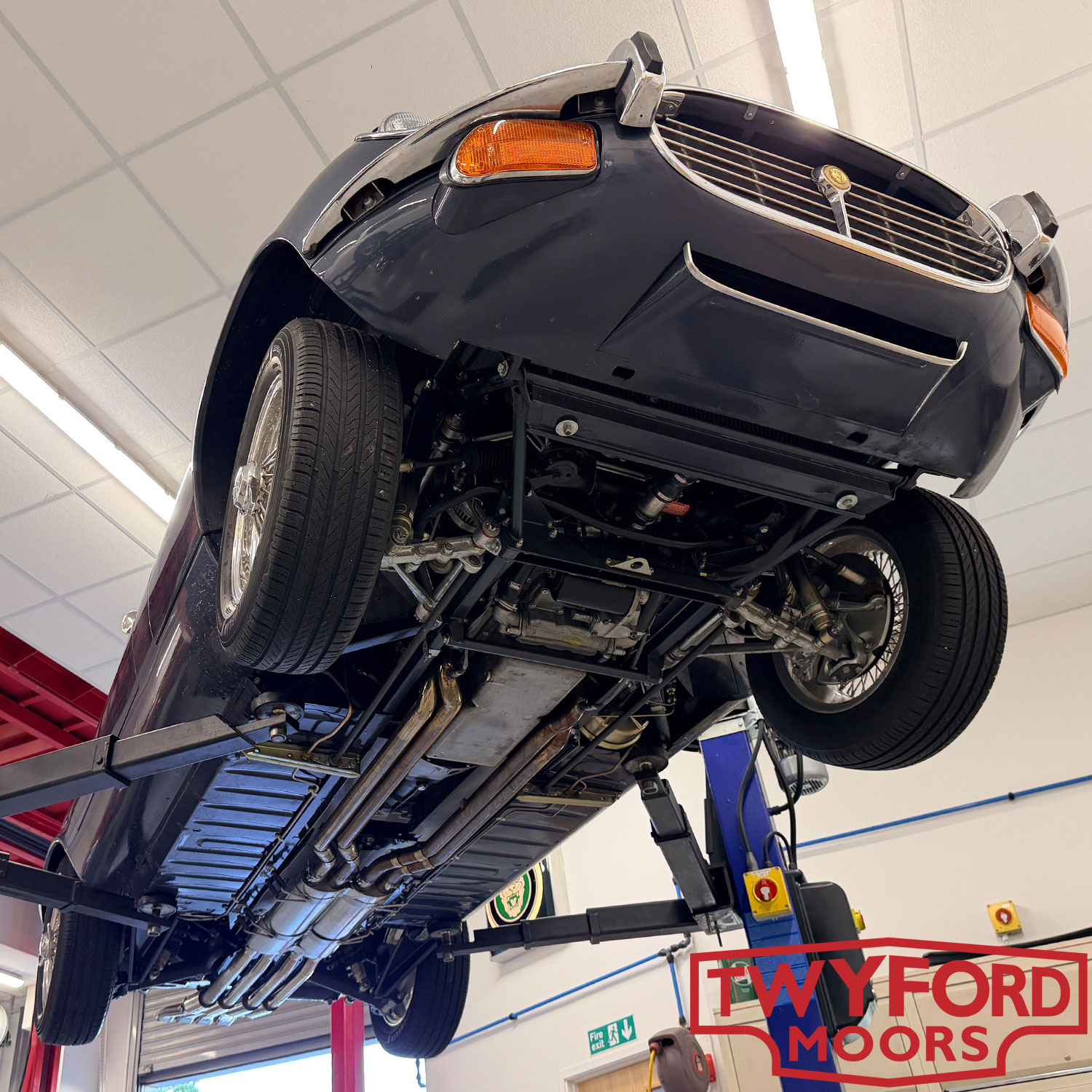
This Jaguar E-Type Series 3 underwent a full nut-and-bolt restoration, completed by its owner at the beginning of the summer. It is a testament to his hard work that the car is an absolute stunner, inside, outside and underneath. In fact, it is so impressive that I wanted to share this photograph of the underside.
The owner had been struggling to get the car properly dialled in and driving as he wanted. He contacted us because he was concerned about a few knocks, rattles and other driving characteristics, so we agreed to get the car in, give it a full inspection and report back.
The build is fantastic, and we particularly like the fuel injection system fitted to the V12 engine. These systems can really help unlock the full potential of these engines.
The addition of an overdrive gearbox would not be our route, when a five-speed gearbox could have been fitted instead, although we do understand the desire to stick with Jaguar parts.
We identified a few items that needed attention to get the car driving properly. Having discussed these with the owner, we are undertaking the jobs he doesn’t feel equipped to tackle himself, after which he will take the car away and work through the rest of the list.
We are always happy to help and advise fellow enthusiasts, so if we can help with your project, please do drop us a line.
Jaguar Mk1 Ignition Fault
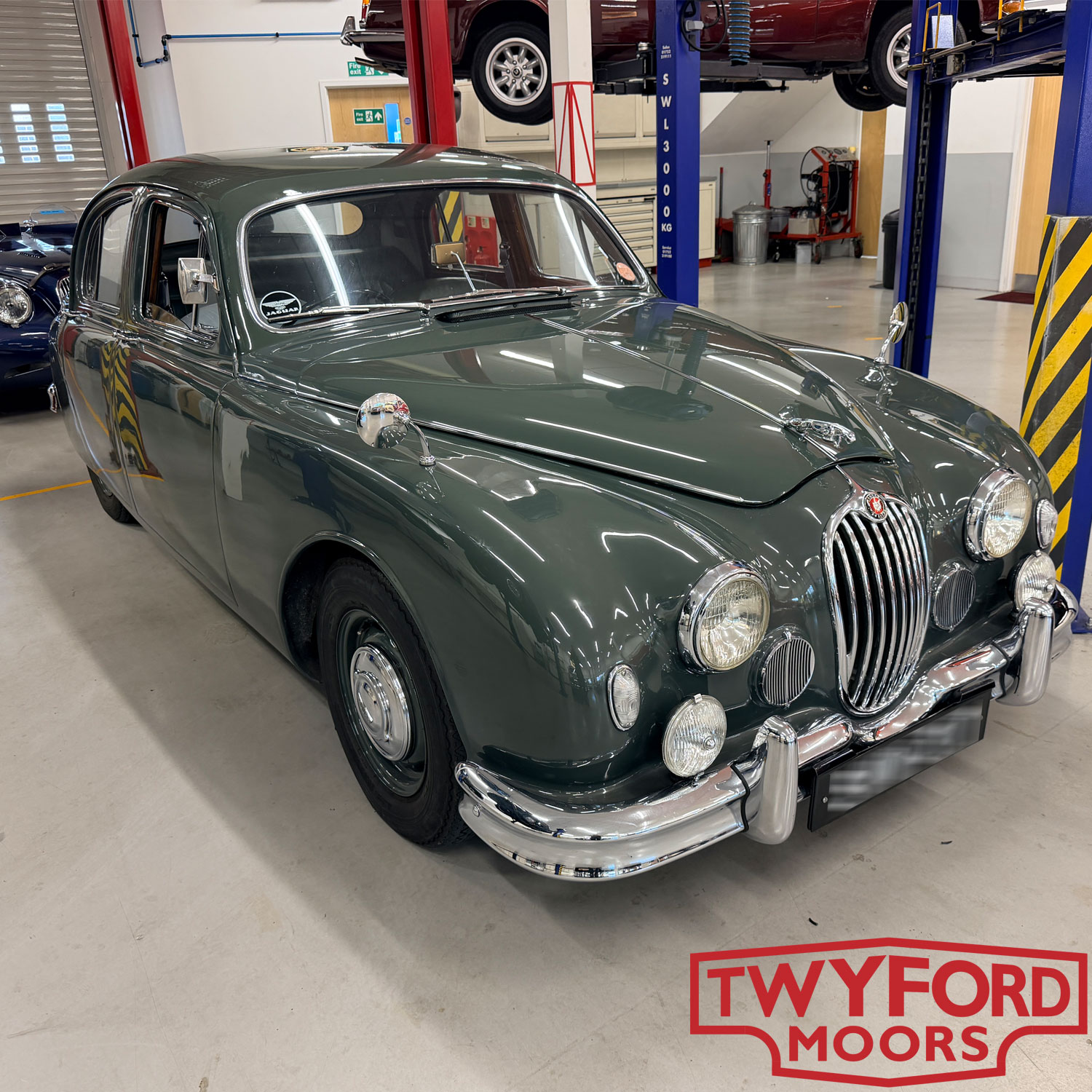
This Jaguar Mk1 is a 2.4-litre model. Although these are generally less sought-after than the larger-engined 3.4-litre cars, I think they look fantastic with their narrow, XK140-style grille, steel wheels and spats. They are so evocative of their era!
This particular car is kept at a local storage facility and normally starts faultlessly. When the owner went to get it out one day, it refused to start as usual and then didn’t feel right when driving.
Sensibly, he continued to his destination and then called us for advice. He didn’t feel confident continuing the journey, so we arranged to recover the car to our workshop for investigation.
Initially, we suspected stale fuel due to the car being in storage, but on closer inspection, we traced the fault to the ignition system. We discussed the options with the owner. As this is a fairly standard car, we thought he might prefer to retain the original distributor, but he opted to upgrade to electronic ignition for peace of mind.
The owner has reported that the car is starting better than ever and driving beautifully. I hope this has given him renewed confidence to get out and enjoy it.
Classic Jaguar Bodywork
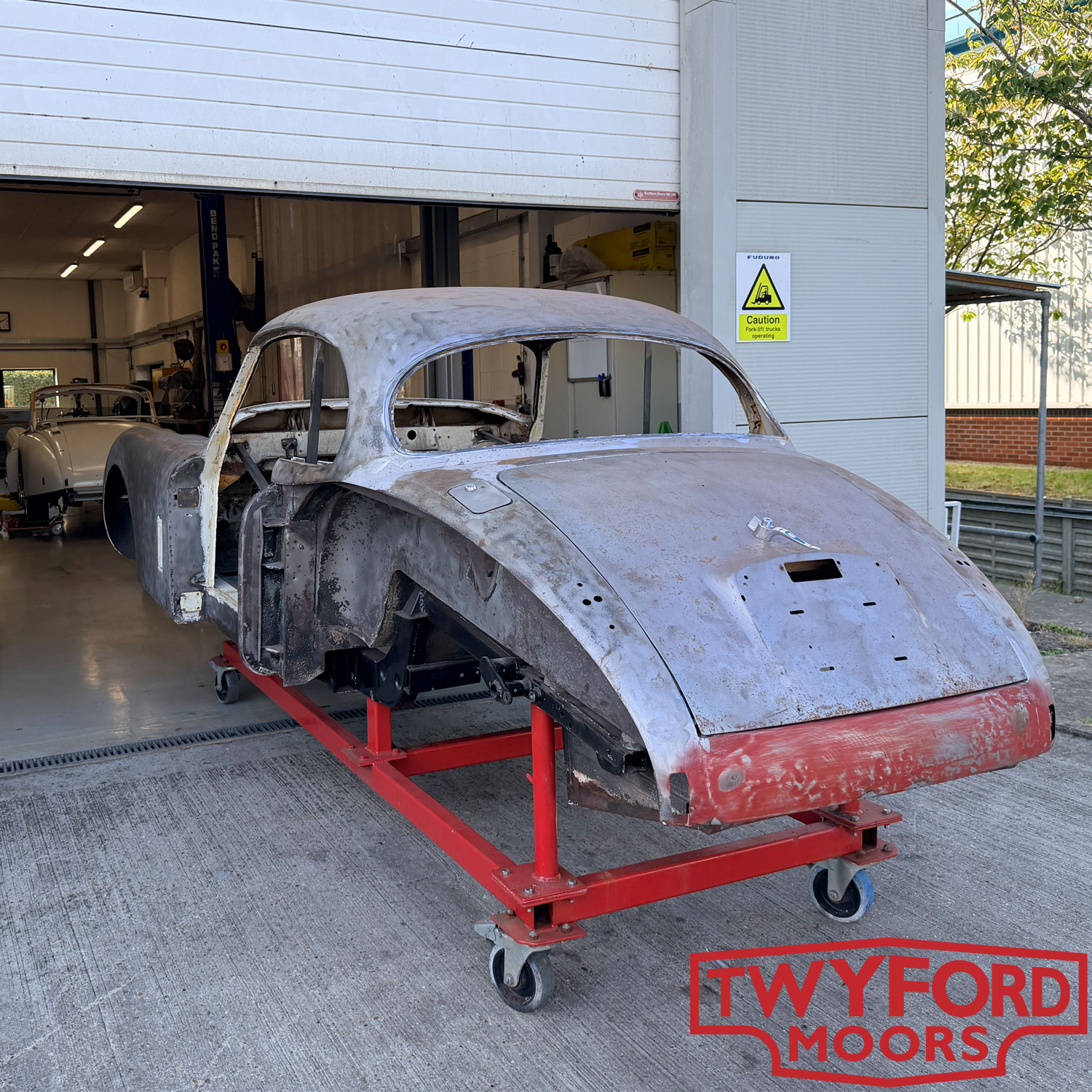
Pictured here is a Jaguar XK150 FHC bodyshell sitting on one of our bodywork jigs, just being pushed into our fabrication workshop. Beyond it, you can see an XK140 drophead coupé body being lifted off its chassis. It has already been gapped up, with all the windows, door fittings, lights and so on fitted, before heading off for paint.
This is a time-consuming process, but we believe it is time well spent and the only way to ensure a top-quality finish when restoring a car. It is very difficult, if not impossible, to make major adjustments after a car has been painted without significantly compromising the finished result.
The XK150 in the foreground is a project that was started elsewhere, but the garage involved felt the work was not for them. The paint had been stripped before the car arrived with us, and the body is actually in very good condition compared with many of the XKs we have restored.
We have some new panels for the car where required, although much of the original bodyshell will be retained and repaired. We’ll soon be getting started on preparing the body for paint.
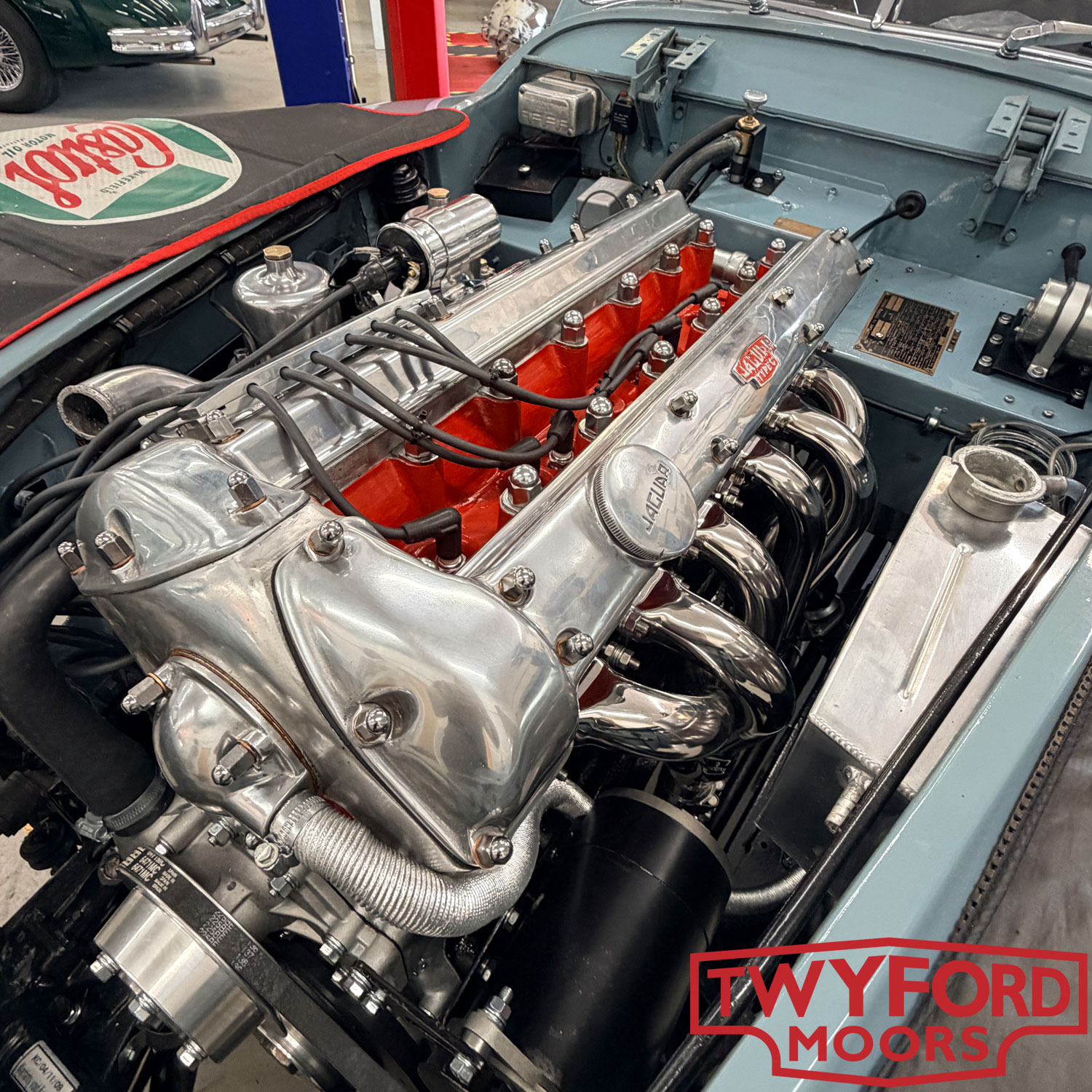
Jaguar XK140 Engine Rebuild
Is this engine bay not exquisite?
This is a picture of a recent engine rebuild as it was being fitted back into the car. One of the design goals for the XK engine was that it shouldn’t just perform well but look good too. They certainly succeeded on that front!
I think a red cylinder head with C-Type cam cover badges is an XK engine at its best. The cam covers should be clean and polished, but not quite a mirror finish. That, sir, would be garish – too much and too showy.
“But the exhaust manifolds are mirror-finished!” I hear you cry. Yes, they are now, but once they have been run for a few miles, they will turn a beautiful blue, purple and orange hue. They will still look stunning, but in a more subtle way.
Those stainless-steel manifolds are mated to a full stainless-steel sports exhaust system from our friends at Classic Fabs. It not only looks stunning but sounds great, too, while helping the engine breathe more freely.
On the other side of the engine, you’ll see a nicely polished pair of twin 2-inch SU carburettors. The combination of the larger carburettors and the exhaust system really lets this engine breathe, which is just as well, as it is a fast-road specification engine featuring larger valves, high-lift cams, a polished and ported cylinder head, and lightweight, balanced components throughout.